Auditing Generative AI: A Guide to Independent Assessments and Certifications

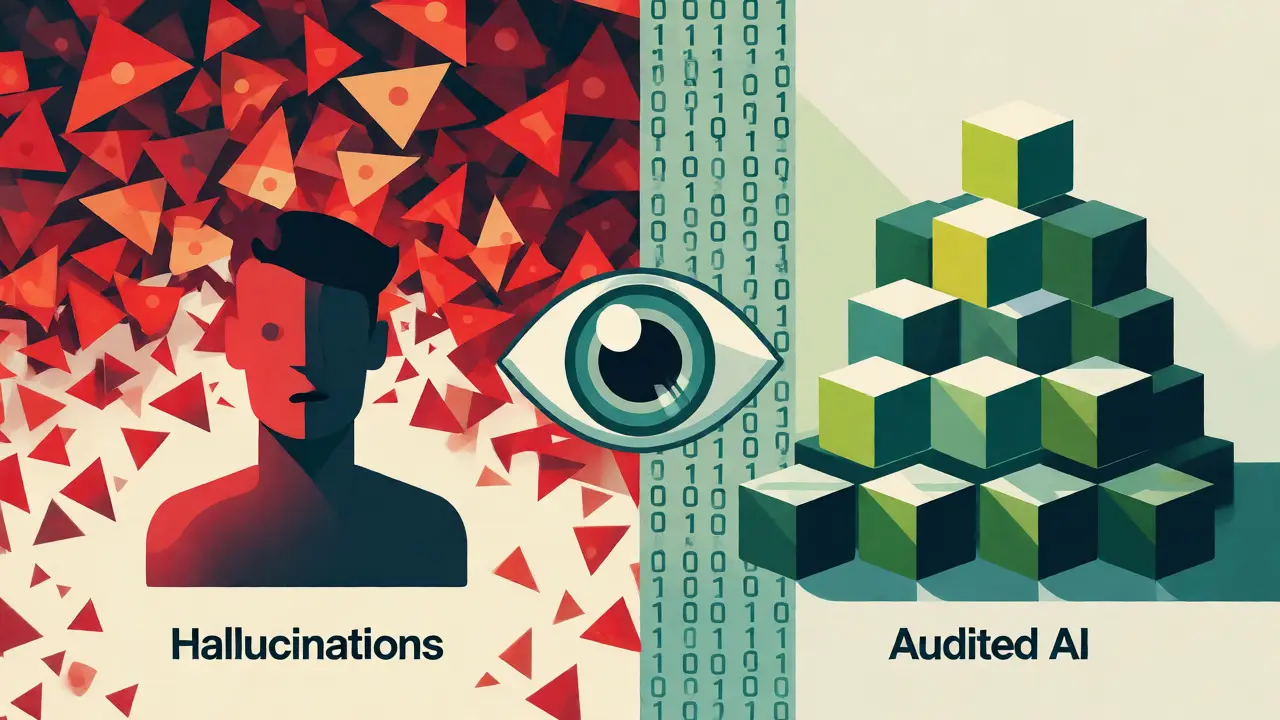
You built a shiny new generative AI tool. It writes emails, summarizes reports, or chats with customers. It feels like magic-until it hallucinates a policy that doesn't exist or biases hiring decisions against qualified candidates. That’s when the panic sets in. You need proof that your system works as advertised, not just because you say so, but because an outsider verified it.
This is where audits of generative AI systems come into play. These aren't just box-checking exercises for compliance teams. They are critical safety valves that prevent reputational disasters and legal fines. Whether you are facing the strict requirements of the EU AI Act or voluntary standards like NIST, understanding how independent assessments work is no longer optional-it's survival.
Why Independent Audits Are Non-Negotiable Now
Self-reporting is dead. If you tell regulators your AI model is fair, they’ll ask for evidence. An independent assessment provides that evidence by bringing in a neutral third party who has no stake in your product’s success. Think of it like a financial audit: you wouldn’t let the person cooking the books also balance them. The same logic applies to algorithms.
The stakes have risen dramatically since 2024-2025. With the European Union’s AI Act fully enforcing conformity assessments for high-risk systems, companies can no longer rely on internal promises. In the US, while regulations are more fragmented, the NIST AI Risk Management Framework (RMF) has become the de facto standard for enterprise risk management. If you skip these audits, you’re flying blind into a storm of potential lawsuits and brand damage.
But why pay for an external auditor? Because internal teams often suffer from "confirmation bias." Your engineers want the model to work. Your sales team wants to ship features fast. An external auditor looks at the data logs, the training sets, and the decision trees with cold, hard skepticism. They find the cracks before your customers do.
What Exactly Gets Audited?
An AI audit isn't just about accuracy metrics. It’s a holistic review of the entire lifecycle. When auditors walk into your office (or log into your cloud environment), they look at five core pillars:
- Data Quality and Consent: Where did the training data come from? Did users consent to their data being used? Is the dataset representative of the real world, or does it skew heavily toward one demographic?
- Model Behavior and Fairness: Does the model treat different groups equally? For example, if you use AI for resume screening, does it systematically downrank names associated with certain ethnicities? Auditors run stress tests across various demographic slices.
- Security Protocols: Who can access the model weights? How are prompts protected? Can someone inject malicious code via a user prompt to make the AI leak private data?
- Governance Processes: Do you have clear roles? Who is responsible when the AI makes a mistake? Is there an incident response plan specifically for AI failures?
- Transparency and Explainability: Can you explain why the AI made a specific decision? If a loan application is denied, can you point to the specific factors the model weighed, or is it a black box?
Auditors don't just read your documentation; they replicate your processes. They might re-run your model on a held-out test set to see if the performance metrics hold up. They check if your "human-in-the-loop" oversight is actually happening or if employees are just rubber-stamping AI outputs because they trust the machine too much.
Navigating the Regulatory Maze: EU vs. US vs. Global Standards
The regulatory landscape is messy, but patterns are emerging. Here is how the major frameworks compare when it comes to auditing requirements.
| Framework | Type | Audit Requirement | Focus Area | Status (2026) |
|---|---|---|---|---|
| EU AI Act | Mandatory Law | Conformity Assessment + Post-Market Monitoring | High-Risk Systems (Healthcare, HR, Credit) | Enforced for High-Risk |
| NIST AI RMF | Voluntary Standard | Measure Function (Independent Analysis) | Risk Management & Trustworthiness | Widely Adopted in US Enterprise |
| ISO/IEC 42001 | International Standard | Certification Audit | AI Management System (AIMS) | Growing Global Adoption |
| IAAIS | Industry Standard | Ethics, Bias, Privacy, Trust, Cybersecurity | Human Impact & Integrity | Niche but Influential |
The EU AI Act is the heavyweight. If your generative AI falls under "high-risk" categories-like tools used in employment, education, or essential services-you must undergo a conformity assessment. This often involves a notified body (an accredited auditor) verifying that your technical documentation matches reality. Failure here means massive fines, up to 7% of global annual turnover.
In contrast, the NIST AI RMF is voluntary but practically mandatory for US corporations doing business globally. Its "Measure" function explicitly calls for independent ongoing analysis. While the government won't fine you directly for ignoring NIST, investors and partners increasingly demand NIST-aligned audits as a sign of maturity.
ISO/IEC 42001 is the first international standard for AI management systems. Think of it as the "ISO 9001 for AI." It certifies that your organization has a structured process for managing AI risks. Many companies pursue this certification to signal reliability to B2B clients. It’s less about the specific algorithm and more about your company’s discipline in handling AI.
Who Conducts These Audits?
You can’t just hire any consultant. Effective AI auditing requires a rare blend of skills. A traditional IT auditor might know security protocols but miss subtle statistical biases. A data scientist might understand the model architecture but overlook legal compliance nuances.
Qualified auditors typically fall into three buckets:
- Big Four Accounting Firms: Deloitte, PwC, EY, and KPMG have launched dedicated AI assurance practices. They bring rigorous methodology and legal expertise but can be expensive.
- Specialized Tech Consultancies: Firms focused purely on AI ethics and engineering. They offer deeper technical testing but may lack broad legal coverage.
- Non-Profit Labs and Academic Partners: Organizations like the Partnership on AI or university labs sometimes conduct pro-bono or low-cost audits for public interest projects, though they may not provide formal certifications.
For internal audits, cross-functional teams are key. You need representatives from Legal (for liability), Compliance (for regulations), IT (for security), and HR (if the AI impacts employees). If you only send engineers, you’ll miss the human impact. If you only send lawyers, you’ll miss the technical flaws.
The 11-Step Roadmap to a Successful Audit
Preparing for an audit is half the battle. If you wait until the auditor arrives to start gathering documents, you’re already behind. Here is a practical checklist based on industry best practices:
- Map Your AI Inventory: List every generative AI tool in use, including shadow IT (tools employees use without official approval).
- Document Data Sources: Create a lineage map showing where training data came from, how it was cleaned, and what consent records exist.
- Bias Stress Testing: Run your model against synthetic datasets representing diverse demographics. Record the output variances.
- Vendor Contract Review: Check your contracts with API providers (like OpenAI or Anthropic). Do they indemnify you for IP infringement? Do they guarantee uptime?
- Capture Model Parameters: Log version numbers, hyperparameters, and any fine-tuning applied.
- Record Interventions: Keep a log of every time a human overrode an AI decision. Why was it overridden?
- Evaluate Transparency: Test if non-experts can understand the AI’s reasoning. If not, improve your explainability layer.
- Define Governance Roles: Assign a clear "AI Owner" for each system. Ambiguity is the enemy of accountability.
- Implement Access Controls: Ensure only authorized personnel can modify model weights or access raw training data.
- Establish Monitoring Metrics: Define KPIs like hallucination rate, latency, and user satisfaction scores.
- Create Feedback Loops: Build easy ways for users to flag bad AI outputs. Treat these flags as audit triggers.
Traceability is the golden thread running through all these steps. If an auditor asks, "Why did the AI reject this customer?", you should be able to pull the exact input, the model version, and the decision log within minutes. If you can’t, you fail the transparency check.
How Often Should You Audit?
There is no one-size-fits-all answer, but risk level dictates frequency.
High-Risk Systems (e.g., credit scoring, medical diagnosis support): Annual independent audits are the minimum. However, given how quickly LLMs evolve, quarterly reviews are becoming common practice among forward-thinking firms.
Medium-Risk Systems (e.g., customer service chatbots): Biannual audits are usually sufficient, provided continuous monitoring shows stable performance.
Low-Risk Systems (e.g., internal code assistants): Annual self-assessments may suffice, unless a significant update occurs.
Don’t forget trigger-based audits. You should immediately reassess your AI if:
- You deploy a major model update (e.g., moving from GPT-3.5 to GPT-4).
- A regulatory change occurs in your operating region.
- You experience a significant incident (e.g., a viral social media post exposing AI bias).
- You expand into a new market with different cultural or legal norms.
Common Pitfalls That Fail Audits
Even well-intentioned companies stumble during audits. Here are the most frequent red flags auditors spot:
- The "Black Box" Excuse: Claiming the model is too complex to explain is no longer acceptable. Regulators demand interpretability for high-stakes decisions.
- Stale Documentation: Your model changed six months ago, but your documentation still describes the old version. This creates a mismatch between reality and record.
- Lack of Human Oversight Evidence: Saying "we have humans in the loop" isn’t enough. Auditors want to see logs proving humans actually reviewed and corrected outputs.
- Ignoring Shadow AI: Marketing teams using unapproved image generators can introduce copyright risks that bypass your central governance.
- Poor Incident Response: Having a plan on paper but no history of practicing it. When an AI fails, do people know who to call?
The Future: Certification as a Competitive Advantage
We are moving toward an era where "Certified AI" will carry weight similar to "Organic Food" or "Fair Trade." Consumers and B2B buyers are becoming skeptical of unchecked AI claims. An independent certification badge signals trust.
Initiatives like the International AI Audit and Integrity Standard (IAAIS) are pushing this further, focusing on ethics, bias, privacy, trust, and cybersecurity. While not yet law, these standards help organizations build infrastructure of trust.
Start small. Don’t try to certify your entire tech stack overnight. Pick your highest-risk generative AI application. Run a mock audit internally using the NIST framework. Fix the gaps. Then hire an external firm for a baseline assessment. Use that report to prioritize investments. This iterative approach builds confidence without breaking the budget.
What is the difference between an AI audit and AI testing?
AI testing focuses on technical performance, such as accuracy, speed, and bug detection. An AI audit is broader; it evaluates governance, compliance, ethics, and risk management. Testing asks, "Does the code work?" An audit asks, "Is the system safe, fair, and legally compliant?"
Do small businesses need independent AI audits?
Not necessarily. Small businesses using off-the-shelf AI tools (like Microsoft Copilot or Salesforce Einstein) often rely on the vendor’s compliance. However, if you build custom models or use AI for high-stakes decisions (like hiring or lending), an independent review-even a lightweight one-is wise to mitigate liability.
How much does an independent AI audit cost?
Costs vary widely based on scope and complexity. A basic gap analysis might cost $10,000-$25,000. A full conformity assessment for a high-risk system under the EU AI Act can range from $50,000 to over $150,000, depending on the number of models and data volume involved.
Can we audit our own AI system?
You can perform internal audits, which are valuable for continuous improvement. However, "independent" assessments require a third party to ensure objectivity. Internal audits lack the credibility needed for regulatory compliance or external stakeholder trust, especially in regulated industries.
What happens if we fail an AI audit?
Failing an audit doesn’t mean shutting down the system. It means identifying non-compliance issues. You receive a remediation plan outlining necessary fixes. For mandatory regulations like the EU AI Act, repeated failure or refusal to remediate can lead to fines or suspension of the system’s operation.
- Oct, 16 2026
- Collin Pace
- 0
- Permalink
Written by Collin Pace
View all posts by: Collin Pace