Build a Cost Forecast for Large Language Model Adoption in Your Company

Most companies get their LLM cost forecast wrong because they treat it like a simple subscription fee. They look at the price per million tokens, multiply it by a guess about how many employees will use the tool, and call it a day. Then, six months later, the bill is three times higher than projected, or worse, the project gets killed because leadership thinks AI is too expensive to scale. The truth is that forecasting costs for large language models isn't just about math; it's about understanding usage patterns, infrastructure choices, and hidden operational taxes.
If you're trying to build a realistic budget for bringing AI into your company, you need to move beyond the sticker price of an API. You have to account for the difference between a pilot program and production-scale deployment, the gap between cloud convenience and on-premise control, and the subtle but massive impact of tokenizer efficiency. This guide breaks down exactly how to structure that forecast so you don't get blindsided by the invoice.
The Three Pillars of LLM Spending
Before you open a spreadsheet, you need to categorize where the money actually goes. Most forecasts fail because they lump everything into one bucket called "AI Costs." In reality, there are three distinct financial dimensions, each with its own behavior over time.
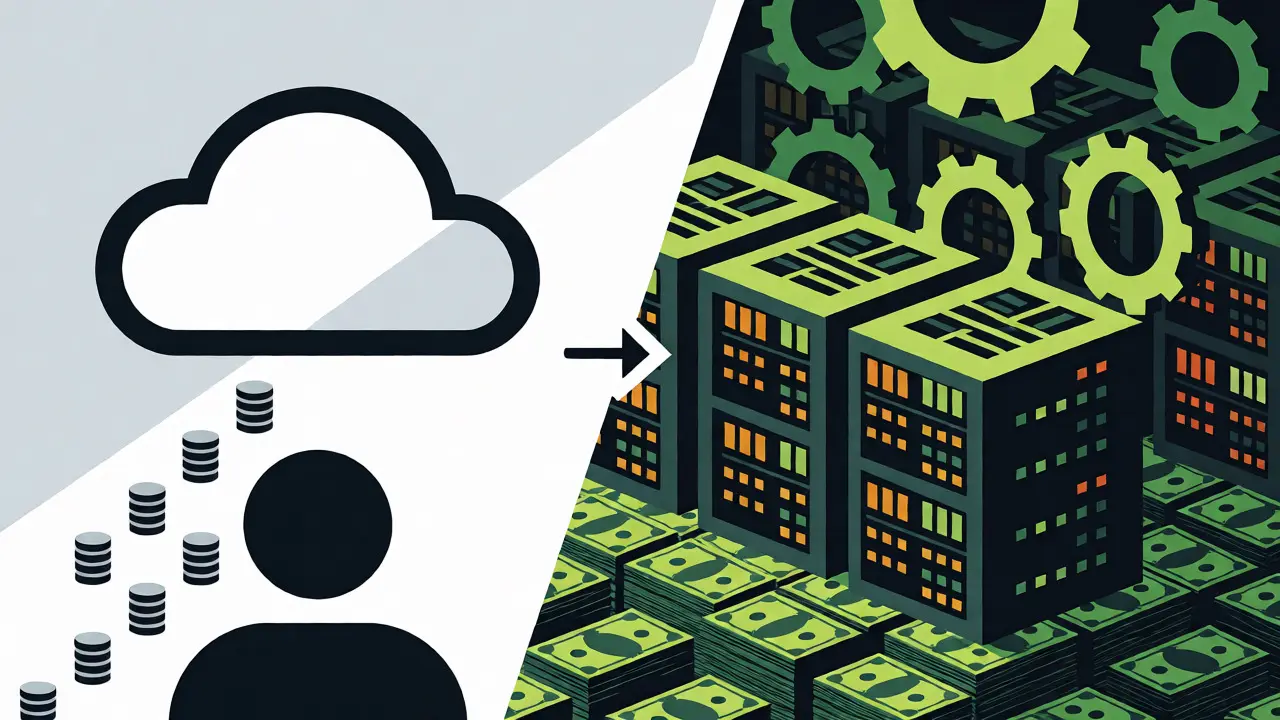
- Cloud API Usage: This is pay-as-you-go. It starts low but scales linearly with volume. If your users double their queries, your bill doubles. There is no upfront capital expenditure (CapEx), but there is also no ceiling on monthly operating expenses (OpEx).
- On-Premise Infrastructure: This is high CapEx, lower marginal OpEx. You buy GPUs, servers, and networking gear upfront. The more you use it, the cheaper each individual query becomes, provided you keep the hardware utilized. If you don't use it, you still pay for electricity and maintenance.
- Hybrid Models: Many enterprises land here. They run sensitive data on local servers and burst to the cloud during peak loads or for non-sensitive tasks. This requires sophisticated orchestration tools, which add software licensing costs.
Your first job is to decide which pillar dominates your initial phase. For most mid-sized companies starting out, Cloud API is the default because it removes the risk of buying $100,000 worth of GPUs that might become obsolete in two years. But if you plan to process millions of documents annually, that convenience comes at a premium.
Calculating Token Volume: The Hidden Variable
The biggest mistake in cost modeling is assuming that one word equals one token. It doesn't. A token is roughly 4 characters in English, but this ratio shifts dramatically depending on the language and the specific model you choose. If you're operating in a multilingual environment, this discrepancy can blow up your budget.
Consider this real-world scenario: An organization processes customer support tickets in English and Tamil. Using an inefficient tokenizer for Tamil can result in token usage being up to 450% higher than for English. Why? Because complex writing systems often require multiple tokens per character. If you assume a flat rate across all languages, you will underbudget significantly.
| Scenario | Estimated Annual Cost | Key Driver |
|---|---|---|
| Efficient Model (English-centric) | $36,500 | Optimized tokenization, lower token count per request. |
| Inefficient Model (Multilingual mix) | $164,250 | Poor handling of complex scripts leads to 4x token inflation. |
| Difference | $127,750 | This variance alone can determine project viability. |
To forecast accurately, you must measure your actual input and output lengths. Don't guess. Run a sample batch of your typical prompts through the API and record the exact token counts. Multiply that average by your expected user count and frequency. If you skip this step, your forecast is just fiction.
Cloud API Pricing: When Convenience Becomes Expensive
Let's look at the numbers for the current market leaders. As of late 2026, pricing has stabilized somewhat, but the spread between models remains huge. OpenAI’s GPT-4 Turbo offers a 128k context window at approximately $0.01 per 1,000 input tokens and $0.03 per 1,000 output tokens. Compare that to the older GPT-4 (8k context) at $0.08 input and $0.16 output. That's an 8x price difference for similar capabilities in many standard use cases.
Why does this matter for your forecast? Because many teams stick with older, more expensive endpoints simply because they haven't updated their integration code. If you're processing 8 million tokens a month, choosing the right endpoint could save you hundreds of dollars instantly. At scale, those savings compound into tens of thousands.
Here’s a quick heuristic: If your monthly API bill exceeds $5,000, you should seriously evaluate self-hosting alternatives. At that level, you’re likely paying a significant premium for the convenience of managed services. However, remember that API costs include the value of not having to manage hardware. If your team lacks DevOps capacity, that "premium" is actually a hiring cost you’re avoiding.

The On-Premise Reality Check: CapEx vs. OpEx
Self-hosting looks cheap on paper until you factor in the total cost of ownership (TCO). Let’s say you want to run LLaMA 3 70B locally. You need at least eight 80GB GPUs. That’s roughly $10,000-$12,000 in hardware alone, plus the server chassis, cooling, and networking. But hardware is just the start.
You also need to power those machines. High-end GPUs consume massive amounts of electricity. A single node running these models might draw 400 watts continuously. Add in cooling costs, which can double your energy bill in warmer climates, and maintenance contracts. Research from Dell Technologies suggests that while on-premise inferencing can be 2.9x to 4.1x cheaper than cloud APIs at scale, the break-even point varies wildly based on utilization.
Small models (under 30 billion parameters) can break even in as little as three months because the hardware is cheap. Large models (like GLM-4.5 or Qwen3-235B) require investments ranging from $60,000 to $90,000 and may take 3.5 to 69.3 months to break even against API costs. If your usage is spiky-high during business hours, zero on weekends-you might end up paying for idle GPU capacity, eroding your savings.
Fine-Tuning: The One-Time Shock
Many companies think they need to fine-tune a model to make it useful for their specific industry jargon. While fine-tuning improves performance, it adds a significant upfront cost that doesn't appear in your monthly recurring revenue (MRR) calculations.
Fine-tuning a smaller model like GPT-3.5 via API might cost a few thousand dollars depending on dataset size. But if you're fine-tuning a larger open-source model locally, you’re looking at days of GPU training time. That translates to tens of thousands of dollars in compute resources and specialized engineer hours. You need to amortize this cost over the lifespan of the model version. If you plan to retrain every quarter, that’s a recurring expense, not a one-time setup fee.
Building the Forecast Model: Step-by-Step
Ready to build the spreadsheet? Here is the logical flow you should follow to ensure nothing is missed.
- Define User Personas: Who will use the AI? Customer support agents? Developers? Marketing teams? Each group has different usage patterns. Support agents might send short, frequent queries. Developers might send long code blocks. Segment them.
- Measure Baseline Tokens: Collect real logs from a pilot. Calculate average input and output tokens per persona. Apply a growth multiplier for year one (e.g., 20% increase in adoption).
- Select Candidate Models: Pick two or three options. One cheap/fast (e.g., Mistral 7B), one balanced (e.g., Llama 3 70B), and one premium (e.g., GPT-4o). Get current pricing for each.
- Calculate API Costs: Multiply token volumes by model rates. Include a buffer for retries and errors (add 10%).
- Calculate Self-Hosted TCO: Estimate hardware cost, divide by 36 months for depreciation. Add estimated electricity, cooling, and 0.5 FTE (Full-Time Equivalent) for engineering support. Add software licensing if using commercial stacks.
- Compare Break-Even Points: Plot the cumulative cost of API vs. Self-Hosted over 36 months. Identify the crossover point. Does it happen before your planned review date?
- Add Contingency: Add 15-20% for unexpected spikes, prompt engineering iterations, or price changes.
Common Pitfalls That Blow Up Budgets
Even with a good model, things go wrong. Here are the most common reasons forecasts fail.
- Ignoring Context Window Bloat: Developers often stuff entire conversation histories into the prompt to give the AI "memory." This increases input tokens exponentially. Without strict prompt management rules, costs skyrocket.
- Underestimating Latency Requirements: If you need sub-second responses, you might need more powerful (and expensive) hardware or higher-tier API plans. Cheaper models are slower.
- Forgetting Data Residency Compliance: Some industries require data to stay on-premise. If you forecast cloud costs but then discover you need a private VPC or dedicated instance, prices jump significantly.
- Lack of Monitoring: Without real-time dashboards tracking token usage, you won't know you're overspending until the invoice arrives. Implement logging early.
Making the Decision: A Heuristic for Leaders
So, when do you switch from cloud to self-hosted? Use this rule of thumb: If your monthly token consumption exceeds 50 million tokens, and your usage is consistent (not spiky), self-hosting likely wins. Below 10 million tokens, stick with the cloud. Between 10 and 50 million, it depends on your internal engineering capability. If you have a strong DevOps team, self-hosting saves money. If you don't, the operational overhead makes the cloud cheaper in practice, even if the raw compute cost is higher.
Remember, the goal isn't just to minimize dollars spent. It's to maximize value delivered. Sometimes, paying extra for a better model that reduces human review time by 50% is far more cost-effective than saving $500 on API fees.
How much does it cost to fine-tune an LLM for a company?
Costs vary widely based on model size and method. Fine-tuning a small model via API might cost $1,000-$5,000. Training a large open-source model locally can cost $10,000-$50,000 in compute resources plus engineering time. Always amortize this over the model's useful life.
Is self-hosting always cheaper than cloud APIs?
No. Self-hosting only becomes cheaper after reaching a certain volume threshold, typically around 10-50 million tokens per month. Below that, the fixed costs of hardware and personnel make cloud APIs more economical.
What is the biggest hidden cost in LLM adoption?
Token inefficiency due to poor prompt design and tokenizer mismatches. In multilingual contexts, bad tokenization can increase costs by 400%. Additionally, the labor cost of maintaining the system and managing hallucinations is often overlooked.
How do I estimate my monthly token usage?
Run a pilot with a representative sample of users. Log the exact input and output token counts for each interaction. Average these numbers and multiply by your total user base and average interactions per user per month.
Do I need to worry about electricity costs for on-premise GPUs?
Yes. High-performance GPUs consume significant power (e.g., 400W+ per node). Combined with cooling requirements, energy costs can add $300-$1,000+ monthly per rack, impacting your total cost of ownership significantly.
- Nov, 4 2026
- Collin Pace
- 0
- Permalink
- Tags:
- LLM cost forecast
- AI budget planning
- LLM adoption costs
- enterprise AI strategy
- token pricing analysis
Written by Collin Pace
View all posts by: Collin Pace