Building a Vibe Coding Center of Excellence: Charter, Staffing, and Goals
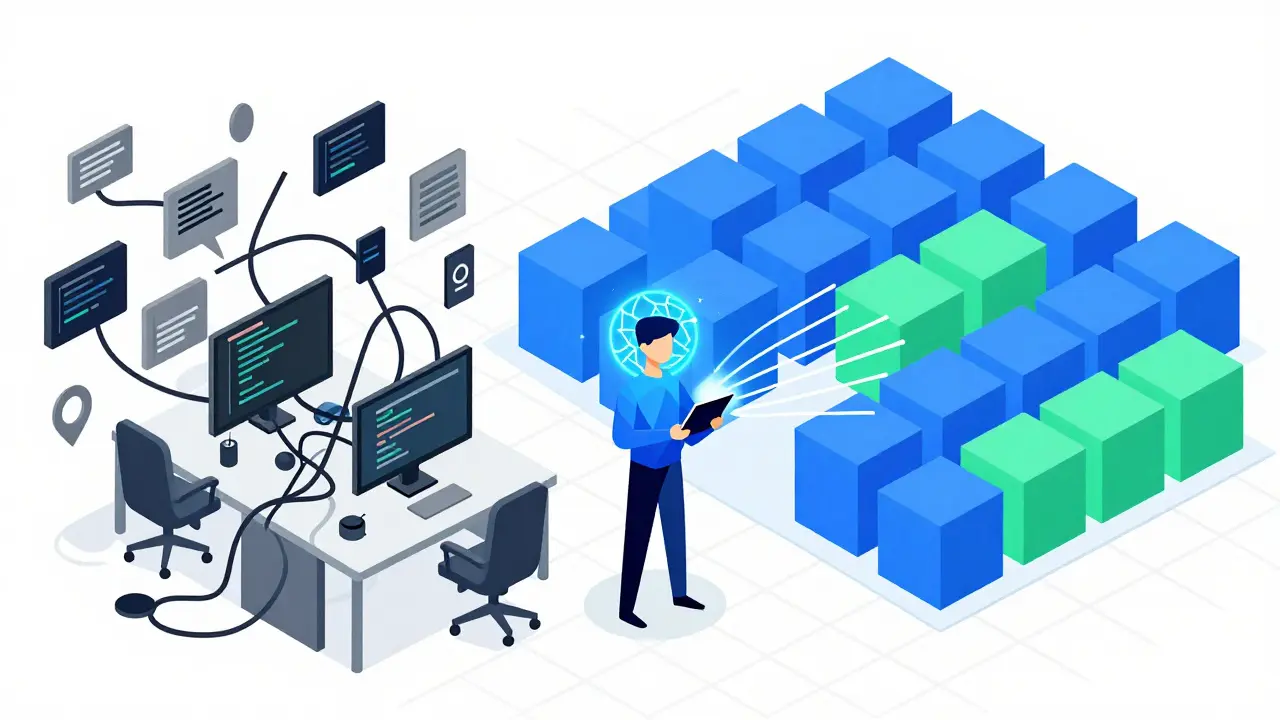
Remember when "coding" meant staring at a terminal for eight hours, debugging syntax errors, and praying your build passed? That era is fading. In 2026, the rise of vibe coding, defined as a development approach where engineers rely heavily on AI assistants to generate code based on natural language intent rather than manual syntax entry has changed everything. You describe what you want; the AI writes it. It’s faster, it’s intuitive, and frankly, it feels good.
But here is the catch: speed without structure is chaos. If every developer in your organization uses their own AI prompt style, their own preferred model, and their own definition of "done," you don’t get efficiency. You get technical debt on steroids. This is why building a Vibe Coding Center of Excellence (CoE) is no longer optional for mid-to-large tech teams-it’s survival. A CoE isn’t just a group of people who say "no." It’s the engine that turns chaotic AI experimentation into scalable, secure, and consistent software delivery.
The Core Problem: Why Your Team Needs a Vibe Coding CoE
You might be thinking, "Why do we need a formal structure for something as fluid as vibe coding?" The answer lies in consistency. Without a CoE, you face the "Wild West" scenario. One team uses an open-source LLM locally; another uses a proprietary enterprise model with strict data guards. One developer prompts for Python; another asks for TypeScript. The result? Integration nightmares, security blind spots, and code that looks like it was written by five different authors who hate each other.
A Vibe Coding CoE solves this by establishing a shared language and toolkit. According to recent industry analysis, organizations with mature CoEs see a 35-45% acceleration in time-to-market. They also reduce production incidents related to coding standards violations by 40%. But these numbers only happen if you set up the CoE correctly from day one. If you treat it like a police force, developers will bypass it. If you treat it like an enablement hub, they’ll beg for its help.
Drafting the Charter: Defining Scope and Decision Rights
The foundation of any successful CoE is its charter. This isn’t just paperwork; it’s your social contract with the engineering team. A vague charter leads to scope creep and frustration. Your charter must explicitly define three things: scope, decision rights, and success metrics.
Scope: What does the CoE actually own? For a Vibe Coding CoE, this typically includes selecting approved AI models, defining prompt engineering templates, setting security guardrails for data privacy, and creating reusable code snippets or "patterns" that work seamlessly with AI generation. It does not mean the CoE writes all the code. That’s a common misconception that kills adoption.
Decision Rights: Who decides what? Gartner analysts suggest that effective CoEs push 70-80% of technical decisions down to the development teams. The CoE should retain control over only 20-30% of choices-specifically those involving architecture, security, and compliance. If your CoE tries to approve every pull request, you’ve created a bottleneck, not a center of excellence.
Success Metrics: How do you know it’s working? Don’t measure "lines of code generated." Measure outcomes. Track defect density (aiming for less than 0.5 defects per thousand lines of code), build success rates (targeting above 95%), and deployment frequency. These are the metrics that prove the CoE is adding value, not just overhead.
Staffing the CoE: The Right Mix of Talent
You cannot staff a Vibe Coding CoE with just senior architects who love documentation but hate change. You need a specific blend of skills. Research indicates that 80% of senior roles in successful CoEs require 10+ years of domain expertise, but that’s only half the equation. The other half is influence.
Your core team should consist of 5-7 full-time equivalents for organizations with 100+ developers. Here is the ideal breakdown:
- The Technical Lead: Someone who understands both traditional software architecture and the nuances of large language models (LLMs). They need to know how AI-generated code differs from human-written code in terms of security vulnerabilities and performance bottlenecks.
- The Prompt Engineer / AI Specialist: This role focuses on optimizing how the team interacts with AI tools. They create standardized prompt libraries that ensure consistent output quality across different projects.
- The Change Manager: Often overlooked, this person is critical. 92% of CoE leadership positions require strong change management capabilities. Their job is to handle resistance, train teams, and make the CoE feel helpful rather than punitive.
- The Security Guardian: With AI comes new risks. This person ensures that no sensitive data leaks into public models and that generated code passes rigorous security scans.
Avoid hiring people who are purely theoretical. You need practitioners who still code-or at least review code-daily. If the CoE members drift too far from the trenches, they lose credibility. Developers can smell out-of-touch governance from a mile away.
Setting Goals: From Enforcement to Enablement
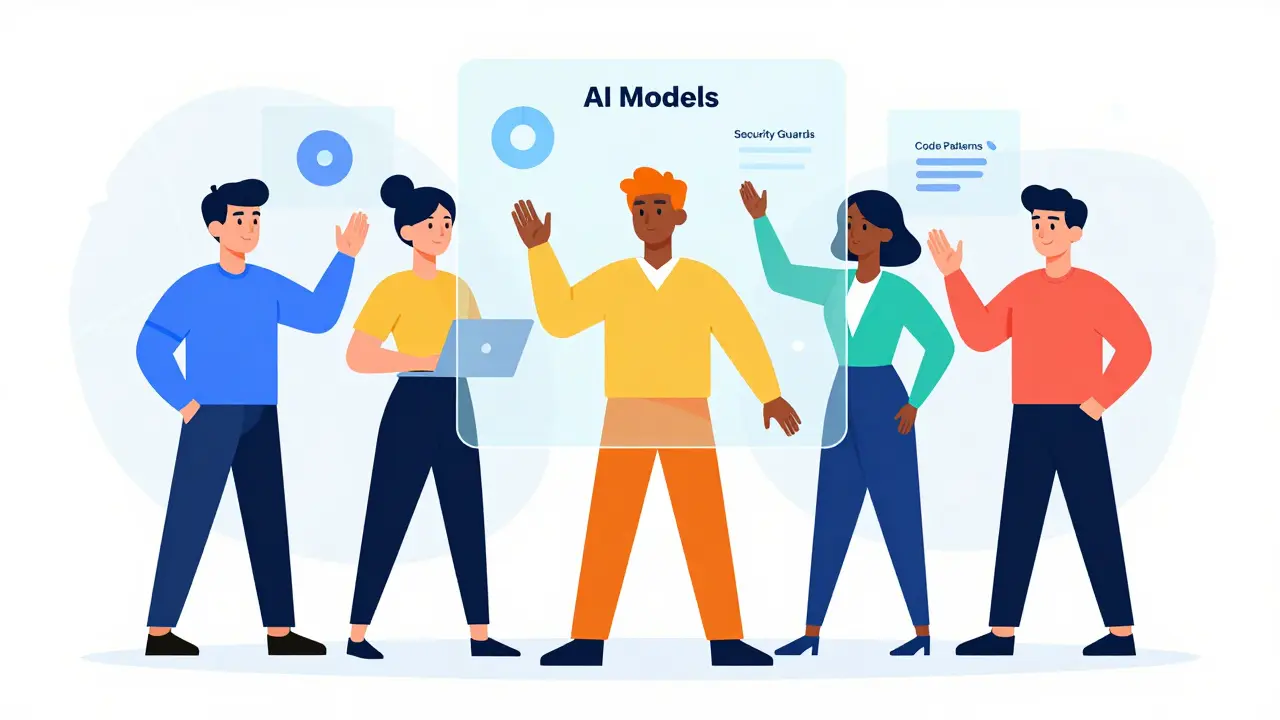
Many CoEs fail because they start with enforcement goals: "Make everyone follow our rules." This approach fails 83% of the time, according to Forrester research. Instead, your primary goal should be enablement: "Give everyone the tools to succeed easily."
Here are three concrete goals for your Vibe Coding CoE in its first year:
- Standardize the Toolchain: By month three, 89% of teams should be using the approved CI/CD pipelines integrated with AI validation. This means developers don’t have to choose between speed and safety-the system handles it for them.
- Create Reusable Assets: Develop a library of "golden patterns"-pre-validated code structures that AI can reliably generate. This reduces context switching and ensures that common functions (like authentication or data logging) are implemented consistently.
- Accelerate Onboarding: New hires should be productive within 10 days instead of six weeks. How? By providing them with pre-configured IDE setups, prompt templates, and clear guidelines on what the AI should and shouldn’t do.
These goals shift the narrative. You’re not slowing developers down with rules; you’re giving them superpowers.
The 5 P’s Framework: Structuring Your CoE
To keep your CoE organized, use the "5 P’s" framework adapted for AI-driven development:
| Component | Description | Actionable Step |
|---|---|---|
| Portfolio | The range of projects and technologies the CoE supports. | Audit current AI tool usage and consolidate vendors to reduce complexity. |
| People | The team members and stakeholders involved. | Identify "champions" in each dev team who advocate for CoE practices. |
| Process | The workflows for code generation, review, and deployment. | Implement automated AI-code reviews before human review begins. |
| Platform | The tools and infrastructure enabling vibe coding. | Deploy enterprise-grade LLMs with built-in data privacy controls. |
| Promotion | How you communicate value and gather feedback. | Host monthly "AI Hackathons" to showcase best practices and new features. |
This framework ensures you cover all bases. Too many CoEs focus only on Process and Platform, ignoring People and Promotion. Without buy-in from developers, even the best tools will sit unused.

Navigating Pitfalls: Avoiding the "Governance Trap"
Let’s be honest: developers hate bureaucracy. If your CoE becomes known as the department that says "no," you’ve failed. The biggest pitfall is excessive governance. A survey by Apex Hours found that 32% of developers cite "excessive governance" as their primary concern with CoEs.
How do you avoid this? Balance standardization with flexibility. Allow 20-30% customization within your standards framework. If a team has a legitimate reason to use a different AI model for a specific project, let them-but require them to document the risk and justify the deviation. This builds trust.
Another pitfall is unclear scope. If your CoE tries to solve every problem in the company, it will drown. Stick to your lane: AI-assisted development standards, security, and efficiency. Let other teams handle product management or HR issues.
Finally, don’t ignore feedback. Create channels for developers to complain, suggest improvements, and share successes. When a developer says, "This template saved me two hours," celebrate that win. When they say, "This rule broke my workflow," listen and adapt. Agility is key.
Measuring Success: ROI and Beyond
You need to prove the CoE’s worth to executive leadership. Cost savings are important, but so is innovation. Organizations reporting more than 15% cost savings from CoE initiatives are 5.3 times more likely to maintain funding during economic downturns. But don’t just look at the bottom line.
Track qualitative metrics too. Are developers happier? Is onboarding faster? Are there fewer late-night emergency patches? Stack Overflow’s 2024 Developer Survey showed that 68% of developers rated CoEs positively when they provided tangible tools and templates. Focus on providing value, and the metrics will follow.
As we move further into 2026, the trend is shifting toward "federated" CoE models. Instead of a central command-and-control structure, imagine a network of local CoE champions in each business unit, supported by a central hub for strategy and tooling. This hybrid approach combines scalability with local relevance, ensuring that your Vibe Coding CoE remains agile and effective in a rapidly changing AI landscape.
What is the difference between a traditional CoE and a Vibe Coding CoE?
A traditional CoE focuses on manual coding standards, legacy systems, and rigid processes. A Vibe Coding CoE specifically addresses the challenges of AI-assisted development, such as prompt engineering, AI model selection, data privacy in LLMs, and integrating AI-generated code into existing architectures. It emphasizes enablement and speed over strict enforcement.
How many people do I need to staff a Vibe Coding CoE?
For organizations with 100+ developers, a core team of 5-7 full-time equivalents is recommended. This includes technical leads, AI specialists, change managers, and security experts. Smaller teams may start with 2-3 part-time roles, scaling up as adoption grows.
What are the key metrics for measuring CoE success?
Key metrics include defect density (target <0.5 per KLOC), build success rates (>95%), deployment frequency, and onboarding time reduction. Qualitative metrics like developer satisfaction and adoption rates of CoE-provided tools are also crucial for long-term sustainability.
How do I prevent the CoE from becoming a bottleneck?
Push 70-80% of technical decisions to development teams. Focus the CoE on high-level architecture, security, and compliance. Provide easy-to-use tools and templates that integrate seamlessly into existing workflows, rather than requiring additional approval steps for every task.
Is a Vibe Coding CoE suitable for small startups?
Formal CoEs are most effective in organizations with 100+ developers. Startups may benefit from lightweight versions of CoE principles, such as shared prompt templates and basic security guidelines, but a dedicated full-time team is often unnecessary and costly until scale demands it.
- May, 2 2026
- Collin Pace
- 0
- Permalink
- Tags:
- vibe coding center of excellence
- CoE charter
- staffing strategy
- AI-assisted development
- coding standards governance
Written by Collin Pace
View all posts by: Collin Pace