Choosing Context Window Sizes to Control Total Cost of Ownership for LLMs
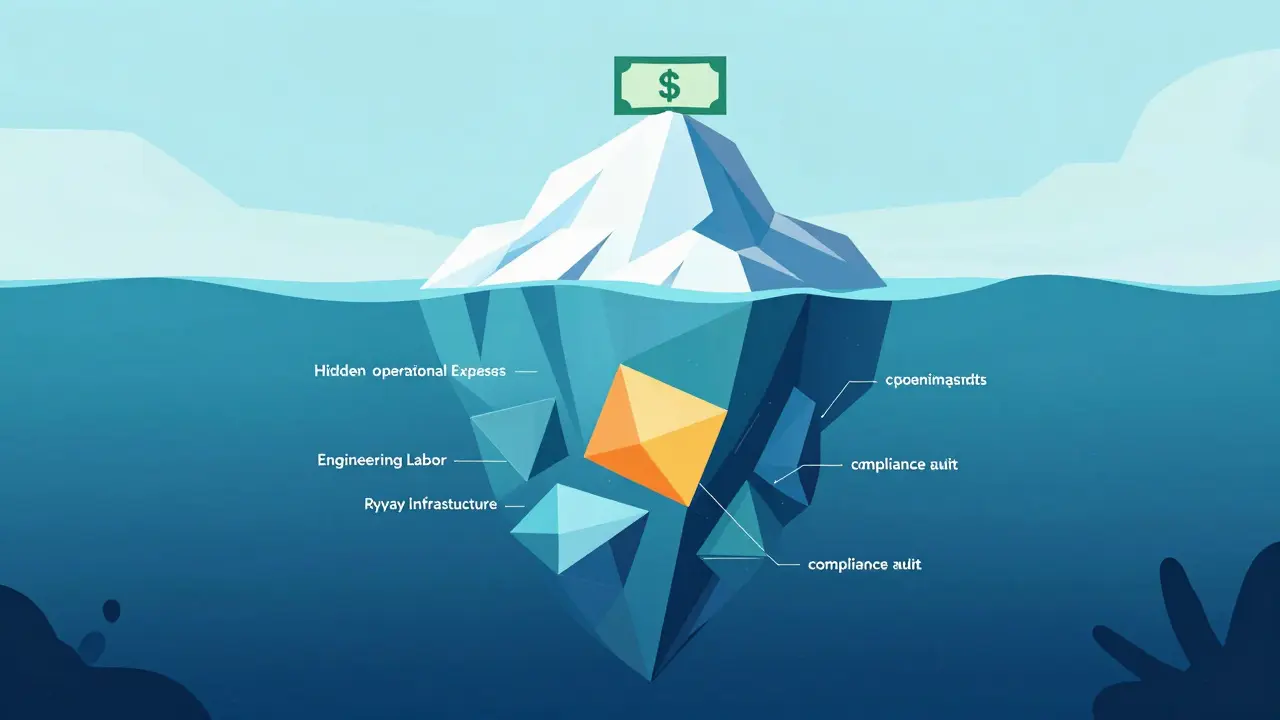
You might think you know how much your AI project costs until the bill arrives. Many organizations underestimate their true LLM expenses by 340 to 580 percent when they only look at API pricing. This happens because context window decisions drive both direct token costs and hidden operational expenses like retry infrastructure and latency optimization. If you are deploying Large Language Models in production, the size of the context window you choose is a critical lever for controlling your Total Cost of Ownership. It is not just about how much text the model can read; it is about how that capacity shapes your entire architecture and budget.
The Hidden Cost Trap in LLM Deployments
When you start planning an AI integration, you usually look at the price per token. That is the direct cost. However, direct costs only make up 35 to 45 percent of the total bill. The rest is hidden in plain sight. Indirect costs account for 30 to 40 percent of your budget. These include the engineering labor needed for integration, the ongoing work to optimize prompts, and the infrastructure required to monitor operations. Then there are the hidden costs, which comprise another 20 to 30 percent. These cover the retry systems you need when models fail, the strategies to stop hallucinations, and the compliance audits for regulated industries.
For a typical enterprise deployment processing 100,000 daily requests, monthly costs can range from $4,200 to $127,000. That is a 30-fold variance for the same volume of work. This massive range exists because context window selection acts as a primary lever controlling these cascading effects. If you pick a window that is too small, you force your system to work harder to fit information in. If you pick one that is too large, you pay for capacity you never use.
Model Landscape and Pricing in 2026
The market offers stark contrasts in context-cost tradeoffs as of March 2026. You need to know the specific numbers to make a smart choice. OpenAI's GPT-4o offers a 128K token context window. It costs $2.50 per 1 million input tokens and $10.00 per 1 million output tokens. This positions it as a premium option for complex reasoning tasks. The same provider's GPT-4o-mini variant reduces input costs to $0.15 per 1 million tokens and output costs to $0.60 per 1 million tokens. It maintains the identical 128K context window, making it economically viable for high-volume workloads.
Anthropic's Claude 3.5 Sonnet provides 200K context capacity at $3.00 input and $15.00 output per 1 million tokens. This offers 56 percent larger context than GPT-4o at a 20 percent cost premium for inputs. Claude 3.5 Haiku delivers the same 200K context window at dramatically reduced pricing of $0.25 input and $1.25 output per 1 million tokens. This represents a 40 percent cost reduction compared to GPT-4o-mini on input tokens. Google's Gemini 1.5 Pro provides the most expansive context at 2 million tokens for $1.25 input and $5.00 output per million tokens. Gemini 1.5 Flash emerges as the most cost-efficient option for large context work at $0.075 per 1 million input tokens with 1 million token context capacity.
| Model | Context Window | Input Cost (per 1M tokens) | Output Cost (per 1M tokens) |
|---|---|---|---|
| GPT-4o | 128K | $2.50 | $10.00 |
| GPT-4o-mini | 128K | $0.15 | $0.60 |
| Claude 3.5 Sonnet | 200K | $3.00 | $15.00 |
| Claude 3.5 Haiku | 200K | $0.25 | $1.25 |
| Gemini 1.5 Pro | 2M | $1.25 | $5.00 |
| Gemini 1.5 Flash | 1M | $0.075 | $0.30 |
The Non-Linear Cost Curve
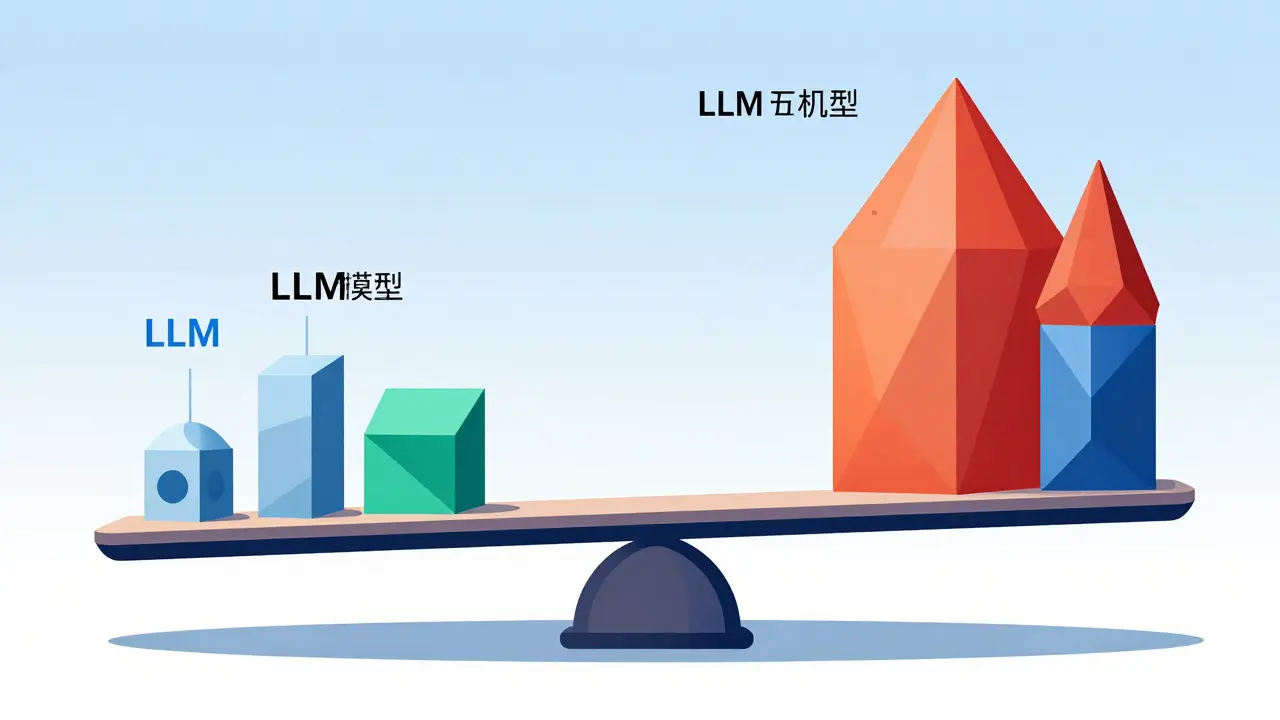
Context window size influences cost through non-linear mechanisms that extend beyond simple per-token pricing. Larger context windows increase compute cost and latency per request. This limits how often you can deploy them in production without degrading user experience. Conversely, smaller context windows force architectural adaptations. You might need Retrieval-Augmented Generation systems requiring separate embeddings infrastructure and vector database maintenance. These architectural requirements generate invisible cost multipliers.
RAG systems require continuous optimization investment in context management. They also need additional engineering labor for retrieval pipeline tuning and infrastructure overhead for vector storage. This overhead may exceed the cost savings from selecting cheaper, smaller-context models. The optimal context window size emerges through balancing three variables. First, look at the natural length of inputs your application receives. Second, check the latency tolerance of your use case. Third, calculate the cost impact of architectural complexity alternatives to fitting information into a given window.
Categorizing Workloads for Selection
Practical selection frameworks begin with categorizing workloads by request volume and complexity profiles. For deployments under 100,000 daily requests with typical prompt-plus-response lengths of 100 to 400 tokens, industry guidance recommends initiating with GPT-4o-mini. This establishes baseline quality metrics and measures quality gaps before committing to expensive options. Deployments between 100,000 and 1 million daily requests benefit from mixed-model routing strategies. In this approach, GPT-4o-mini handles 80 percent of straightforward requests while reserving GPT-4o for the 20 percent of queries requiring superior reasoning capabilities.
Organizations exceeding 1 million daily requests should evaluate fine-tuning smaller open-source models or implementing response caching for frequent queries. The per-token margin economics of hosted GPT-4o rapidly erode profitability at enterprise scales. Annual API spend provides another calibration point. Below $50,000 in projected annual spending, GPT-4o-mini's small 128K context proves adequate for most workloads. Between $50,000 and $500,000 annual spend, mixed deployments combining GPT-4o-mini for 80 percent of traffic with self-hosted 7-billion parameter models for specialized tasks offer optimal cost-effectiveness. Above $500,000 annual spend, a well-utilized GPU cluster with LoRA fine-tuning almost always produces lower total costs than continuing with hosted API consumption.
Optimization Tactics for Cost Reduction
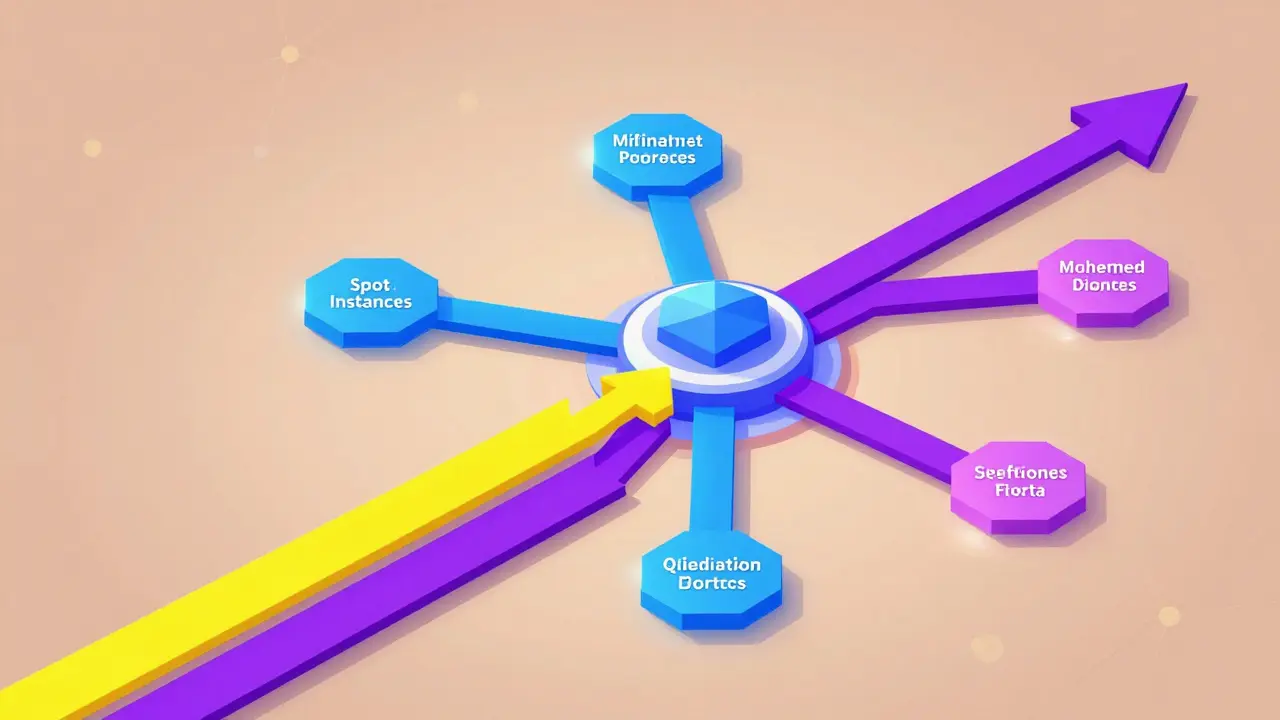
Cost reduction techniques for context-intensive workloads include multiple non-mutually-exclusive approaches. Quantizing models to 4-bit precision reduces GPU memory requirements and power consumption by approximately 30 percent without visible quality degradation. This directly reduces compute infrastructure costs. Utilizing spot or preemptible GPU instances provides identical compute capacity at 40 to 70 percent lower hourly rates compared to on-demand pricing. You can fallback to on-demand instances to maintain reliability guarantees.
Fine-tuning large models on domain-specific data reduces the number of clarifying tokens required in prompts. This decreases input token consumption for routine tasks while maintaining quality through customized model behavior. Infrastructure case studies from fintech applications demonstrate practical impact. Quantizing a 7-billion parameter model and migrating to spot instances cut run costs by 62 percent quarter-over-quarter according to documented implementation results. Context window management itself requires continuous optimization investment as models and use patterns evolve. Organizations that regularly re-evaluate cluster sizing prevent old hardware and overprovisioned GPU clusters from quietly draining budgets through underutilization.
Future Dynamics and Strategic Planning
Future cost dynamics will likely reshape context window optimization strategies as the AI infrastructure market matures. Emerging smaller, more efficient models with specialized capabilities may enable more granular workload routing. This increases optimization opportunities beyond current binary choices. Continued improvements in quantization and distillation techniques will lower the cost barrier for self-hosted deployments. This accelerates migration from hosted APIs to private infrastructure for organizations exceeding $500,000 annual API spend.
Standardization of context window sizes around key breakpoints like 32K, 128K, 200K, and 1M tokens across providers suggests that competitive pricing pressure will gradually compress cost differentials. This shifts optimization focus from model selection to architectural efficiency improvements in prompt engineering and retrieval systems. The regulatory and compliance landscape continues expanding, increasing the hidden cost component of enterprise deployments. This is particularly true in healthcare and financial services where audit trails and data residency requirements force either accepting higher per-token costs for compliant commercial models or investing significantly in self-hosted infrastructure.
How much do organizations typically underestimate LLM costs?
Organizations consistently underestimate their true LLM costs by 340 to 580 percent when using naive API-only projections. This is because context window decisions drive both direct token costs and hidden operational expenses including retry infrastructure and latency optimization overhead.
What are the three tiers of Total Cost of Ownership?
The three tiers are Direct costs (35-45%) which include API calls and compute, Indirect costs (30-40%) which include engineering labor and monitoring, and Hidden costs (20-30%) which include retry infrastructure and compliance overhead.
Which model is best for high-volume, low-complexity tasks?
GPT-4o-mini is recommended for high-volume, moderately complex workloads due to its low input cost of $0.15 per 1 million tokens while maintaining a 128K context window.
When should I consider self-hosting instead of APIs?
You should evaluate self-hosting with a GPU cluster and LoRA fine-tuning if your annual API spend exceeds $500,000. At this scale, the per-token margin economics of hosted APIs erode profitability.
How does quantization affect costs?
Quantizing models to 4-bit precision reduces GPU memory requirements and power consumption by approximately 30 percent without visible quality degradation, directly reducing compute infrastructure costs.
What is the benefit of mixed-model routing?
Mixed-model routing allows you to handle 80 percent of straightforward requests with cheaper models like GPT-4o-mini while reserving premium models for the 20 percent of queries requiring superior reasoning, reducing overall costs.
Why are larger context windows not always better?
Larger context windows increase per-request compute costs and latency. Selecting the largest available window often wastes resources on unused context capacity without delivering proportional quality improvements for typical requests.
How do hidden costs impact the budget?
Hidden costs comprise 20 to 30 percent of TCO and include retry infrastructure necessitated by model unreliability, hallucination mitigation strategies, and compliance audit infrastructure for regulated industries.
What is the cost advantage of spot instances?
Utilizing spot or preemptible GPU instances provides identical compute capacity at 40 to 70 percent lower hourly rates compared to on-demand pricing, significantly lowering infrastructure spend.
Does RAG save money on context windows?
RAG systems can save on token costs but generate invisible cost multipliers through continuous optimization investment, additional engineering labor, and infrastructure overhead for vector storage that may exceed savings.
Choosing the right context window is a balancing act. It requires detailed analysis of actual input length distributions across your workload. If 95 percent of requests fit within 32K tokens but 5 percent require 200K tokens, selecting a model with 200K context for all requests represents suboptimal economics. A segmented routing approach enabled through intelligent API orchestration layers typically reduces costs 20 to 40 percent compared to defaulting to the largest available context for all requests. You must treat this as an ongoing optimization rather than a one-time setup decision.
- Mar, 25 2026
- Collin Pace
- 9
- Permalink
Written by Collin Pace
View all posts by: Collin Pace