Context-Aware Translation with LLMs: A Practical Guide for Localization Teams
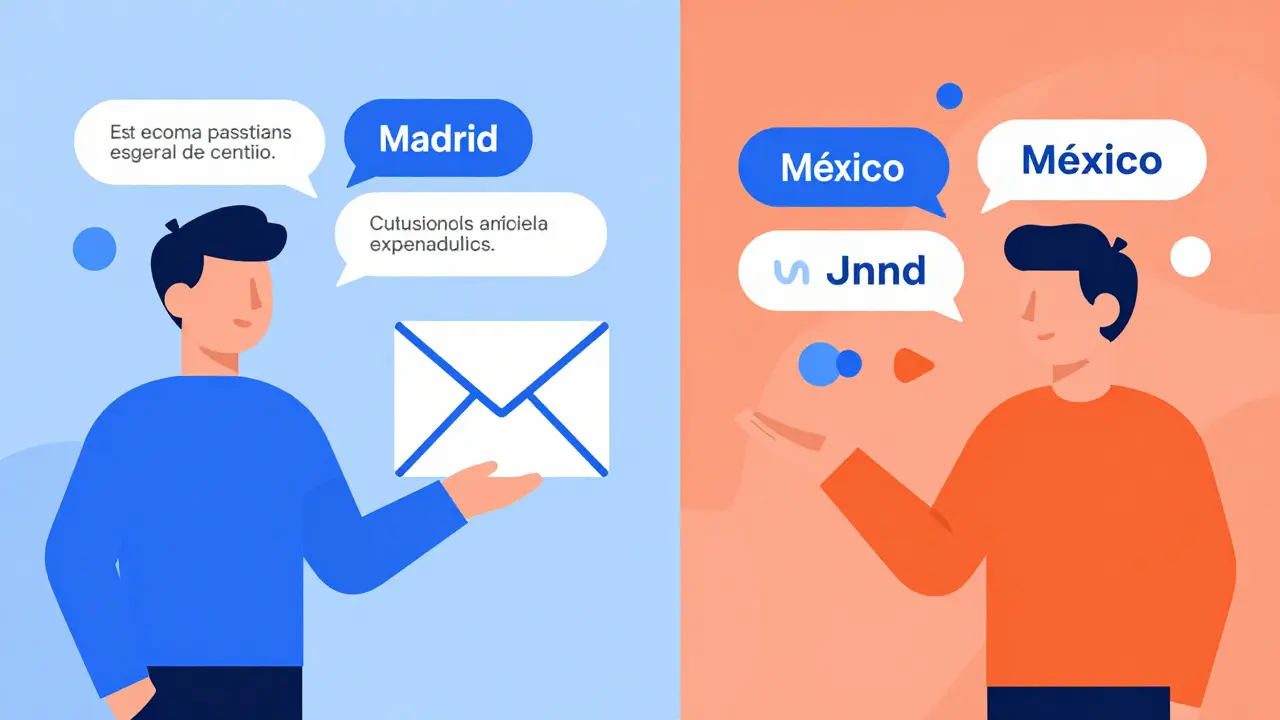
Imagine sending a marketing email to your Spanish-speaking audience in Madrid. You want to sound friendly but professional. Now imagine that same email landing in the inbox of a customer in Mexico City. If you use a basic translation tool, they might get the exact same words. But if you use a context-aware system powered by Large Language Models (LLMs), the tone, idioms, and even the word choices shift to match local expectations. This isn't science fiction; it's the current reality of localization in 2026.
For years, businesses relied on Neural Machine Translation (NMT) systems like Google Translate or DeepL. These tools were fast and decent at literal translation. However, they often missed the forest for the trees. They struggled with cultural nuance, brand voice, and domain-specific terminology. Enter LLMs. Unlike traditional engines that predict the next word based on statistical probability alone, LLMs understand semantic relationships and contextual cues. They don't just translate words; they interpret intent.
How LLMs Change the Game for Localization
To understand why LLMs are disrupting the industry, we need to look at how they differ from their predecessors. Traditional NMT systems, which became dominant around 2016, process language in isolated segments. An LLM, built on transformer architectures trained on massive multilingual datasets, processes language holistically. It considers the entire document structure, previous sentences, and even external knowledge bases when generating output.
This holistic approach brings two major benefits:
- Cultural Adaptation: LLMs can distinguish between regional variations. For example, Smartling’s 2024 research showed that an LLM correctly translated the word "car" as "coche" for audiences in Spain and "auto" for Latin American audiences with 92% accuracy. Traditional MT systems only achieved 41% accuracy in these specific contexts.
- Domain Specificity: When fine-tuned with medical or legal terminology databases, LLMs improve industry-specific accuracy by up to 42%, according to BureauWorks' 2023 research. They learn not just what a word means, but how it is used in a specific professional setting.
However, this power comes with a cost. LLMs require significantly more computational resources. While a standard NMT system might process 10,000 words in 15 seconds, a comparable LLM task can take 45 to 60 seconds. The trade-off is speed versus quality. For high-volume, low-stakes content like product descriptions, NMT might still win. For high-value, nuanced content like user manuals or marketing campaigns, LLMs are becoming the standard.
The Role of Retrieval Augmented Generation (RAG)
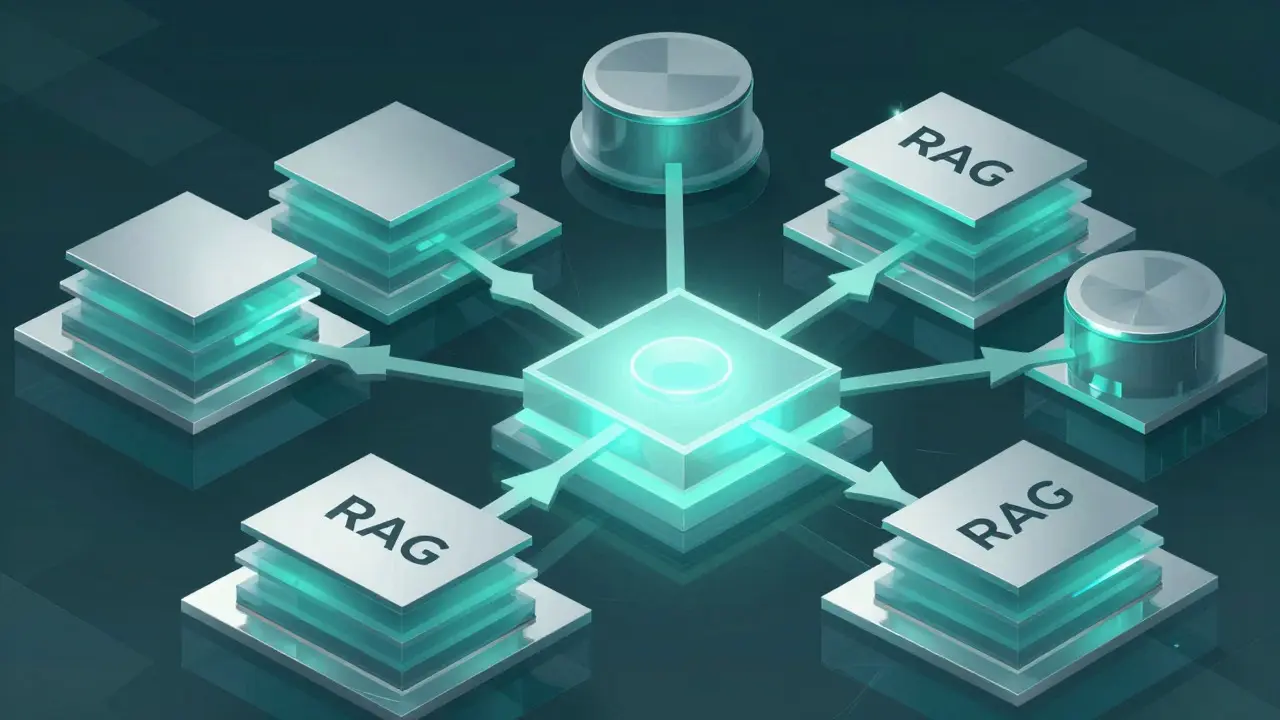
One of the biggest criticisms of early LLM adoption was hallucination-making up facts or terms. To solve this, localization teams are increasingly using Retrieval Augmented Generation (RAG). Think of RAG as giving the LLM a cheat sheet before it starts translating.
Here is how it works in practice:
- You store your company’s approved glossaries, style guides, and past translations in a vector database.
- When the LLM receives a new text to translate, it first searches this database for relevant context.
- The model then generates the translation using both its internal training data and the retrieved specific information.
AWS’s 2024 evaluation framework found that integrating RAG with LLMs can boost BLEU scores (a metric for translation quality) by up to 20 percentage points compared to standard NMT. This ensures that your brand voice remains consistent across thousands of documents. Without RAG, an LLM might translate a technical term differently every time it appears. With RAG, it sticks to your approved terminology.
High-Resource vs. Low-Resource Languages
Not all languages are created equal in the world of AI. The quality of an LLM’s translation depends heavily on the amount of training data available for that language pair. We categorize these into high-resource and low-resource languages.
| Feature | High-Resource Languages (e.g., English, Spanish, Chinese) | Low-Resource Languages (e.g., Swahili, Bengali) |
|---|---|---|
| Training Data Availability | Extensive corpora available | Limited or fragmented data |
| Translation Quality | Near-human fluency and accuracy | Significant drop in quality (55-68% reduction) |
| Cultural Nuance Handling | High accuracy in idioms and slang | Frequent misinterpretations |
| Recommended Use Case | Marketing, UI, Customer Support | Drafting only, requires heavy human post-editing |
If you are expanding into markets with low-resource languages, proceed with caution. Microsoft’s data indicates that quality drops sharply for languages with minimal training data. In these cases, a hybrid approach-using an LLM for drafting followed by rigorous human review-is essential. Don’t assume the AI understands a culture just because it speaks the language.
Implementation Challenges and Human Oversight
Adopting LLMs for localization isn't just about buying software. It requires a shift in workflow and skill sets. According to a 2024 survey by Lokalise, successful implementations require prompt engineering expertise, domain-specific knowledge, and robust translation memory management.
Common pitfalls include:
- Inconsistent Terminology: 67% of users reported issues where the LLM failed to stick to approved terms without strict RAG integration.
- Cultural Misinterpretations: 42% of users noted instances where the AI missed regional idioms or formal/informal register distinctions.
- Brand Voice Drift: Maintaining a unique brand personality across different languages is difficult. 58% of users struggled with this initially.
Human oversight remains critical. MIT researchers cited in LocalizeJS’s 2024 analysis emphasize that while LLMs generate fluent text, they still require human checks for mission-critical content. Professional translator Maria Chen shared on Reddit that Claude 3.5 cut her post-editing time by 60% for marketing content, but she still caught 3-5 critical errors per 1,000 words in technical manuals. In regulated industries like healthcare, the stakes are higher. One medical translation manager reported dangerous inaccuracies in dosage instructions when using an unconfigured LLM. Always verify critical information.
Choosing the Right Tools and Models
The market for LLM-powered translation is growing rapidly, projected to reach $8.7 billion by 2027. Several platforms have emerged as leaders. Lokalise’s 2024 comparison positioned Claude Sonnet 3.5 as a top performer for contextually challenging passages, outperforming Google Translate and DeepL in Polish, German, and Russian tests. GPT-4 and Gemini 1.5 Pro also remain strong contenders, especially for enterprises already integrated into Microsoft or Google ecosystems.
When selecting a provider, consider these factors:
- Integration Capabilities: Does the tool integrate with your existing CMS or translation management system (TMS)?
- RAG Support: Can you easily upload custom glossaries and style guides?
- Data Privacy: Is your sensitive customer data safe? Check compliance with GDPR and the EU AI Act, which mandates human oversight for critical translations.
- Cost Structure: LLMs are more expensive than NMT. Calculate the cost per word and factor in the reduced post-editing time.
Enterprise adoption is fastest in technology (78%) and e-commerce (63%), according to Gartner’s October 2024 report. Highly regulated industries like healthcare are slower to adopt due to accuracy concerns, preferring hybrid models that combine LLM speed with human precision.
Future Trends in Context-Aware Translation
We are moving toward increasingly sophisticated context handling. Current commercial implementations typically limit context windows to around 4,000 tokens. Future developments aim to maintain context across entire documents, regardless of length. Researchers at KU Leuven are exploring techniques to guide LLMs with explicit translation strategies, potentially improving accuracy further.
Gartner predicts that by 2027, 80% of enterprise translation workflows will incorporate LLMs for context-aware outputs. The key takeaway for today is not to replace your translators entirely, but to augment them. Equip your team with LLM tools, invest in prompt engineering training, and build robust RAG systems. The future of localization is collaborative, combining the speed of AI with the cultural intelligence of humans.
What is the difference between NMT and LLM translation?
Neural Machine Translation (NMT) uses statistical patterns to translate sentence by sentence, often missing broader context. Large Language Models (LLMs) analyze semantic relationships and cultural nuances across larger texts, resulting in more natural and context-aware translations. LLMs are generally slower and more computationally expensive but offer higher quality for complex content.
Is LLM translation accurate enough for legal or medical documents?
LLMs show promise but are not yet fully reliable for mission-critical legal or medical documents without human oversight. Studies show a 22% decrease in accuracy for highly technical engineering documentation compared to specialized NMT systems unless fine-tuned. Always use a hybrid approach with expert human post-editing for regulated industries to avoid costly errors.
How does Retrieval Augmented Generation (RAG) improve translation?
RAG enhances LLM translation by providing external context, such as company glossaries and style guides, during the generation process. This reduces hallucinations and ensures consistent terminology. AWS benchmarks indicate that RAG integration can improve BLEU scores by up to 20 percentage points compared to using an LLM alone.
Which LLM is best for translation in 2026?
There is no single "best" model, as performance varies by language pair. Lokalise’s 2024 study highlighted Claude Sonnet 3.5 for superior context handling in European languages. GPT-4 and Gemini 1.5 Pro are also top contenders. The choice should depend on your specific language needs, integration requirements, and budget.
Do I need to hire new staff to implement LLM translation?
You may not need new hires, but you will need training. Localization teams typically require 3-5 weeks of training to master prompt engineering and RAG configuration. Key skills include understanding how to structure prompts for context and managing translation memories within vector databases.
- Jul, 25 2026
- Collin Pace
- 0
- Permalink
- Tags:
- LLM translation
- context-aware localization
- neural machine translation
- RAG translation
- AI localization tools
Written by Collin Pace
View all posts by: Collin Pace