Copyright Risks in Multimodal Generative AI: Images, Music, and Video
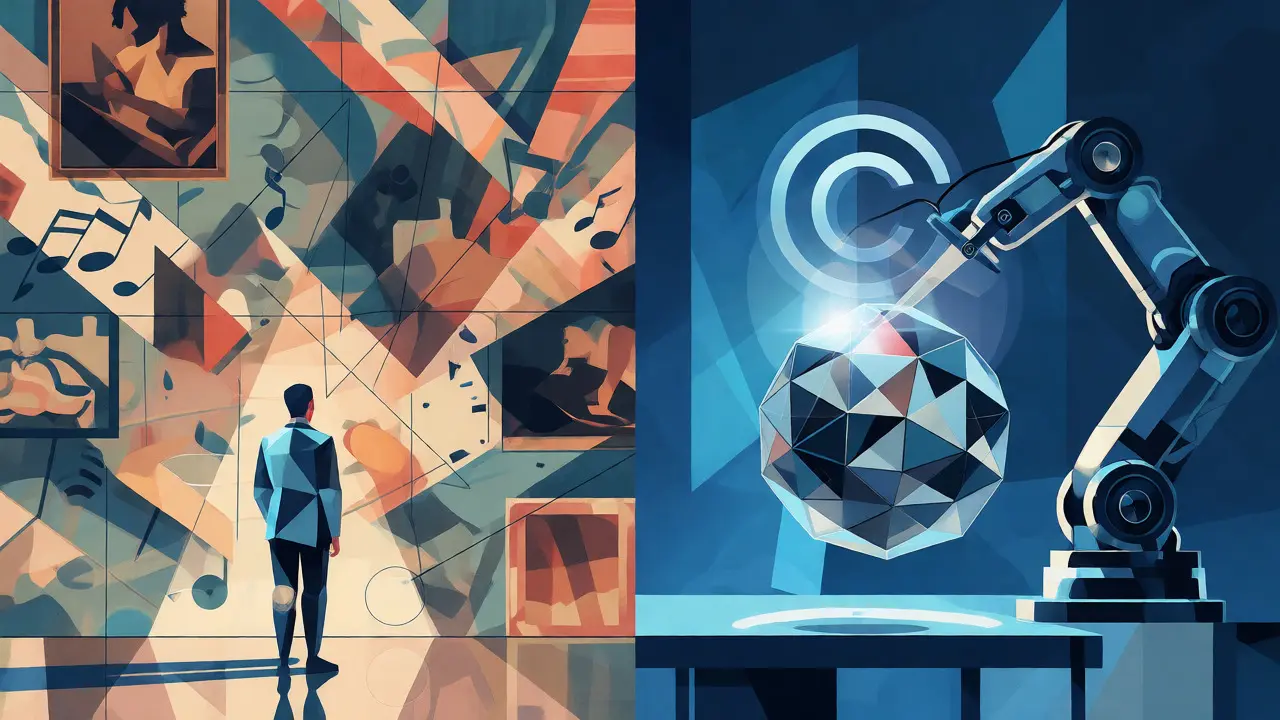
You just spent three hours tweaking prompts to get the perfect background track for your YouTube channel. It sounds exactly like a hit song, but you know it’s synthetic. You upload it, and two weeks later, a cease-and-desist letter lands in your inbox. Or maybe worse: you try to register that track as your own intellectual property, and the Copyright Office rejects it because a human didn’t write it. This isn’t a hypothetical scenario from a sci-fi movie; it is the current reality for creators using Multimodal Generative AI in 2026.
The promise of tools that can generate images, music, and video clips on demand has collided head-on with copyright laws designed for human authors. The result is a legal minefield where ownership is unclear, liability is shared, and protection is often non-existent. If you are using platforms like Suno, Udio, Midjourney, or Stable Diffusion, you need to understand exactly where you stand legally before you commercialize your output.
The Core Paradox: Training vs. Output
To understand the risk, you have to look at how these models work. They don’t create from nothing. They learn patterns from massive datasets scraped from the internet-datasets filled with copyrighted songs, paintings, and films. This creates a fundamental paradox that lawyers and technologists are still fighting over.
On one side, there is the training data problem. Did the AI company infringe on copyrights by using protected works to train their model without permission? On the other side, there is the output problem. Does the generated content itself infringe on existing copyrights because it resembles something in the training set?
In the United States, the stance on outputs is surprisingly strict. In January 2025, the U.S. Copyright Office issued definitive guidance stating that 100% AI-generated content cannot be copyrighted. Why? Because copyright requires human authorship. If you type a prompt and the machine does the rest, you aren’t the author. This means your cool AI-generated logo might fall into the public domain instantly. Anyone can copy it, use it, or sell it, and you have no legal recourse.
Music Generation: A High-Stakes Gamble
Music generation tools like Suno and Udio offer incredible convenience, but they carry significant legal baggage. Unlike text or code, music involves complex layers of rights: the composition (lyrics and melody) and the sound recording (the actual audio file).
Here is the harsh truth: if you generate a track in Suno, you likely do not own the copyright to it under U.S. law. Suno’s own terms of service admit this, stating they make no representation that copyright will vest in any output. This leaves you in a precarious position. If a competitor hears your AI-generated jingle and likes it, they can legally use the exact same audio file. You paid for the subscription; they got the asset for free.
| Media Type | U.S. Copyright Eligibility | Primary Risk Factor | Owner of Output |
|---|---|---|---|
| Images | Low (unless heavily edited) | Style mimicry of living artists | Public Domain / User (varies) |
| Music | None (for pure AI output) | Training data similarity | No One / Platform Terms |
| Video Clips | Very Low | Multiple overlapping rights | Unclear / Complex |
The risk goes deeper than just losing ownership. Because these models were trained on copyrighted hits, there is a constant threat that an AI-generated melody might accidentally replicate a protected hook. Rights holders are increasingly suing AI companies for this. As a user, you inherit this risk. If your AI track sounds too much like a Taylor Swift song, you could face infringement claims, even though you didn’t write the melody yourself.
Visual Arts: The "In The Style Of" Problem
Image generators like Midjourney and Stable Diffusion changed the game for visual assets. But they also disrupted the economic model for artists. Before AI, if you wanted an illustration "in the style of" a famous concept artist, you had to pay them. Now, you can generate hundreds of variations in seconds.
This has led to specific legal complaints. Artists argue that using their name as a prompt (e.g., "by Greg Rutkowski") misleads consumers and dilutes their brand. More importantly, the economic harm is real. Commissions dry up when clients realize they can get similar results via AI. While the U.S. Copyright Office denied registration for images created solely by Midjourney in the *Zarya of the Dawn* case, they did allow copyright for the text and arrangement. This highlights a key strategy: hybrid creation.
If you take an AI-generated image and significantly edit it in Photoshop-adding hand-drawn elements, changing composition, or combining multiple sources-you may regain some copyright protection. The more human creative control you exert, the stronger your claim to ownership.
Video Clips: The Multi-Layered Liability Trap
Video generation is arguably the most complex area because it combines everything else. A single video clip contains moving images, background music, voiceovers, and potentially performance rights. When you use an AI tool to generate a short video clip, you are navigating a web of overlapping copyrights.
Consider the components:
- Cinematography: The visual sequence itself.
- Soundtrack: Any music embedded in the video.
- Voice: If the AI uses a cloned voice, you face right-of-publicity issues.
- Likeness: If the video features a recognizable face, you need release forms.
If any single component infringes on a copyright, the whole video becomes risky. For example, if an AI video generator uses a snippet of a copyrighted song in its training data and reproduces it in your output, you are liable for music infringement. If it generates a face that looks suspiciously like a celebrity, you might face a personality rights lawsuit. Unlike static images, video doesn’t give you the luxury of fixing one element easily. You often have to regenerate the entire clip, which is time-consuming and costly.
Global Differences: U.S. vs. UK Law
It is crucial to remember that copyright is territorial. What is true in Madison, Wisconsin, might not be true in London.
In the United Kingdom, Section 178 of the Copyright, Designs and Patents Act 1988 offers a different perspective. It allows for copyright protection of computer-generated works in circumstances where there is no human author. However, this protection is limited. It typically applies to sound recordings regardless of originality, but compositions and lyrics still require human creativity to be protected. This distinction matters for musicians. If you use an AI tool to create a backing track (sound recording), you might have stronger rights in the UK than in the US. But if you rely on it for the melody (composition), you are back in the same uncertain territory.
For businesses operating globally, this fragmentation is a nightmare. You cannot assume a license granted in one country protects you in another. Always check the local laws where your content will be distributed.
The Threat of Bad-Faith Registration
A new and insidious risk is emerging: bad-faith copyright registration. Some creators are lying to the Copyright Office, claiming AI-generated works are entirely human-made. Legal experts warn that this corrupts the database. If thousands of registrations list AI art as human art, it becomes impossible to verify who actually owns what.
This affects you directly. If you try to clear a sample or an image for use, you might find a copyright registered against it by someone who didn’t actually create it. Litigation becomes harder to resolve because the registry is unreliable. As a responsible creator, you must document your process. Keep screenshots of your prompts, timestamps, and editing steps. If challenged, you need proof of how the work was made.
Practical Strategies for Risk Mitigation
So, how do you use multimodal AI without getting sued? Here are concrete steps you can take today.
- Document Everything: Save every prompt, seed number, and iteration. Proof of human involvement is your best defense against claims of zero-authorship.
- Avoid Artist Names in Prompts: Instead of saying "in the style of Van Gogh," describe the technique: "impasto brushstrokes, swirling skies, post-impressionist color palette." This reduces style-mimicry lawsuits.
- Review Platform Terms: Read the fine print. Some platforms grant you full commercial rights to the output, while others retain ownership. Know what you are buying.
- Add Human Value: Don’t publish raw AI output. Edit images, mix audio manually, or add voiceover. Transforming the work strengthens your copyright claim.
- Use Licensed Data Models: Look for AI tools that train exclusively on licensed or public domain data. These are safer, though often less creative.
The landscape is shifting rapidly. Lawsuits against major AI firms are ongoing, and new regulations may emerge in 2026 and beyond. Until then, treat AI-generated content as a powerful tool, not a guaranteed asset. The technology is ahead of the law, and you are operating in the gap between them.
Can I copyright a song generated by AI in the USA?
Generally, no. Under current U.S. Copyright Office guidance, purely AI-generated music lacks human authorship and therefore cannot be copyrighted. However, if you add significant human-composed lyrics or melodies, those specific human-created elements may be protectable.
Who owns the copyright to AI-generated images?
Ownership depends on the platform's terms of service and the level of human input. In many cases, if the image is 100% AI-generated, it falls into the public domain in the U.S. If you substantially modify the image, you may hold copyright over your modifications, but not the underlying AI-generated base.
Is it safe to use AI voices in my videos?
Not always. Using a voice that closely mimics a specific celebrity or actor can lead to right-of-publicity lawsuits, even if the voice is synthetic. Always ensure you have the necessary releases or use generic AI voices that do not impersonate identifiable individuals.
What is the biggest risk with AI training data?
The biggest risk is indirect infringement. Since AI models are trained on copyrighted material, the outputs may inadvertently resemble protected works. Users of these tools can face infringement claims if their generated content is too similar to existing copyrighted songs or images.
How does UK copyright law differ from US law regarding AI?
UK law (CDPA 1988) provides some protection for computer-generated works where there is no human author, particularly for sound recordings. US law generally requires human authorship for copyright protection, making it stricter for AI outputs.
- Sep, 20 2026
- Collin Pace
- 0
- Permalink
- Tags:
- multimodal ai copyright
- generative ai legal risks
- ai music copyright
- ai image infringement
- video clip licensing
Written by Collin Pace
View all posts by: Collin Pace