Cost-Aware Scheduling for Large Language Model Workloads: A Practical Guide

Running large language models (LLMs) in production is expensive. You are paying for high-end GPUs every second they sit idle or churn through inefficient requests. If you are managing LLM workloads today, you likely face a frustrating trade-off: meet strict service-level objectives (SLOs) and watch your cloud bill skyrocket, or cut costs and risk missing latency targets that upset users. This tension defines the core challenge of modern AI infrastructure.
The solution isn't just buying more hardware; it is smarter scheduling. Cost-aware scheduling for large language model workloads represents a shift from simple request handling to intelligent resource allocation. It combines distributed systems theory with machine learning operations to ensure every token generated delivers maximum value for minimum cost. By July 2026, this has moved from academic curiosity to a critical component of any serious LLM deployment strategy.
The Problem with Traditional Scheduling
Most teams start with basic scheduling strategies like Round Robin (RR) or First-Come-First-Served (FCFS). These methods treat all requests as equal. In reality, LLM requests are wildly heterogeneous. One user might ask a short factual question requiring minimal compute, while another triggers a complex code-generation task with long context windows and extensive tool use.
When you apply generic scheduling to these diverse workloads, two major issues emerge:
- Cold Start Latency: In serverless environments, spinning up a new instance for a sudden spike in traffic introduces significant delay. Traditional schedulers don't anticipate these spikes effectively.
- GPU Memory Fragmentation: Different models and sequence lengths require varying amounts of memory. Poor packing leads to wasted VRAM, forcing you to over-provision hardware to maintain performance.
Furthermore, prior research often overlooked tool execution costs. An LLM might generate a plan that uses five different external APIs. If the scheduler doesn't account for the cost of those API calls, the "efficient" plan becomes financially disastrous. The execution costs can easily outweigh the performance benefits of the task itself.
How Cost-Aware Scheduling Works
Cost-aware scheduling systems optimize two variables simultaneously: SLO compliance and operational cost. They do this by predicting request characteristics before execution and assigning them to the most appropriate resources.
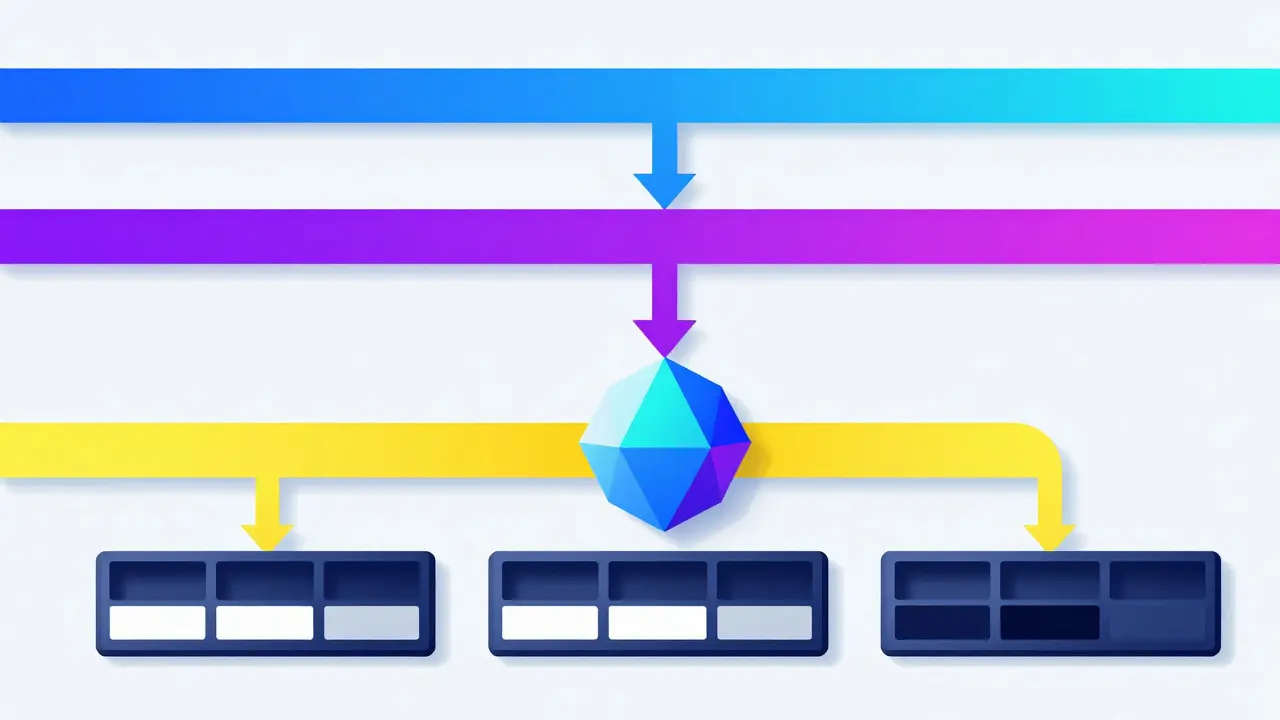
Consider the workflow of an advanced SLO-aware scheduler:
- Prediction Phase: The system estimates the latency required for each incoming request based on input length, expected output length, and current system load.
- Priority Mapping: Requests are ranked not just by arrival time, but by their specific SLO requirements. A real-time chat query gets higher priority than a batch report generation.
- Resource Allocation: Using algorithms like simulated annealing, the scheduler assigns requests to specific GPU instances. This minimizes fragmentation and maximizes throughput.
- Execution: Requests are enqueued and processed. The system continuously monitors tail latency to adjust future decisions.
This approach ensures that high-priority requests meet their deadlines while lower-priority tasks fill in the gaps, keeping utilization high without compromising quality.
Key Frameworks and Technologies
Several frameworks have emerged to tackle these challenges. Understanding their strengths helps you choose the right tool for your infrastructure.
| Framework | Core Approach | Best Use Case | Key Metric Improvement |
|---|---|---|---|
| DeepServe++ | Contextual Bandit Algorithm | Serverless, Multi-Tenant Environments | Optimizes joint SLO-cost in elastic settings |
| SLO-Aware Scheduler | Simulated Annealing | High-Precision Latency Requirements | 5x better SLO attainment, 31.6% lower latency |
| CATP-LLM | Offline Reinforcement Learning (CAORL) | Tool-Heavy Applications (Agents) | 24.7%-45.8% lower costs vs GPT-4 |
| PPO-Based Multi-Cloud | Proximal Policy Optimization | Distributed Multi-Cloud Deployments | Dynamic SLA fulfillment and CPU cost reduction |
DeepServe++ for Elastic Environments
DeepServe++ addresses the unique difficulties of serverless, multi-tenant deployments. It formulates the scheduling problem as a contextual bandit issue. This means it learns from past interactions to make better decisions in real-time. It explicitly handles cold starts and inter-tenant resource contention. If you are running multiple clients on shared infrastructure, DeepServe++ prevents one noisy neighbor from degrading everyone else's experience while keeping costs down.
CATP-LLM for Agent Workflows
For applications where LLMs act as agents using external tools, CATP-LLM (Cost-Aware Tool Planning with LLMs) is revolutionary. It uses a specialized planning language to generate non-sequential plans. Instead of calling tools one by one, it identifies parallel execution paths. The underlying CAORL algorithm fine-tunes the model to balance performance against the financial cost of each tool call. Even when using smaller backbone models like Llama2-7B, CATP-LLM outperforms larger models like GPT-4 in cost-efficiency metrics.
Measuring Success: Metrics That Matter
To evaluate if your scheduling strategy is working, you need to track specific metrics beyond simple uptime.
- SLO Attainment Rate: The percentage of requests that meet their defined latency targets. Advanced schedulers aim for near 100% attainment even under load.
- Average Latency Reduction: Measured in milliseconds. A 31.6% reduction, as seen in recent benchmarks, translates directly to better user experience and lower compute time per request.
- Scheduling Overhead: The computational cost of making the scheduling decision itself. Effective systems keep this under 1 millisecond to avoid adding latency to the very requests they are trying to optimize.
- Cost Per Token: The ultimate financial metric. By optimizing GPU utilization and reducing unnecessary tool calls, you drive this number down significantly.

Implementing Cost-Aware Strategies
Adopting cost-aware scheduling requires changes to both your infrastructure and your application logic.
First, instrument your requests. You must know the input length, expected output length, and priority level of every incoming prompt. Without this data, no scheduler can make informed decisions. Second, integrate with a scheduling framework that supports dynamic resource allocation. Static assignments waste money. Third, consider the role of reinforcement learning. Systems like CATP-LLM show that training models to be cost-aware during the planning phase yields substantial savings. You don't need massive clusters to benefit; even smaller models perform well when guided by cost-aware policies.
Finally, monitor interference. In multi-tenant setups, one heavy workload can fragment memory for others. Use interference-aware policies to isolate critical services. This ensures that your premium customers get consistent performance regardless of what other tenants are doing.
Future Directions in LLM Scheduling
The field is evolving rapidly. We are moving toward holistic optimization frameworks that span the entire inference pipeline. Future systems will likely integrate more nuanced understanding of resource interactions, such as thermal constraints in GPU datacenters or network bandwidth limits in multi-cloud setups.
Research platforms like OpenCATP are standardizing evaluation methods, allowing teams to benchmark their schedulers against industry leaders like vLLM and LMDeploy. As offline reinforcement learning techniques mature, we expect to see LLMs becoming inherently cost-conscious, making smart decisions about when to think deeply and when to rely on cached or cheaper alternatives.
Cost-aware scheduling is no longer optional for scalable AI infrastructure. It is the difference between a sustainable business model and a burning cash pit. By adopting these advanced techniques, you ensure that your LLM deployments remain both performant and profitable.
What is cost-aware scheduling for LLMs?
Cost-aware scheduling is a method of allocating computing resources for large language model inference that optimizes for both service-level objectives (like latency) and operational costs. It uses algorithms to predict request needs and assign them to the most efficient hardware, avoiding waste from idle GPUs or inefficient memory usage.
How does DeepServe++ differ from traditional schedulers?
Traditional schedulers like Round Robin treat all requests equally. DeepServe++ uses a contextual bandit algorithm to learn from past data and dynamically adjust resource allocation in serverless, multi-tenant environments. It specifically addresses cold start latency and GPU memory fragmentation, which generic schedulers ignore.
Why is tool execution cost important in LLM scheduling?
Many LLM applications use external tools (APIs, databases) to complete tasks. Prior systems often focused only on the LLM's compute cost, ignoring the price of these tool calls. Frameworks like CATP-LLM incorporate tool costs into the planning process, preventing scenarios where the cost of executing a plan exceeds its value.
Can smaller LLMs benefit from cost-aware scheduling?
Yes. Research shows that frameworks like CATP-LLM allow smaller models (e.g., Llama2-7B) to achieve better cost-performance trade-offs than larger models (e.g., GPT-4) because they are fine-tuned to minimize unnecessary tool usage and optimize execution paths. The scheduling intelligence compensates for raw model power differences.
What metrics should I track to evaluate my LLM scheduler?
Key metrics include SLO attainment rate (percentage of requests meeting latency targets), average latency reduction, scheduling overhead (ideally under 1ms), and cost per token. These metrics provide a clear picture of both performance efficiency and financial sustainability.
- Jul, 12 2026
- Collin Pace
- 0
- Permalink
Written by Collin Pace
View all posts by: Collin Pace