Diffusion Models in Generative AI: How Noise Removal Creates Photorealistic Images
You stare at a blank canvas. Then, with a few words, you summon a hyper-realistic portrait of a cyberpunk detective or a serene mountain landscape. It feels like magic, but it’s actually math. Specifically, it’s Diffusion Models, a class of generative artificial intelligence systems that create images by reversing a process of adding noise to data. If you’ve ever wondered how tools like Midjourney or DALL-E turn random static into coherent, detailed visuals, the answer lies in a surprisingly elegant concept: teaching a computer to clean up mess.
This isn’t just about pretty pictures. Diffusion models have fundamentally shifted the landscape of Generative AI, replacing older methods like GANs as the industry standard for high-fidelity image synthesis. But why did this happen? And how does removing noise result in something so lifelike? Let’s break down the mechanics, the history, and the practical reality of using these powerful engines.
The Core Concept: From Static to Signal
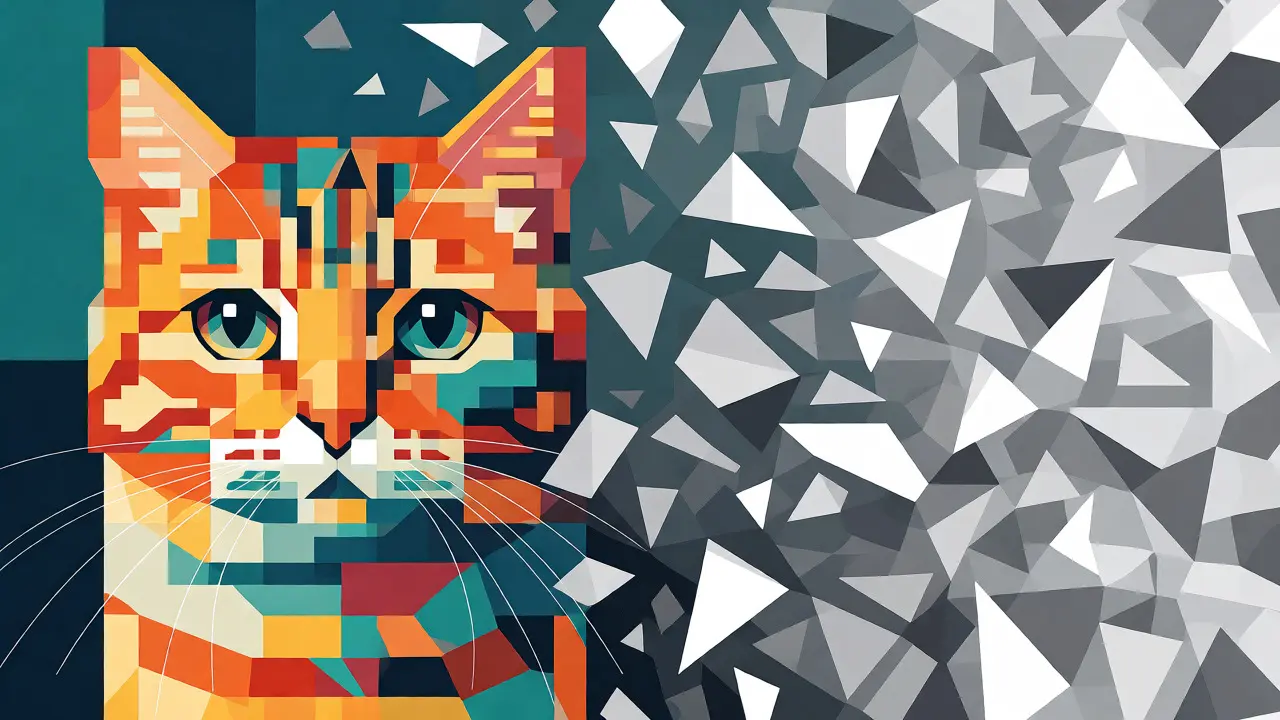
Imagine you have a clear photograph of a cat. Now, imagine slowly sprinkling white powder over it until the image is completely obscured-just gray static. This is the Forward Diffusion Process, where Gaussian noise is gradually added to an image over thousands of steps until the original structure is lost entirely. The model doesn’t just learn to generate images; it learns to reverse this destruction.
The magic happens in the Reverse Diffusion Process. Here, the AI starts with pure random noise and attempts to remove tiny amounts of that noise step-by-step. At each step, it guesses what the slightly less noisy version of the image looks like. After hundreds of iterations, the random static resolves into a coherent, photorealistic image. It’s like sculpting from marble, but instead of chipping away stone, you’re clarifying a blurry signal.
This approach solves a major headache in AI training. Previous methods, like Generative Adversarial Networks (GANs), often suffered from "mode collapse," where the AI would produce only a few types of images repeatedly. Diffusion models are far more stable because they don’t rely on two networks fighting each other. Instead, they use a single neural network trained to predict noise, making them easier to train and much better at capturing the full diversity of visual data.
A Brief History of Noise
While diffusion models feel new, their roots go back to physics. The underlying mathematics draws from non-equilibrium thermodynamics-the same principles that describe how heat spreads. In 2020, researchers Jonathan Ho, Ajay Jain, and Pieter Abbeel published the seminal paper Denoising Diffusion Probabilistic Models (DDPM). They proved that if you train a neural network to predict the noise added to an image at any given step, you can generate high-quality samples by starting from noise and iteratively denoising.
By 2022, companies like OpenAI and Stability AI had refined this technique into consumer-ready products. Stable Diffusion introduced a crucial optimization: operating in a compressed latent space rather than raw pixel space. This reduced computational costs dramatically, allowing users to run powerful models on home gaming GPUs. Today, diffusion models power everything from professional design workflows to hobbyist art communities, dominating benchmarks with Fréchet Inception Distance (FID) scores that consistently beat GANs.

How It Works Under the Hood
To understand the quality, you need to look at the architecture. Most modern diffusion models use a U-Net, a type of convolutional neural network designed for precise spatial localization. The U-Net takes a noisy image and a timestamp (indicating how much noise remains) as input. Its job is simple: predict the noise pattern currently present in the image.
Once the noise is predicted, the model subtracts it from the current state to estimate the cleaner image. This process repeats. Early steps remove large, coarse structures-think general shapes and colors. Later steps refine fine details like skin texture, hair strands, and lighting reflections. This hierarchical refinement is key to achieving photorealism. The model isn’t trying to draw every detail at once; it builds the image layer by layer, ensuring coherence at both macro and micro scales.
Text conditioning adds another layer of control. By integrating a text encoder (like CLIP), the model receives guidance on what to generate. The text embedding acts as a compass, steering the denoising process toward features described in your prompt. This allows for complex compositions, such as "a red car parked next to a blue house," where the model must respect both object identity and spatial relationships.
Why Diffusion Beats GANs
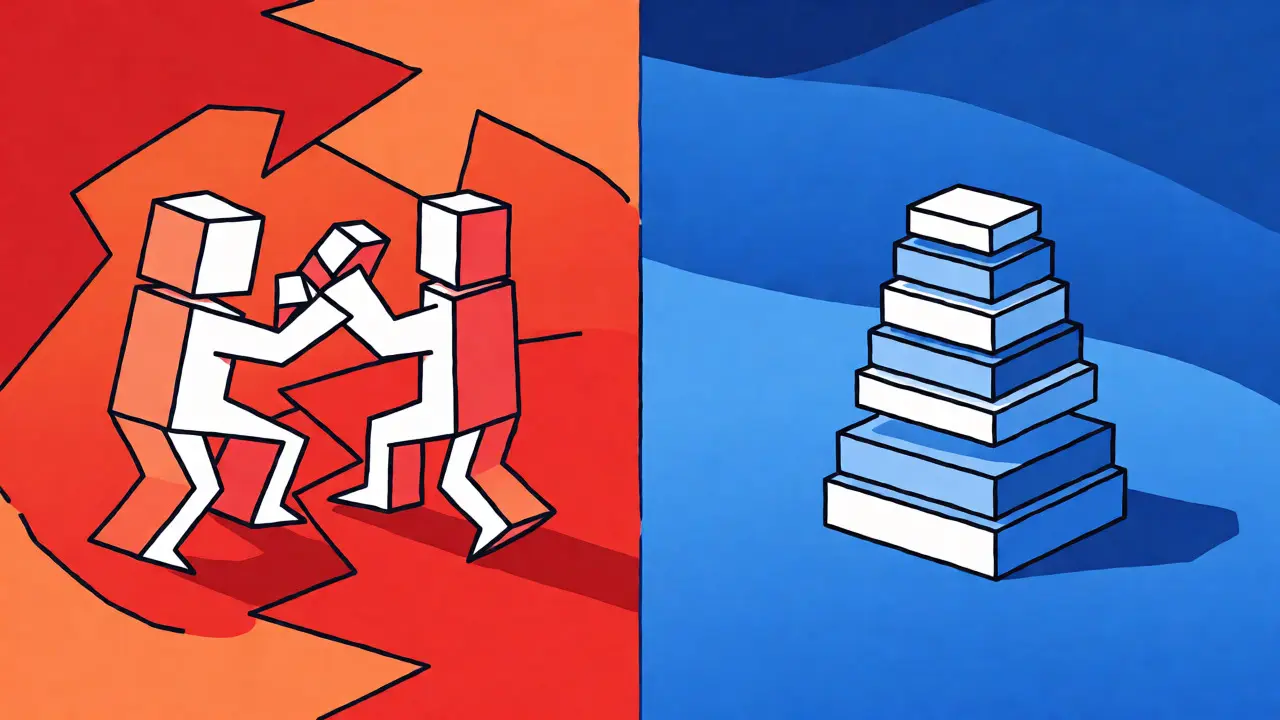
If you’re familiar with older AI tech, you might wonder why we switched from GANs. The short answer: stability and quality. GANs work by pitting a generator against a discriminator. While effective, this adversarial setup is notoriously unstable. Training can diverge easily, and the resulting images often lack variety. Diffusion models, by contrast, offer smoother training curves and superior sample diversity.
| Feature | Diffusion Models | GANs |
|---|---|---|
| Training Stability | High; no mode collapse issues | Low; prone to divergence |
| Inference Speed | Slower (requires multiple steps) | Fast (single forward pass) |
| Image Quality | Superior FID scores (e.g., 1.70 on CIFAR-10) | Good, but lower fidelity (e.g., 2.57 on CIFAR-10) |
| Control | Excellent conditional generation via prompts | Limited without complex architectures |
The trade-off is speed. Because diffusion requires iterative denoising, generating an image takes longer than a GAN’s single pass. However, techniques like DDIM sampling allow us to reduce the number of steps from 1,000 to as few as 20-50 without significant quality loss, making real-time applications increasingly feasible.
Practical Challenges and Solutions
Using diffusion models isn’t always plug-and-play. Users often encounter artifacts, particularly in hands and text. Why? Because these elements require precise structural understanding, which is hard to learn from noisy data alone. Additionally, "prompt fragility" is common-small wording changes can drastically alter outputs. For instance, changing "a dog sitting" to "a dog sitting on a chair" might introduce unexpected background elements.
To mitigate these issues, practitioners use negative prompting (telling the model what to avoid) and Classifier-Free Guidance (CFG). CFG adjusts how strictly the model follows the text prompt versus its own learned distribution. Higher CFG values enforce strict adherence but can lead to oversaturated colors; lower values allow more creative freedom but risk ignoring instructions. Finding the sweet spot usually requires experimentation.
Hardware requirements also matter. While Stable Diffusion runs on consumer GPUs, higher resolutions demand more VRAM. A 512x512 image needs about 6GB, while 1024x1024 might require 12GB or more. For those without powerful hardware, cloud-based solutions or optimized samplers like Euler A can help balance speed and memory usage.
The Future of Noise Removal
We’re just scratching the surface. Current research focuses on efficiency and controllability. Techniques like flow matching aim to reduce the number of denoising steps further, potentially cutting generation time by half. Meanwhile, integration with video generation is expanding rapidly, with models like Veo creating coherent motion sequences directly from text.
As these models become faster and more accessible, they’ll likely permeate more industries. From architectural visualization to drug discovery, the ability to generate realistic synthetic data will prove invaluable. The core principle remains unchanged: start with chaos, remove the noise, and reveal the signal. It’s a simple idea, but one that has revolutionized how we create digital content.
What is the main difference between diffusion models and GANs?
The primary difference lies in their training and generation processes. GANs use two competing networks (generator and discriminator) and generate images in a single step, which can lead to instability and mode collapse. Diffusion models train a single network to predict noise and generate images through an iterative process of removing noise from random data, resulting in higher stability, better image diversity, and superior fidelity metrics like FID scores.
Why do diffusion models take longer to generate images than GANs?
Diffusion models require multiple sequential steps (typically 20-50 or more) to iteratively remove noise from a random starting point. Each step involves a forward pass through the neural network. In contrast, GANs generate an image in a single forward pass. Although optimizations like DDIM sampling reduce the number of steps needed, the iterative nature of diffusion inherently makes it slower per image compared to the one-shot generation of GANs.
What is latent diffusion?
Latent diffusion is an optimization technique used in models like Stable Diffusion. Instead of performing the computationally expensive denoising process on high-resolution pixel data, the model operates in a compressed latent space created by a Variational Autoencoder (VAE). This reduces the dimensionality of the data significantly (e.g., from 512x512 pixels to 64x64 latent vectors), lowering memory requirements and speeding up inference while maintaining high output quality.
Can diffusion models generate videos?
Yes, recent advancements have extended diffusion models to video generation. Models like Google's Veo and Meta's VideoPoet use temporal attention mechanisms to ensure consistency across frames. These models treat video as a sequence of images, applying diffusion in both spatial and temporal dimensions to create coherent motion. While still computationally intensive, video diffusion is becoming increasingly viable for professional and creative applications.
What is Classifier-Free Guidance (CFG)?
Classifier-Free Guidance is a technique used to improve the alignment between generated images and text prompts. It works by interpolating between the predictions made with and without the text condition. By adjusting the CFG scale parameter, users can control how strongly the model adheres to the prompt. Higher values force stricter adherence but may reduce creativity, while lower values allow more artistic interpretation.
- Nov, 6 2026
- Collin Pace
- 0
- Permalink
Written by Collin Pace
View all posts by: Collin Pace