Energy Efficiency in Generative AI Training: Sparsity, Pruning, and Low-Rank Methods

Why Training Generative AI Is Burning Through Energy
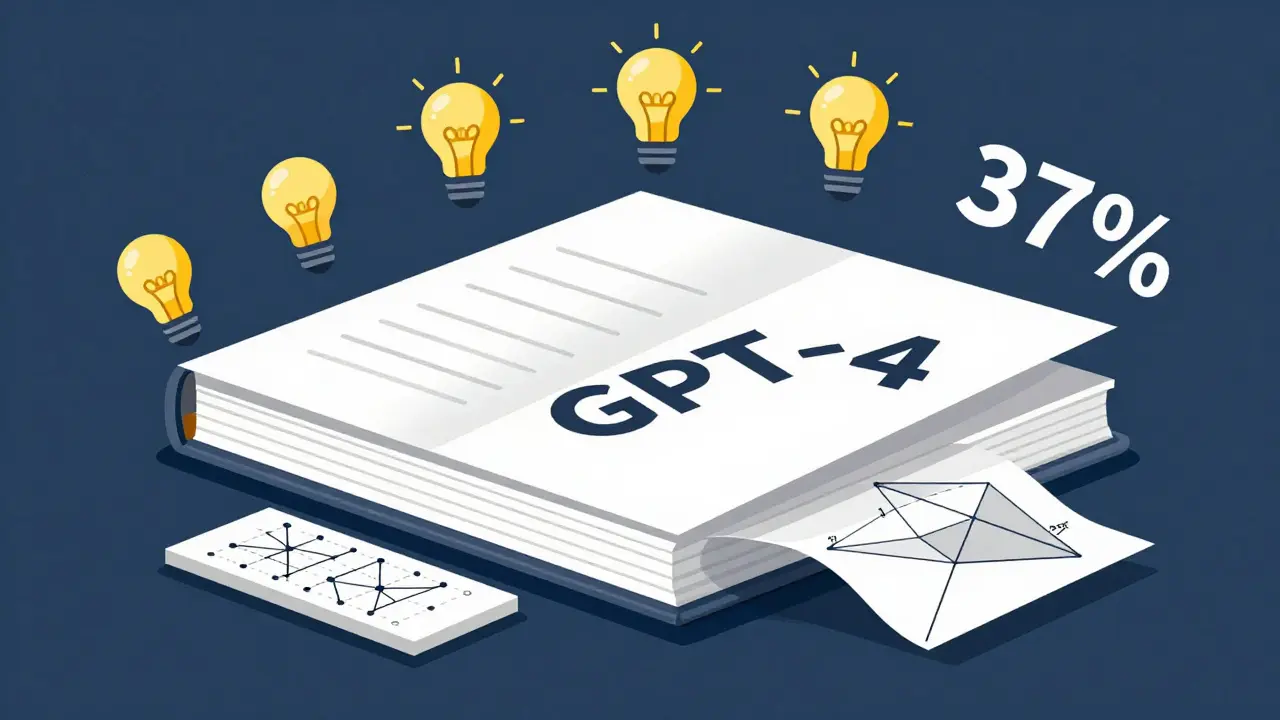
Training a large language model like GPT-3 used as much electricity as 130 average American homes use in a year. GPT-4? That jumped to 65,000 megawatt-hours - enough to power a small city. And it’s not slowing down. Generative AI’s computational demands are doubling roughly every 100 days. If nothing changes, data centers could be responsible for 1.2% of global carbon emissions by 2027. That’s not science fiction. That’s the next 18 months.
Most people think bigger models = better AI. But what if you could get 97% of the performance using just 30% of the energy? That’s not a dream. It’s happening right now - through sparsity, pruning, and low-rank methods. These aren’t theoretical ideas. They’re being used by NVIDIA, Google, and startups alike to cut training costs and carbon footprints without throwing away accuracy.
What Sparsity, Pruning, and Low-Rank Methods Actually Do
Imagine a neural network as a giant grid of numbers - weights that tell the model how to process information. Most of those numbers aren’t doing much. They’re tiny, noisy, or redundant. Sparsity, pruning, and low-rank methods are ways to remove the dead weight - literally.
Sparsity means forcing weights to become zero. Think of it like deleting unused apps from your phone. Unstructured sparsity can turn 80-90% of weights into zeros. But the real win? Structured sparsity, which removes entire blocks - like deleting whole rows or columns in a spreadsheet. MobileBERT, for example, shrank from 110 million parameters to just 25 million - a 77% drop - while keeping 97% of its original accuracy on language tasks.
Pruning is the process of finding and removing those useless weights. There are three main ways:
- Magnitude-based pruning: Cut the smallest weights. Simple, effective.
- Movement pruning: Watch weights during training and zap the ones that don’t move much.
- Lottery ticket hypothesis: Find a tiny subnetwork inside the big model that, if trained alone, performs just as well.
University of Michigan tested iterative magnitude pruning on GPT-2. At 50% sparsity, they cut training energy by 42% - and lost only 0.8% accuracy on text prediction.
Low-rank methods work differently. Instead of deleting weights, they restructure them. Think of a large matrix (a table of numbers) that’s been stretched too thin. Low-rank techniques break it into two smaller matrices that, when multiplied, give you almost the same result. It’s like summarizing a 500-page book into a 50-page outline - you lose some detail, but keep the core meaning.
NVIDIA used low-rank adaptation (LoRA) on BERT-base. Training energy dropped from 187 kWh to 118 kWh - a 37% cut. Accuracy? 99.2% of the original. That’s not a trade-off. That’s a win.
How Much Energy Can You Really Save?
Let’s get specific. Here’s what real-world results look like:
| Technique | Model | Energy Reduction | Accuracy Loss | Hardware Benefit |
|---|---|---|---|---|
| Structured Sparsity | MobileBERT | 77% fewer parameters | 3% | 2.8x faster on A100 GPUs |
| Magnitude Pruning | GPT-2 | 42% | 0.8% | Works on standard GPUs |
| Low-Rank (LoRA) | BERT-base | 37% | 0.8% | Reduces memory use by 3x |
| Combined (Pruning + LoRA) | Llama-2-7B | 63% | <1% | Compatible with existing training pipelines |
| Mixed Precision | General | 15-20% | Minimal | Requires specialized hardware |
Notice something? The best results come from combining techniques. Pruning cuts the fat. Low-rank methods compress the core. Together, they’re not just efficient - they’re transformative.
And it’s not just about cost. It’s about access. A startup with a $5,000 monthly cloud budget can train a model that used to require $20,000. A university lab can run experiments that were previously impossible. Energy efficiency isn’t just green - it’s democratic.
Why These Methods Beat Other Approaches
You’ve probably heard of model distillation or early stopping. They’re popular. But they’re not as powerful.
Model distillation trains a small model to mimic a big one. Great for inference. Terrible if you’re trying to train from scratch. You’re still paying the energy bill for the big model first.
Early stopping cuts training short. Saves 20-30% energy. But you risk underfitting. The model never learns enough. You’re trading accuracy for savings - and often, you get neither.
Mixed precision uses lower-precision numbers (like 16-bit instead of 32-bit). It helps - but only if you have the right hardware. And it only saves 15-20%. That’s a nice bonus, but not a game-changer.
Sparsity and pruning? They work on any standard GPU. They don’t require new chips. You can apply them to models you already have - GPT, Llama, BERT, you name it. And they save 40-60%. That’s not incremental. That’s revolutionary.
IBM’s October 2024 analysis found that combining structured pruning with low-rank adaptation cut Llama-2-7B training energy by 63%. Mixed precision alone? 42%. The difference isn’t just numbers - it’s the difference between a model that’s feasible and one that’s not.
Implementation: What It Really Takes
It’s not plug-and-play. But it’s not rocket science either.
Here’s the standard workflow used by teams at NVIDIA and Accenture:
- Train a baseline model - get your model to its target accuracy first.
- Apply sparsity or pruning gradually - don’t delete 50% of weights on day one. Ramp up over weeks.
- Validate accuracy - test on your key benchmarks. If accuracy drops too much, reduce sparsity.
- Use low-rank adaptation for fine-tuning - especially if you’re adapting a pretrained model to a new task.
- Deploy optimized - sparse models run faster on GPUs with sparse tensor cores (like NVIDIA’s A100 or H100).
Most teams need 2-4 weeks to get comfortable. The biggest hurdle? Accuracy degradation. Push sparsity beyond 70%, and you start losing performance fast. Dr. Lirong Liu at the University of Surrey warns: “Over-pruning beyond 70% density often negates energy savings.”
Framework support is improving. TensorFlow Model Optimization Toolkit (v3.2.1) and PyTorch (v2.2.0 with TorchPruner) now have built-in tools. Developers on GitHub report:
- “Magnitude pruning on BERT-base cut our training energy from 213 kWh to 126 kWh - 41% savings, 0.9% accuracy loss.”
- “The 15% extra dev time was worth it. We saved $1,200 per training cycle.”
But it’s not perfect. PyTorch’s docs get a 3.8/5 rating. TensorFlow’s get 4.2/5. Community support is active, but scattered. Reddit’s r/MachineLearning and SparseML’s GitHub are your best friends.

The Future: Hardware, Regulation, and Mandatory Efficiency
This isn’t just a technical trend. It’s becoming a requirement.
By Q2 2026, the European Union’s AI Act will force companies to log energy usage for all large AI models. The U.S. isn’t far behind. The World Economic Forum says we’re on track for data centers to use 1.2% of global electricity by 2027. That’s more than the entire country of Argentina.
Hardware is catching up. NVIDIA’s Blackwell Ultra chips, launching Q4 2025, will have pruning built into the silicon. Google’s TPU v5p, expected in Q2 2025, will auto-configure sparsity. PyTorch 2.4 (March 2025) will let you combine pruning, sparsity, and low-rank methods in one click.
Startups like Neural Magic are betting everything on sparsity. They raised $45 million in August 2024. Cloud giants aren’t waiting: AWS launched SageMaker Energy Optimizer. Google added efficiency tools to Vertex AI. These aren’t side features. They’re core products now.
Gartner predicts that by 2027, 90% of enterprise AI deployments will use at least one compression technique. The question isn’t whether you’ll adopt them. It’s whether you’ll be early or late.
And here’s the quiet truth: The most efficient AI isn’t the biggest. It’s the smartest. The one that knows what to ignore. The one that doesn’t waste a single cycle. That’s what sparsity, pruning, and low-rank methods give you - not just energy savings, but smarter AI.
What You Should Do Next
If you’re training generative AI models:
- Start with magnitude pruning on your next fine-tuning run. Use TensorFlow or PyTorch’s built-in tools.
- Measure your energy use before and after. You’ll be shocked.
- Try low-rank adaptation (LoRA) for task-specific tuning. It’s low-risk, high-reward.
- Don’t chase 90% sparsity. Aim for 50-70%. That’s where the sweet spot is.
- Combine techniques. Pruning + LoRA = 60%+ savings with minimal accuracy loss.
If you’re managing cloud budgets: Talk to your ML team. Ask: “What’s our energy cost per training run?” If they don’t know, you’re flying blind.
Energy efficiency in AI isn’t a luxury. It’s survival. The models that win aren’t the ones with the most parameters. They’re the ones that use the least power to get the job done.
- Dec, 17 2025
- Collin Pace
- 10
- Permalink
Written by Collin Pace
View all posts by: Collin Pace