Ethical Futures for Generative AI: Equitable Access and Global Impact

By mid-2026, the conversation around Generative AI is technology capable of creating original text, images, audio, and code from complex data patterns has shifted. We are no longer asking if these tools are useful; we are asking who gets to use them and what happens when they fail. The promise of generative AI was democratization-giving everyone a superpower. The reality, so far, has been uneven. While Silicon Valley labs race toward more powerful models, rural communities in the Global South often lack the bandwidth to run even basic versions. This gap isn't just an inconvenience; it’s a structural failure that threatens to widen economic inequality on a global scale.
The core problem isn’t the technology itself. It’s the governance-or lack thereof-that surrounds its deployment. As we look toward the ethical futures of this tech, two pillars stand out: ensuring equitable access is the principle that all individuals, regardless of geography or income, can benefit from AI advancements and managing the profound global impact is the widespread societal, economic, and cultural consequences of AI adoption across different nations. If we don’t address these now, we risk building a future where AI serves only the privileged few while exacerbating biases and misinformation for everyone else.
Bridging the Digital Divide: What Equitable Access Really Means
Equitable access goes beyond simply making software available. It means removing the barriers that prevent meaningful participation. In 2025, reports showed that high-end GPU clusters required to train large language models cost millions of dollars, placing them firmly out of reach for most universities and small businesses outside major tech hubs. This creates a monopoly on innovation. When only a handful of companies control the underlying infrastructure, they also control the narrative, the values, and the priorities embedded in the systems.
To fix this, we need a shift in how we distribute resources. One promising approach is the development of smaller, efficient models that can run on local devices rather than centralized clouds. These "edge AI" solutions reduce latency and privacy risks while lowering costs. Imagine a teacher in a remote village using a lightweight AI assistant on a standard tablet to create personalized lesson plans without needing constant internet connectivity. That is true accessibility. It requires investment in open-source ecosystems and public infrastructure, not just corporate R&D budgets.
We must also consider digital literacy. Providing access to a tool is useless if users don’t understand how to wield it critically. Governments and NGOs need to fund education programs that teach people not just how to prompt an AI, but how to evaluate its output, recognize hallucinations, and understand the limitations of automated decision-making. Without this layer of human capability, technological access remains hollow.
The Bias Trap: Why Diverse Data Is Non-Negotiable
You cannot build fair systems with unfair data. This is the hardest lesson in AI ethics. Most large language models are trained on datasets scraped primarily from English-language websites, which skews their understanding toward Western, urban, and male-centric perspectives. When you ask such a model about "leadership," it might default to masculine traits. When you ask about "family," it might assume a nuclear structure. These aren’t bugs; they are reflections of the training data.
Bias mitigation is the process of identifying and reducing unfair prejudices in AI algorithms through diverse data collection and algorithmic adjustments requires intentional effort. It starts with diverse development teams. Homogeneous groups tend to overlook blind spots. A team composed of engineers from varied cultural, linguistic, and socioeconomic backgrounds is more likely to spot discriminatory patterns before they ship into production.
Regular auditing is equally critical. Companies like Microsoft and Google have begun publishing transparency reports detailing how their models perform across different demographic groups. But self-reporting isn’t enough. Independent third-party audits should become the industry standard, similar to financial audits. These audits would test models for hate speech generation, stereotype reinforcement, and exclusionary outcomes. If a model fails, it shouldn’t be deployed until fixed. This slows down release cycles, yes, but speed at the expense of fairness is a dangerous trade-off.
Global Frameworks: Who Sets the Rules?
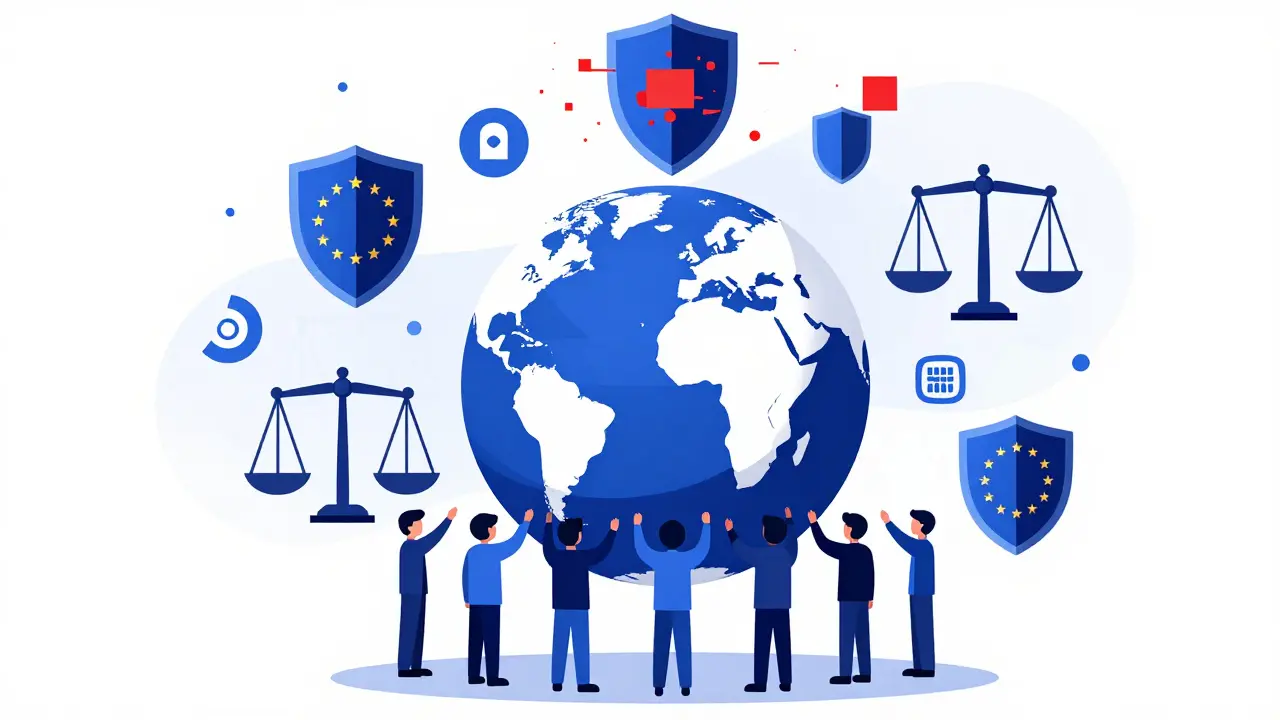
As AI crosses borders, national regulations alone are insufficient. We need international cooperation. By 2026, several key frameworks have emerged to guide this effort. The EU AI Act is comprehensive legislation regulating artificial intelligence systems based on risk levels, imposing strict requirements on high-risk applications has set a precedent by categorizing AI systems by risk level. High-risk uses, like those in healthcare or law enforcement, face rigorous scrutiny. Meanwhile, the OECD’s AI Principles, adopted by over 40 countries, emphasize inclusive growth and sustainable development.
However, enforcement remains tricky. A company based in one country can serve users in another, creating regulatory arbitrage. To counter this, we see a trend toward mutual recognition agreements between nations. Think of it like aviation safety standards: planes built in one country must meet certain criteria to fly in another. Similarly, AI models deployed globally should adhere to a baseline of ethical standards regarding privacy, transparency, and accountability.
The IEEE Global Initiative on Ethics of Autonomous and Intelligent Systems provides a technical backbone for these policies. Their guidelines focus on human agency, ensuring that humans remain in the loop for critical decisions. This is vital for maintaining trust. People are skeptical of black-box algorithms that make life-altering decisions-from loan approvals to medical diagnoses-without explanation. Transparency demands explainable AI (XAI), where the system can articulate why it reached a specific conclusion.
| Framework | Primary Focus | Key Requirement | Enforcement Mechanism |
|---|---|---|---|
| EU AI Act | Risk-based regulation | Strict rules for high-risk AI | Legal penalties, market bans |
| OECD AI Principles | Inclusive growth, sustainability | Responsible stewardship | Voluntary adoption by member states |
| IEEE Ethically Aligned Design | Human-centered design | Transparency, accountability | Industry best practices |

Misinformation and Deepfakes: Protecting Truth
One of the most immediate threats posed by generative AI is the erosion of truth. Deepfakes-hyper-realistic synthetic media-can impersonate politicians, celebrities, or private citizens. According to U.S. government data, nearly 95% of deepfake videos published since 2018 involved non-consensual pornography. This isn’t just a privacy violation; it’s a weaponized form of harassment that disproportionately targets women.
Combating this requires a multi-layered defense. First, detection tools. Researchers are developing algorithms that can identify subtle artifacts in synthetic images and videos. However, this is an arms race. As detectors improve, generators get better too. Therefore, detection alone isn’t enough. We need provenance standards. Initiatives like C2PA (Coalition for Content Provenance and Authenticity) embed cryptographic signatures into files, verifying their origin and history. Imagine buying a photo online and seeing a verified badge indicating it was taken by a specific camera at a specific time, never altered. This metadata trail helps restore trust in digital content.
Public education is the other half of the solution. Media literacy programs must evolve to include AI literacy. Schools should teach students how to spot manipulated content, question sources, and understand the incentives behind viral misinformation. When users are empowered to be skeptical, the power of deepfakes diminishes significantly.
Intellectual Property and Creative Rights
The legal battles over copyright are heating up. Generative AI models are trained on vast amounts of copyrighted material-books, articles, art, music-often without permission or compensation. Artists argue this is theft. Tech companies argue it’s fair use, akin to how humans learn from observing the world. Courts are still deciding, but the ethical path is clear: consent and compensation matter.
Forward-thinking companies are exploring opt-in training datasets. Instead of scraping the entire web, they partner with creators who explicitly allow their work to be used, offering royalties or credits. This respects intellectual property rights while still fueling innovation. Additionally, watermarking generated content helps distinguish AI-created works from human-made ones, protecting artists’ reputations and allowing consumers to choose authenticity if they prefer it.
Accountability: Who Is Responsible When Things Go Wrong?
When an AI doctor misdiagnoses a patient, or an AI hiring tool rejects a qualified candidate due to biased data, who pays the price? Currently, responsibility is diffuse. Developers blame users, users blame the algorithm, and companies hide behind terms of service. This accountability gap must close.
We need clear lines of liability. Legislation should mandate that companies deploying high-risk AI systems maintain insurance or funds to compensate victims of errors. Furthermore, incident response plans should be mandatory. If a system causes harm, there must be a rapid mechanism to shut it down, investigate the cause, and notify affected parties. Transparency logs-public records of significant AI incidents-would foster a culture of learning rather than hiding mistakes.
Building a Human-Centric Future
The goal of ethical AI isn’t to stop progress. It’s to steer it. We want AI that augments human potential, not replaces human judgment. This means designing systems that enhance creativity, solve complex problems like climate change, and provide accessible healthcare. But it also means recognizing limits. AI should not make final decisions on matters of life, liberty, or justice without human oversight.
As we move forward, the success of generative AI will be measured not by its computational power, but by its contribution to human well-being. Will it bridge divides or deepen them? Will it empower voices or silence them? The answers depend on the choices we make today-in policy, in engineering, and in our daily interactions with these powerful tools. Let’s choose wisely.
What is the biggest ethical challenge facing generative AI in 2026?
The biggest challenge is balancing rapid innovation with equitable access and bias mitigation. While tech advances quickly, ensuring that benefits reach marginalized communities and that systems do not reinforce existing prejudices remains difficult due to resource disparities and lack of standardized auditing.
How can individuals protect themselves from AI-generated misinformation?
Individuals can protect themselves by verifying sources, looking for provenance metadata (like C2PA tags), using reverse image search tools, and staying educated on common deepfake tactics. Critical thinking and skepticism towards sensational content are essential defenses.
Are there laws governing AI bias currently?
Yes, regulations like the EU AI Act impose strict requirements on high-risk AI systems to prevent discrimination. Other regions are adopting similar frameworks, though enforcement varies. Many companies also follow voluntary guidelines from organizations like the IEEE and OECD.
What does 'equitable access' mean in the context of AI?
Equitable access means ensuring that people from all geographic locations, income levels, and backgrounds can benefit from AI technologies. This involves improving infrastructure, reducing costs, providing digital literacy education, and developing models that work offline or on low-power devices.
Who is responsible if an AI system makes a harmful decision?
Responsibility is increasingly being assigned to the developers and deployers of the AI system. Legal frameworks are evolving to hold companies accountable for negligence in testing, bias mitigation, and oversight. Clear incident reporting and liability insurance are becoming standard practices for high-risk AI applications.
- Jun, 14 2026
- Collin Pace
- 0
- Permalink
Written by Collin Pace
View all posts by: Collin Pace