Funding Models for Vibe Coding: Managing Budgets and Chargebacks in 2026
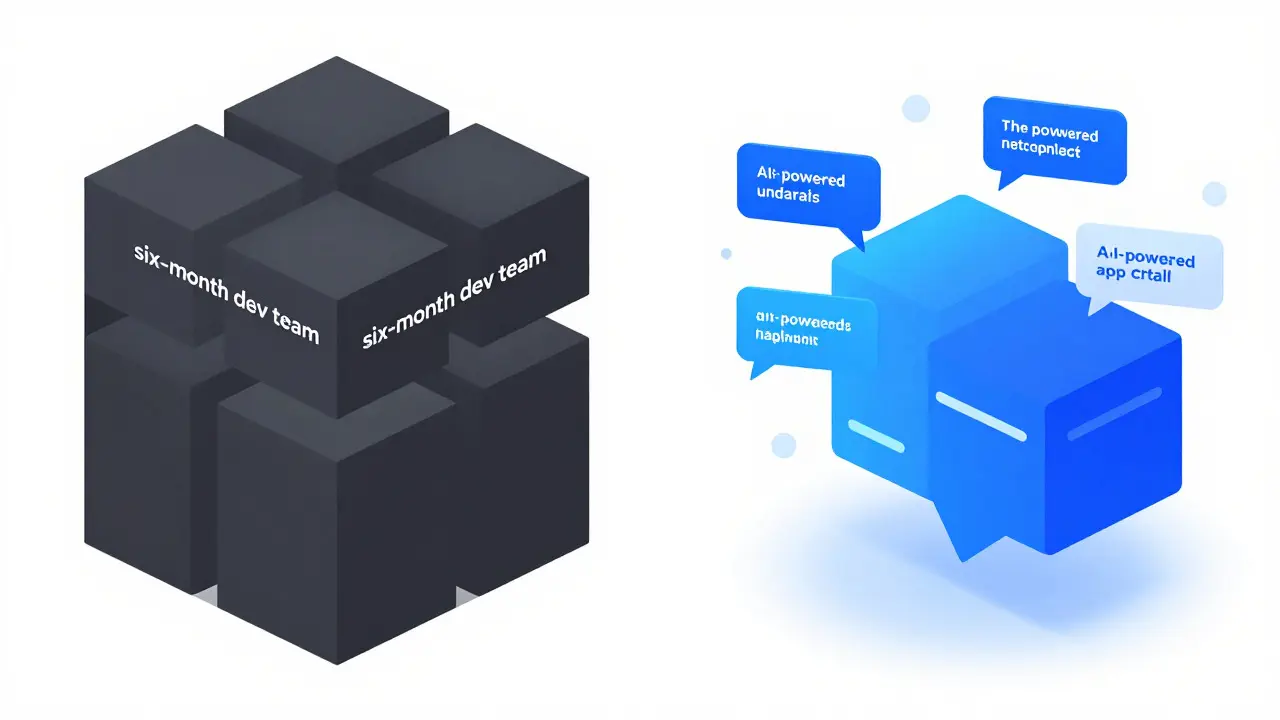
Remember when building a software prototype meant hiring a team of developers for six months? That era is officially over. In its place, we have vibe coding, a paradigm shift where AI-powered tools enable users to build applications through natural language prompts rather than traditional code. Coined by OpenAI co-founder Andrej Karpathy in early 2025, this approach has turned software creation into a usage-based utility. But here is the catch: while you save on salaries, you risk blowing your budget on compute costs. A solopreneur recently cut their dev agency quote from $500,000 to just $1,000 for initial testing. Sounds like a dream, right? Until you hit an unexpected $3,200 bill after a holiday sprint.
The core problem isn't the technology; it's the financial model. Traditional development frontloads costs (salaries), but vibe coding backloads them (token usage). If you don't understand how platforms like Cursor or Lovable charge for GPU cycles, your 'cheap' app could become your most expensive liability. This guide breaks down the funding models, explains why chargebacks happen, and shows you exactly how to budget for AI-driven development in 2026.
How Vibe Coding Platforms Actually Make Money
To manage your budget, you first need to understand what you are paying for. These platforms aren't selling you lines of code; they are selling you access to massive computational resources. When you type a prompt, the platform taps into models from providers like OpenAI, Anthropic, or Google DeepMind. This process requires extended context windows (often 128K-200K tokens) and multi-step reasoning capabilities.
According to industry analysis from VestBee in October 2025, AI code generation is among the most computationally expensive workloads in tech. The platforms absorb some of this cost, but they pass the bulk of it to you via subscription tiers. Here is how the major players structure their revenue:
- Cursor: Uses a tiered subscription model. The Pro plan costs $20/month, while the Business plan is $40/month. Despite these low sticker prices, the underlying real-time GPU costs can spike if your prompts trigger complex reasoning chains.
- Lovable: Achieved $100 million in Annual Recurring Revenue (ARR) in just eight months using a similar subscription structure. They aim to hit $250 million ARR by December 2025.
- Replit: Scaled from $2.8 million to $150 million ARR in less than a year. Their model integrates hosting and coding, creating a sticky ecosystem that encourages higher spend.
- Vercel: Integrates vibe coding into its broader cloud platform via v0. With over 3.5 million unique users, Vercel leverages its existing infrastructure to create an operational moat that pure-play agents lack.
The key takeaway? You are paying for speed and convenience, but the meter is always running. Every time the AI 'thinks' about your code, you are burning tokens. Understanding this mechanic is the first step toward preventing budget overruns.
| Platform | Pricing Model | Key Cost Driver | Enterprise Features |
|---|---|---|---|
| Cursor | $20-$40/mo subscription | Token consumption during reasoning | SSO integration, SOC 2 compliance |
| Lovable | Tiered subscription | High-volume MVP generation | Rapid scaling support |
| Replit | Usage + Subscription hybrid | Hosting + Compute combined | Budget Guardian tool |
| Vercel | Cloud-integrated pricing | Next.js ecosystem usage | Predictive budgeting (v0.3) |
Why Your Bills Spike: The Token Trap
You set aside $40 a month for Cursor. Then one day, you get a notification: your usage exceeded limits, or worse, your credit card was charged extra. Why does this happen? It comes down to 'multi-step reasoning.'
When you ask an AI to write a simple function, it uses few tokens. But when you ask it to debug a complex interaction between three different APIs, the model has to 'think' through multiple steps. Cursor’s documentation notes that multi-step reasoning can consume 5-10x more tokens than simple prompts. This is known as the 'compute cost crunch.'
User feedback from Reddit’s r/vibecoding community highlights this pain point. In a November 2025 thread titled 'How to justify vibe coding costs to CFO?', user 'devguy2025' reported an unexpected $3,200 bill after a holiday sprint. The issue wasn't malice; it was unmonitored token consumption during complex feature generation. Another case study from WebProNews showed an e-commerce startup achieving $2 million ARR in two weeks using Anything’s platform, but suffering initial budget overruns of 178% due to opaque token usage.
This unpredictability is the biggest barrier to enterprise adoption. Only 12% of Fortune 500 companies had formal vibe coding budgets as of November 2025, according to Gartner. Finance teams struggle because they are used to fixed salaries, not variable compute costs. To fix this, you need to treat API calls like fuel expenses: track every gallon.

Governing Spend: Tools and Strategies
If you want to scale vibe coding without going broke, you need governance. J.P. Morgan’s November 2025 guide for startups emphasizes that organizations must develop frameworks for user-generated application security and cost control. Here are three practical strategies to implement immediately:
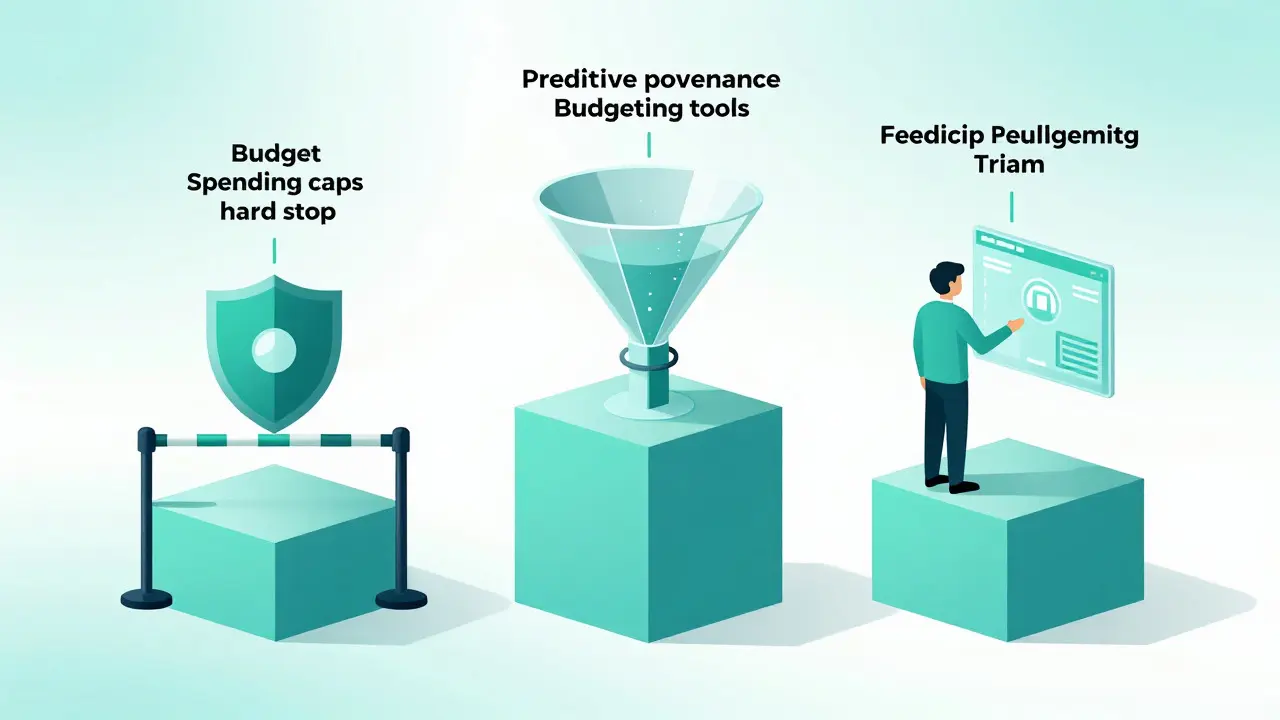
- Implement Hard Caps: Don't rely on soft alerts. Use platforms that allow hard spending limits. Replit launched 'Budget Guardian' in November 2025 specifically to address this. It provides real-time spending alerts and usage caps, solving the top complaint found in 68% of negative Trustpilot reviews.
- Adopt Predictive Budgeting: Look for tools that forecast expenses. Vercel’s upcoming v0.3 release (scheduled for December 2025) introduces predictive budgeting that analyzes historical usage to forecast monthly expenses within 5% accuracy. This turns guesswork into data-driven planning.
- Train Your Finance Team: The learning curve is steep. A Salesforce case study noted that finance teams need 2-3 weeks of dedicated training to understand usage metrics. Teach them what 'tokens' are and how 'context windows' impact cost. Without this literacy, no amount of software will stop overspending.
For enterprises, consider hybrid models. Gartner predicts that by 2027, 65% of enterprise software projects will use a mix of traditional developers for core systems and vibe coding for rapid prototyping. This balances stability with speed, keeping costs predictable for critical infrastructure while allowing experimentation elsewhere.
The Future of Vibe Coding Economics
The market is exploding. SaaSter projects a Total Addressable Market (TAM) of $150-400 billion by 2030. However, the path forward isn't smooth. Investors are skeptical about long-term viability due to unresolved questions around code security and maintenance at scale. Livemint’s analysis of Indian vibe-coding firms notes that despite recent funding rebounds, concerns persist about handling enterprise-level complexity.
Platforms are responding. Cursor allocated 30% of its $2.3 billion funding round to improve its Composer model, aiming to reduce token consumption. Salesforce Ventures invested $15 million in Rocket.new to target enterprise-grade budget controls. These moves signal a shift from raw growth to sustainable unit economics.
As a developer or manager, your job is to stay ahead of this curve. Monitor your token usage daily. Set up alerts before you hit your limit. And remember: vibe coding makes you faster, but only disciplined budgeting keeps you solvent.
What is the average cost of vibe coding for a small business?
For small businesses, costs typically range from $20 to $40 per month for basic subscriptions like Cursor Pro or Business plans. However, actual costs can vary significantly based on usage. Complex projects requiring multi-step reasoning may incur additional charges or exceed token limits, potentially leading to bills ranging from $100 to several thousand dollars depending on the intensity of AI usage.
How do I prevent unexpected chargebacks from AI coding tools?
To prevent unexpected charges, implement hard spending caps and real-time alerts. Tools like Replit's Budget Guardian offer usage caps that stop generation once a limit is reached. Additionally, train your team to recognize high-token activities, such as complex debugging sessions, and monitor daily usage reports to identify spikes before they result in large bills.
Is vibe coding cheaper than hiring traditional developers?
Yes, for prototyping and initial development, vibe coding is significantly cheaper. One documented case showed a reduction from a $500,000 agency quote to $1,000 for initial testing. However, for long-term maintenance and complex enterprise systems, traditional developers may still be necessary, making a hybrid approach the most cost-effective strategy for many organizations.
Which vibe coding platform offers the best budget controls?
Replit currently leads with its 'Budget Guardian' feature, which provides real-time spending alerts and hard usage caps. Vercel is also introducing predictive budgeting in its v0.3 release to help forecast expenses. For enterprise needs, Rocket.new focuses on providing robust budget controls tailored for regulated industries.
What causes token consumption spikes in vibe coding?
Token spikes are primarily caused by multi-step reasoning tasks. When an AI model needs to debug complex interactions, analyze large codebases, or generate intricate features, it consumes significantly more tokens-up to 10x more than simple prompts. Monitoring the complexity of your prompts and breaking down large tasks can help mitigate these spikes.
- Aug, 12 2026
- Collin Pace
- 7
- Permalink
Written by Collin Pace
View all posts by: Collin Pace