Generative AI Market Structure: Foundation Models, Platforms, and Apps
To understand where the money and power are moving, we have to look at the numbers. The Generative AI market is a rapidly expanding sector of the AI industry centered on models capable of creating new text, images, audio, and code. Estimates for 2026 put the market value between $55 billion and $83 billion, with some forecasts suggesting it could rocket toward $1.3 trillion by 2032. This isn't just growth for the sake of growth; it is a fundamental shift in how software is built and delivered.
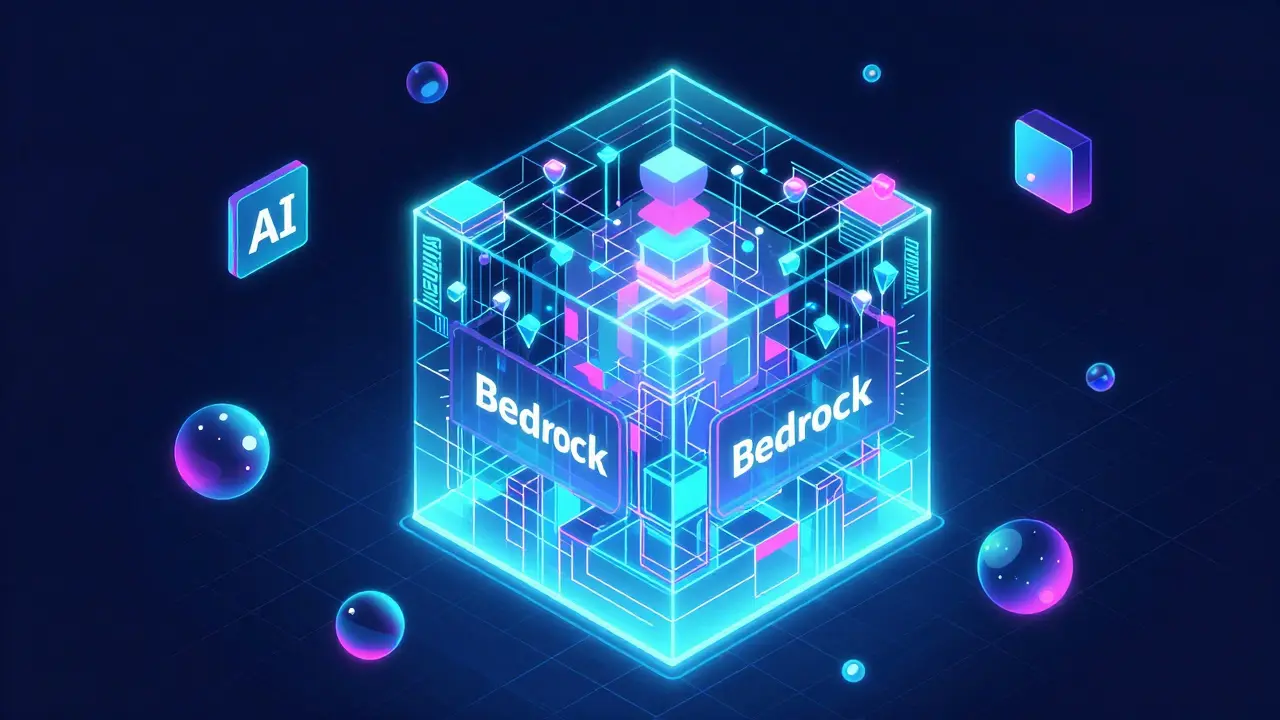
The Bedrock: Foundation Models
At the bottom of the stack are the foundation models. These are the massive, compute-heavy engines that provide the raw intelligence. Most of these rely on Transformer technology, an architecture using self-attention mechanisms to process data sequences efficiently, first introduced in the 2017 'Attention is All You Need' paper. This tech replaced older recurrent neural networks and is the reason why AI can now maintain context over long conversations.
Developing these models is an expensive game. You need massive amounts of GPUs and specialized talent, which is why this layer is dominated by giants like Google LLC, Microsoft, and Meta. However, we are seeing a shift toward Reinforcement Learning from Human Feedback (RLHF), a process where human trainers rank AI responses to align model outputs with human preferences and safety guidelines. This is how models move from being "statistically probable" to actually being useful and safe for enterprise use.
The modality of these models is also diversifying. While text generation held nearly 48% of the market in 2025, we are seeing a massive surge in multimodal models. These are systems that can "see," "hear," and "write" simultaneously, breaking the silos between different types of AI.
The Middle Layer: AI Platforms and Infrastructure
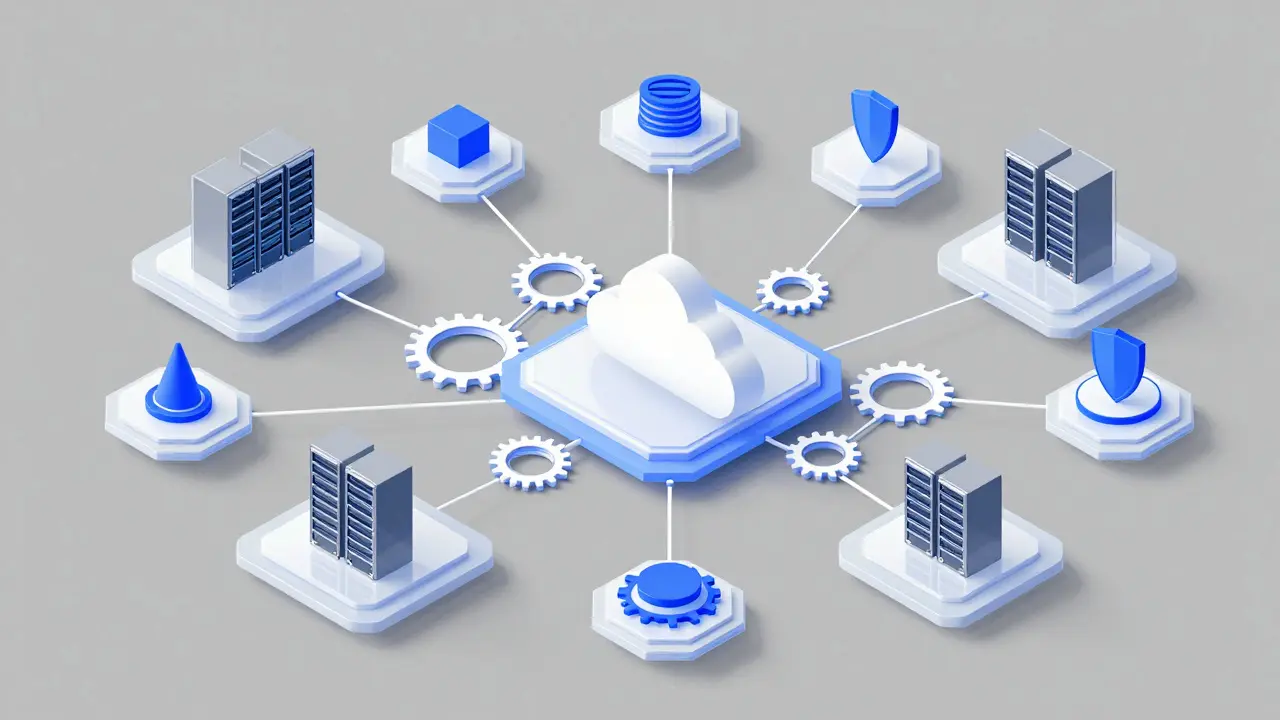
If foundation models are the electricity, platforms are the grid and the appliances. This layer is where the model meets the real world. Most businesses don't build their own LLMs from scratch; they use platforms to deploy, tune, and manage them. This is where Amazon Web Services (AWS) and IBM thrive, providing the cloud infrastructure necessary to run these behemoths.
Deployment choice is a major strategic decision here. Most of the market (about 73.8% as of 2025) stays in the cloud because it's easier to scale. But for a hospital or a law firm, the cloud is a privacy nightmare. This has led to a rise in on-premises and edge-based deployments. Processing data locally on a device reduces latency and keeps sensitive data behind a company's own firewall, a trend that's growing at over 21% annually.
| Attribute | Cloud-Based | On-Premises | Edge/Device-Local |
|---|---|---|---|
| Scalability | Instant / High | Slow / Manual | Limited by Hardware |
| Data Privacy | Third-party Trust | Full Control | Highest (Local) |
| Latency | Network Dependent | Low | Ultra-Low |
| Upfront Cost | Low (OpEx) | High (CapEx) | Medium |
The Edge: Application-Layer Software
This is where the user actually interacts with the AI. Applications can be horizontal (like a general-purpose writing assistant) or vertical (like a tool specifically for medical coding). We are seeing a strong trend toward "deep vertical" solutions. Why? Because a general model often hallucinates when it hits a specialized field like maritime law or nuclear engineering. Specialized apps that integrate domain-specific data provide much higher ROI.
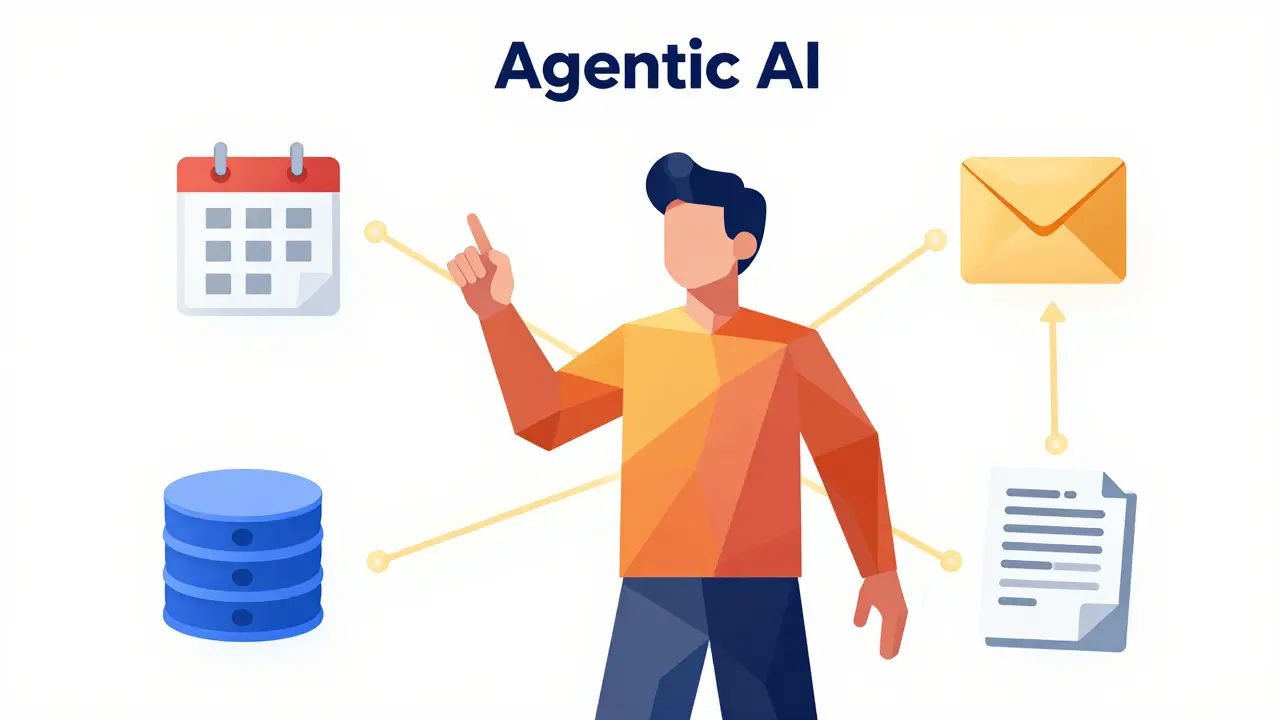
The most successful apps in 2026 are moving toward Agentic AI, autonomous systems capable of executing complex multi-step tasks with minimal human oversight. Instead of just writing an email, an agentic app can research a lead, draft the message, schedule the meeting in your calendar, and update your CRM without you clicking a single button.
Companies like Adobe have successfully integrated these capabilities into existing workflows, turning AI from a standalone "destination" into a feature that lives inside the tools people already use. This is the "invisible AI" phase where the tech becomes a utility rather than a novelty.
Who is Winning? Geographic and Industry Trends
The map of AI power is still heavily skewed toward North America, with the US alone generating nearly $24 billion in 2025. However, the Asia-Pacific region is the fastest grower, with China leading the charge at a projected CAGR of 36.8%. Europe is playing a different game, focusing more on regulatory frameworks and ethical AI, which has created a unique market for compliance-first AI services in Germany and France.
Industry-wise, IT and Telecommunications are the first movers, capturing over 20% of the market share. They use AI to automate code generation and optimize network traffic. But the real battleground is now in specialized sectors. Legal and medical fields are moving away from general chatbots toward customized models that are trained on verified, high-quality industry data to avoid the risks of misinformation.
The Path to ROI: Moving Beyond the Hype
For a long time, generative AI was a science project for the C-suite. Executives spent millions on pilots that never made it to production. In 2026, the pressure has shifted toward measurable outcomes. The companies winning now aren't the ones with the biggest models, but the ones who have successfully integrated AI into a specific business process to save time or generate new revenue.
The strategy has shifted from "How can we use AI?" to "Which specific workflow is broken, and how can a foundation model fix it?" This shift is maturing the market, moving us from a wild-west era of experimentation to a structured era of institutional implementation.
What is the difference between a foundation model and a generative AI app?
A foundation model is the core "brain" (like GPT-4 or Claude) trained on massive datasets to understand patterns. An app is the specific interface and set of instructions built on top of that brain to solve a particular problem, such as a legal document analyzer or a marketing image generator.
Why is the market shifting toward vertical AI solutions?
General-purpose models often struggle with industry-specific jargon, strict compliance rules, and high accuracy requirements. Vertical AI solutions use domain-specific data and expert human feedback to provide a level of reliability that a general chatbot cannot match.
What are the main drivers of growth for edge AI deployment?
The move toward edge AI is driven by three things: data privacy (keeping data off the cloud), latency (getting an answer instantly without a round-trip to a server), and cost (reducing the expensive bandwidth and API fees associated with cloud computing).
Which region is seeing the fastest growth in AI adoption?
The Asia-Pacific region is currently seeing the fastest growth, with a projected CAGR of 35.3% through 2035, driven largely by massive investments and rapid digitalization in China.
What is Agentic AI and why does it matter?
Agentic AI refers to systems that can autonomously plan and execute a series of steps to achieve a goal. Unlike a standard chatbot that just answers a question, an AI agent can interact with other software, make decisions, and correct its own mistakes to complete a full project.
Next Steps for Businesses
If you are an enterprise leader, stop looking for a "magic pill" AI tool. Instead, map your most expensive, repetitive workflows. If the task requires high creativity or synthesis, look at the foundation model layer. If the task requires strict data sovereignty, look into on-premises deployment platforms. If you need a specific outcome-like reducing customer churn-search for a deep vertical application that specializes in your industry.
The biggest risk in 2026 isn't adopting the wrong model; it's adopting a tool without a clear a business case. Focus on the "job to be done," and the market structure will tell you which tier of AI you need to buy into.
- Apr, 4 2026
- Collin Pace
- 7
- Permalink
- Tags:
- Generative AI market structure
- foundation models
- AI platform infrastructure
- generative AI apps
- AI market trends 2026
Written by Collin Pace
View all posts by: Collin Pace