How AI High Performers Capture Value from Generative AI: Workflow Redesign and Scaling
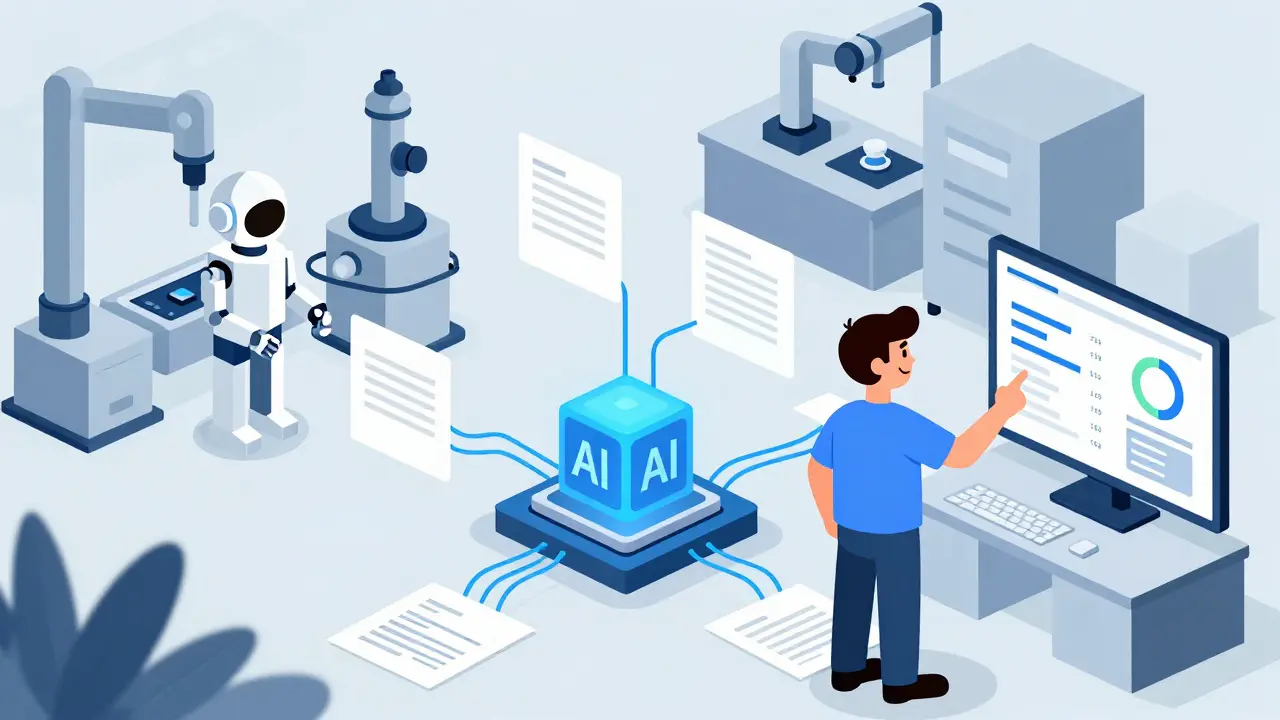
Most companies treat generative AI like a fancy new tool-something to plug into an existing process and hope for better results. But the companies actually winning with AI? They don’t just use it. They redesign how work gets done. That’s the difference between a pilot that fizzles out and a system that delivers real value.
MIT’s 2025 report found that 95% of generative AI pilots fail. Not because the tech doesn’t work. But because companies didn’t change how people work. The 5% that succeed? They didn’t automate old tasks. They rebuilt them from the ground up.
Start with One Pain Point, Not Ten
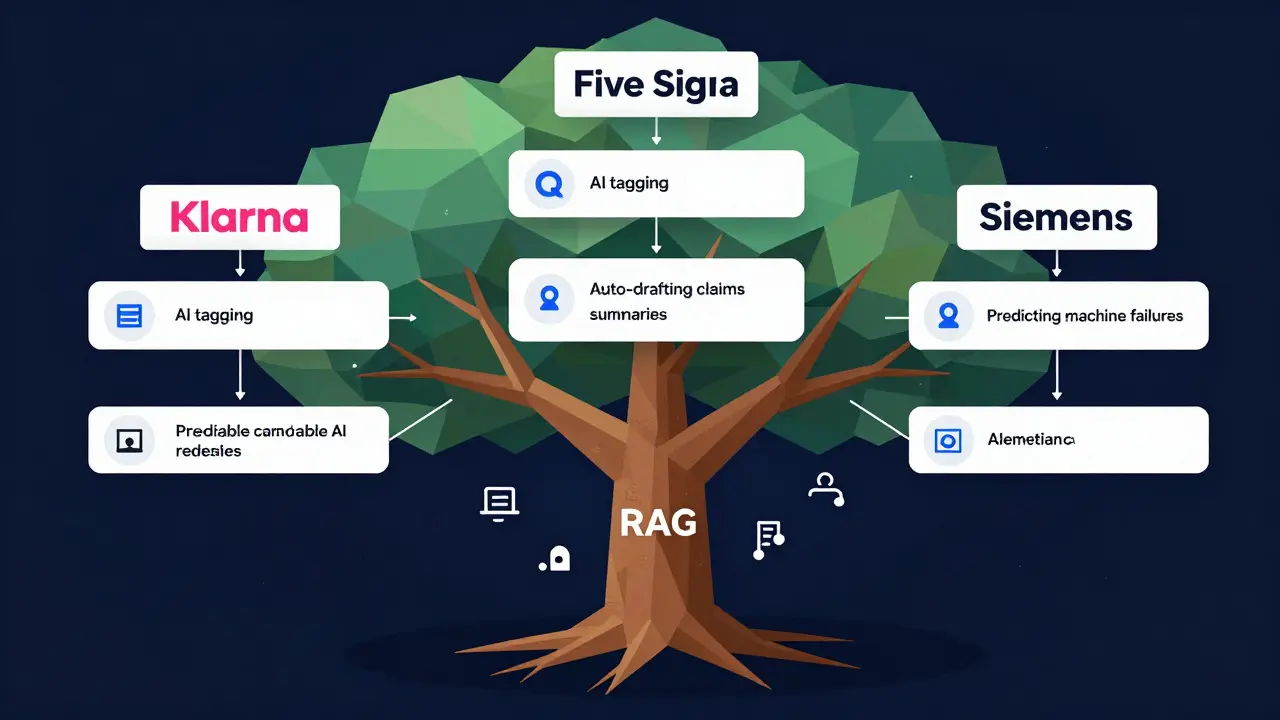
High performers don’t try to fix everything at once. They pick one thing that’s broken, expensive, or slow-and they go all in. Klarna, the fintech company, didn’t start by replacing customer service reps. They fed their AI thousands of past customer chats and support tickets. Then they trained it to recognize which questions were simple ("Where’s my order?") and which needed a human ("I’m being charged twice and I’m furious"). The result? A tag-team system. AI handles 70% of routine queries. Humans focus on the messy, emotional stuff. Customer service costs dropped. Wait times shrank. Employees stopped feeling like call center drones.
Five Sigma, an insurance company, did the same thing with claims. Before AI, adjusters spent hours digging through documents, checking for fraud, and filling out forms. Now, their AI engine pulls data from claims, medical records, and police reports. It flags anomalies. It drafts summaries. Humans only step in when something’s weird or complex. Error rates dropped 80%. Productivity jumped 25%. Claims processed 10% faster.
This isn’t about AI doing the work. It’s about AI changing the work.
Build Systems That Learn From Your Data-Not Just Google
Most AI tools just answer questions using public data. High performers use something called retrieval-augmented generation, or RAG. It’s not magic. It’s simple: take your company’s internal documents, customer records, product specs, and past reports-and make them part of the AI’s brain.
Colgate-Palmolive used RAG to replace stacks of market research reports. Instead of reading 50-page PDFs, employees now ask questions like: "What are consumers saying about mint toothpaste in urban areas?" or "Which social media trends are driving demand for natural ingredients?" The AI pulls from proprietary surveys, third-party data, and Google search trends-all in seconds. No more waiting for analysts. No more guessing.
Siemens did the same with factory maintenance. Their AI, connected to the Senseye system, now pulls from decades of machine sensor logs, repair histories, and vendor manuals. When a technician asks, "Why did this pump fail last month?" the AI doesn’t guess. It shows exact patterns from similar breakdowns. Maintenance costs dropped 40%. Downtime fell by half.
The key? The AI doesn’t just know things. It knows your things.
Make AI a Collaborator, Not a Replacement
Some fear AI will take jobs. High performers know it can make jobs better. The goal isn’t to replace humans. It’s to give them superpowers.
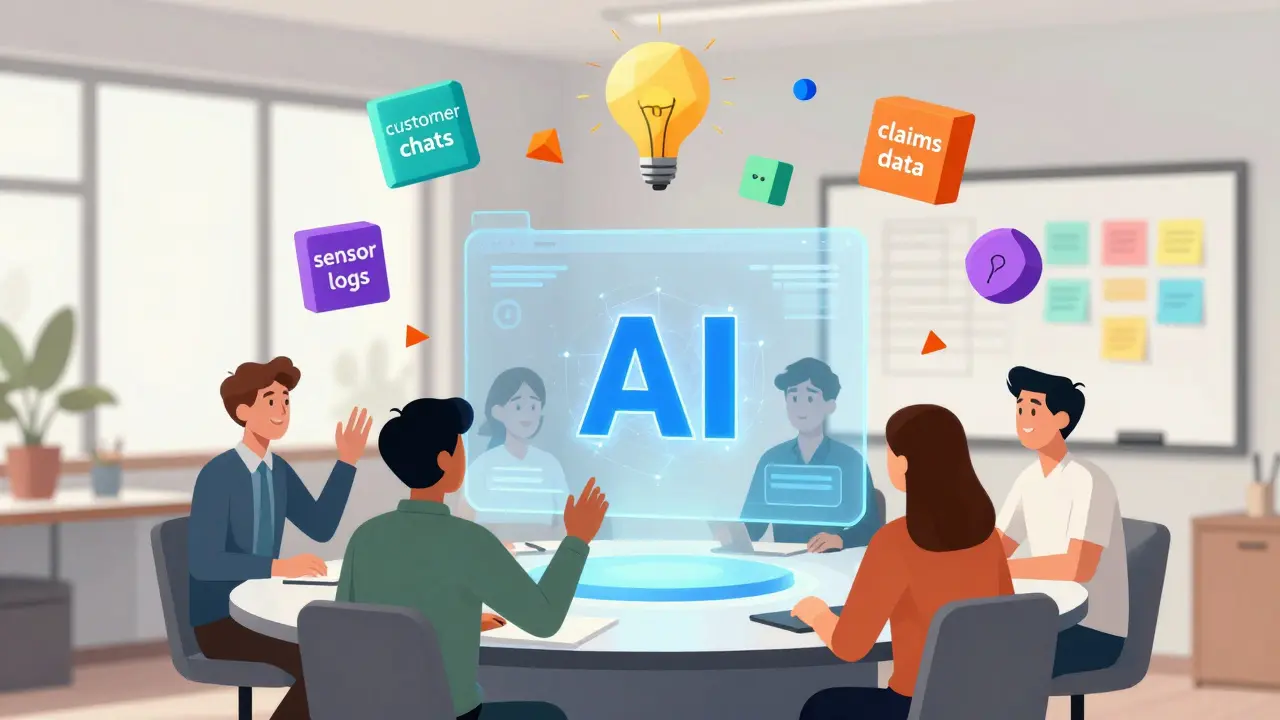
Rivian, the electric vehicle maker, uses Gemini integrated with Google Workspace. Employees don’t just ask AI for facts. They brainstorm with it. "What if we designed a charging station that doubles as a coffee shop?" The AI suggests 10 variations. The human picks the best one. Then they refine it together. Staff say they can learn complex topics-like battery chemistry or supply chain logistics-70% faster.
Gazelle, an AI tool for real estate agents in Sweden and Norway, doesn’t write property listings. It extracts key details from messy PDFs-square footage, zoning rules, renovation history-and turns them into clean, accurate summaries. Accuracy jumped from 95% to 99.9%. Time dropped from four hours to 10 seconds. Agents now have time to talk to clients, not copy-paste.
At MAS, a marketing agency, creatives don’t sit in silence waiting for inspiration. They have conversations with AI. "Give me five wild ideas for a sneaker campaign targeting Gen Z." The AI spits out options. The team laughs, argues, tweaks, and builds. Human creativity doesn’t disappear. It gets amplified.
This isn’t automation. It’s co-creation.
Scale by Repeating What Works-Not by Adding More Tools
Successful companies don’t roll out AI everywhere. They start with one win. Then they copy it.
Sojern, a travel marketing platform, built its AI system on Vertex AI and Gemini. It processes billions of real-time signals-searches, bookings, weather, events-to predict traveler intent. Before? It took two weeks to build audience segments. Now? Less than two days. Clients saw 20-50% better cost-per-acquisition. They didn’t add more AI tools. They just made this one system work better.
Mercury, a fintech startup, used the same model. First, they automated email drafting. Then they applied it to internal project planning. Then to engineering bug reports. Within 18 months, they’d scaled their AI system to three core functions-each built on the same foundation. No new vendors. No new teams. Just repetition of what worked.
Companies that fail try to do everything at once. High performers do one thing well-and then do it again.
Training Isn’t About Coding. It’s About Context.
You don’t need engineers to make AI work. You need people who understand the work.
At Toyota, factory workers built their own machine learning models using Google Cloud’s tools. No coding experience required. They were trained in 15 hours on how to describe their problems: "I waste 20 minutes every shift looking for the right wrench." The AI learned from their descriptions. The result? Over 10,000 man-hours saved annually.
Seguros Bolivar, an insurance company in Colombia, trained claims teams not on Python, but on how to ask better questions. "What does a successful claim look like?" "What delays happen most often?" The AI learned from their answers. Cost reductions hit 20-30%. Collaboration with partners improved.
The real skill? Knowing where AI can help-and how to explain the problem clearly. That’s not a technical skill. It’s a thinking skill.
What Separates Winners from the Rest
Here’s what high performers do differently:
- They don’t automate-they redesign. AI isn’t a shortcut. It’s a new way to work.
- They use their own data. RAG isn’t optional. It’s the core.
- They pair humans with AI. AI handles repetition. Humans handle judgment.
- They start small, then scale. One win. Then another. Then another.
- They train people on problems, not code. You don’t need to be a data scientist to use AI well.
Companies that just buy AI tools? They’re still stuck in pilot mode. The ones who rebuild workflows? They’re scaling to 3, 5, even 10 new use cases in under two years.
Generative AI isn’t about being smarter. It’s about working differently. The winners aren’t the ones with the most AI. They’re the ones who changed how work gets done.
Why do 95% of generative AI projects fail?
Most fail because companies treat AI as a tool to plug into old workflows, not as a force to redesign them. They automate tasks instead of rethinking processes. MIT’s 2025 report found that successful AI projects focus on one specific pain point, use internal data (via RAG), and involve employees in redesigning their own work-not just handing tasks to machines.
What is RAG, and why is it so important?
RAG stands for Retrieval-Augmented Generation. It’s a technique where AI pulls information from your company’s internal documents, databases, and reports-instead of just using public internet data. This lets employees ask questions like, "What did our customers say about product X last quarter?" and get answers based on your real data. Colgate-Palmolive and Siemens use RAG to cut research time by 80% and improve decision-making. Without RAG, AI is guessing. With it, AI is informed.
Do I need engineers to implement AI successfully?
No. Toyota factory workers, insurance adjusters at Five Sigma, and real estate agents at Gazelle all used AI without writing a single line of code. What they needed was clarity about their work: What’s slow? What’s repetitive? What’s frustrating? Training focused on helping them describe those problems-not on learning Python or TensorFlow. The tools are designed to be used by non-technical staff. The real skill is asking the right questions.
How do I know which use case to start with?
Look for tasks that are repetitive, time-consuming, and rule-based. Examples: drafting routine emails, summarizing long documents, pulling data from PDFs, categorizing customer requests, or generating basic marketing copy. Avoid vague goals like "make everyone more productive." Instead, pick one job where people say, "I wish I didn’t have to do this." That’s your starting point. Klarna started with customer service tickets. Five Sigma started with claims paperwork. Start narrow. Win fast.
Can AI actually make employees more motivated?
Yes-if you design it right. HBR’s 2025 research found AI can reduce motivation when it replaces meaningful work. But when AI takes over boring, repetitive tasks, employees report higher satisfaction. At MAS, creatives said they felt more inspired because AI handled the grunt work. At Five Sigma, claims handlers said they finally got to focus on helping customers, not filling forms. The key is letting humans do what only humans can: empathize, judge, and create.
How long does it take to see real results from AI?
The best performers see measurable results in 60 to 90 days. Gazelle cut content generation from four hours to 10 seconds. Sojern cut audience-building time from two weeks to two days. Rivian’s staff reported learning complex topics 70% faster within weeks. The difference? They didn’t wait for enterprise-wide rollout. They launched one small, focused project, measured the impact, and then scaled. Slow, broad deployments take years. Fast, targeted ones take weeks.
- Mar, 12 2026
- Collin Pace
- 5
- Permalink
Written by Collin Pace
View all posts by: Collin Pace