Legal Basics for Vibe-Coded Apps: Copyright, Licensing, and IP Ownership
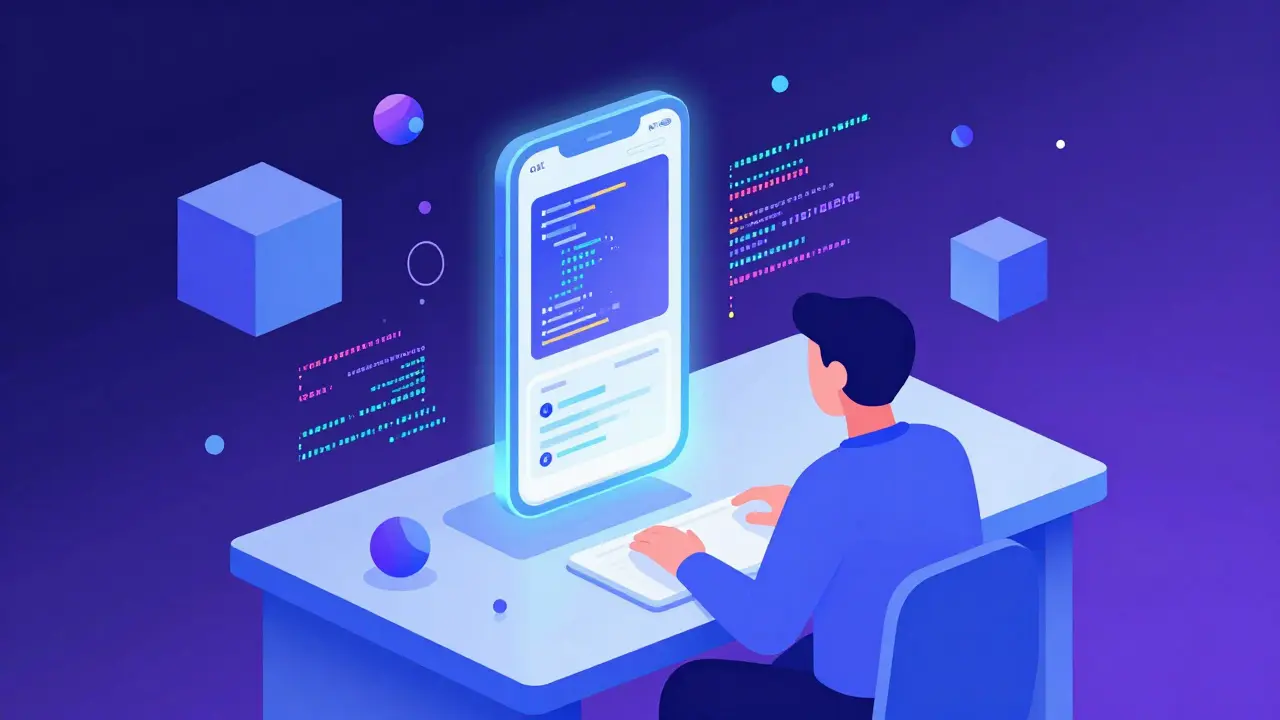
You have a brilliant app idea. You don’t know how to write Python or JavaScript. But you do know how to talk to AI. You describe your vision to an LLM, it spits out the code, you tweak the prompt, and boom-your app is live. This is vibe coding, a term popularized by Andrej Karpathy in early 2025. It’s democratizing software development like nothing before it.
But here is the part nobody talks about at the hackathon: Who actually owns that code? If you build an app using Cursor or GitHub Copilot, can you sell it? Can you sue someone if they copy it? Or does the copyright belong to the AI company, the open-source community, or... nobody?
The legal landscape for vibe-coded apps is not just gray; it’s a fog bank. As we move through 2026, the rules are still being written in courtrooms and regulatory bodies worldwide. If you are building for real, you need to understand these basics now, not after you get served with a lawsuit.
Who Owns the Code? The Copyright Conundrum
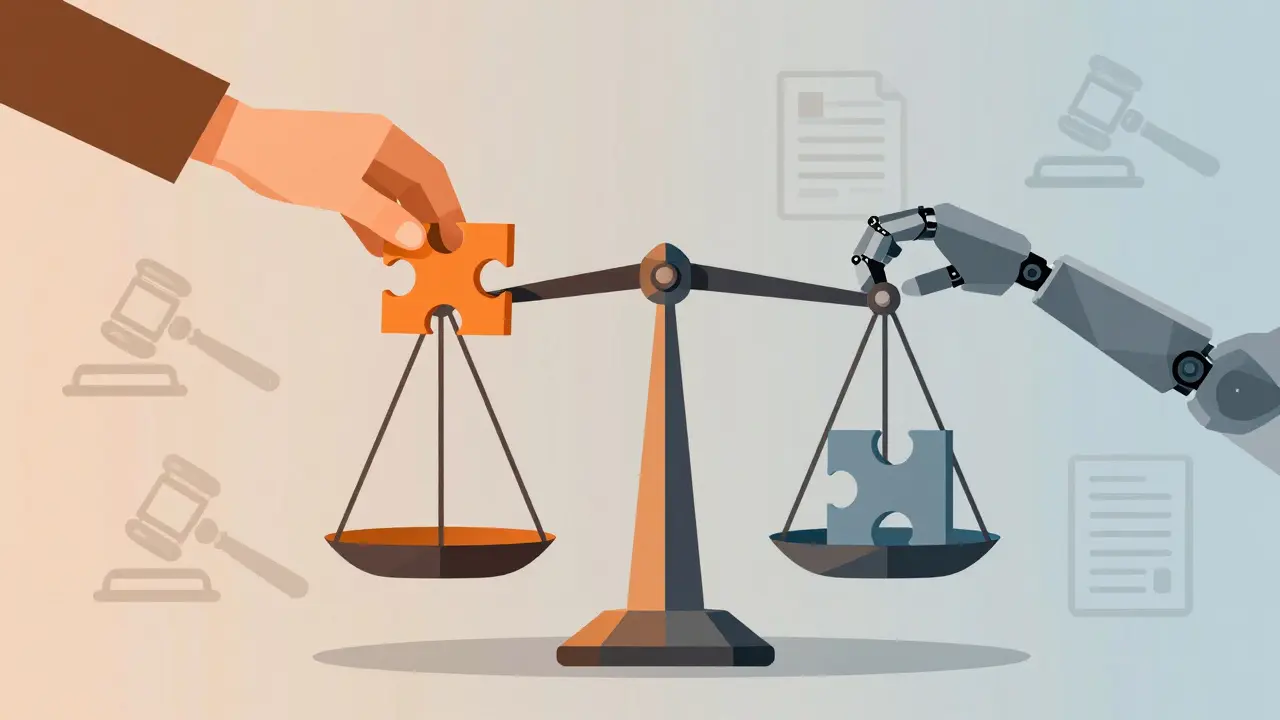
In traditional software development, ownership is straightforward. You write the code, you own the copyright. If you hire a developer, the contract determines who owns it. In vibe coding, the "author" is a machine. And machines cannot hold copyright.
This is the core tension. Under current U.S. Copyright Office guidance, works created entirely by artificial intelligence without human authorship are not eligible for copyright protection. The key word here is entirely. If you just type "Build me a todo list app" and copy-paste the result, you likely have no copyrightable work. That output is in the public domain. Anyone can take it, modify it, and sell it as their own.
To claim ownership, you need to demonstrate significant human creative input. This means:
- Selective curation: Choosing which parts of the AI output to keep and which to discard based on creative judgment.
- Detailed prompting: Writing complex, specific prompts that dictate structure, style, and logic, rather than vague requests.
- Manual editing: Rewriting sections of the code, optimizing algorithms, or integrating components in a unique way.
Think of it like photography. Taking a snapshot of a sunset doesn’t make you the owner of the sunset. But composing the shot, adjusting the lighting, and choosing the angle creates a new work. With vibe coding, your "composition" is your prompt engineering and your post-processing edits.
Licensing Traps: What Are You Really Using?
When you use an AI coding assistant, you are not just generating text. You are interacting with a model trained on billions of lines of existing code. Much of that training data comes from open-source repositories like GitHub. These repositories have licenses. And those licenses often come with strings attached.
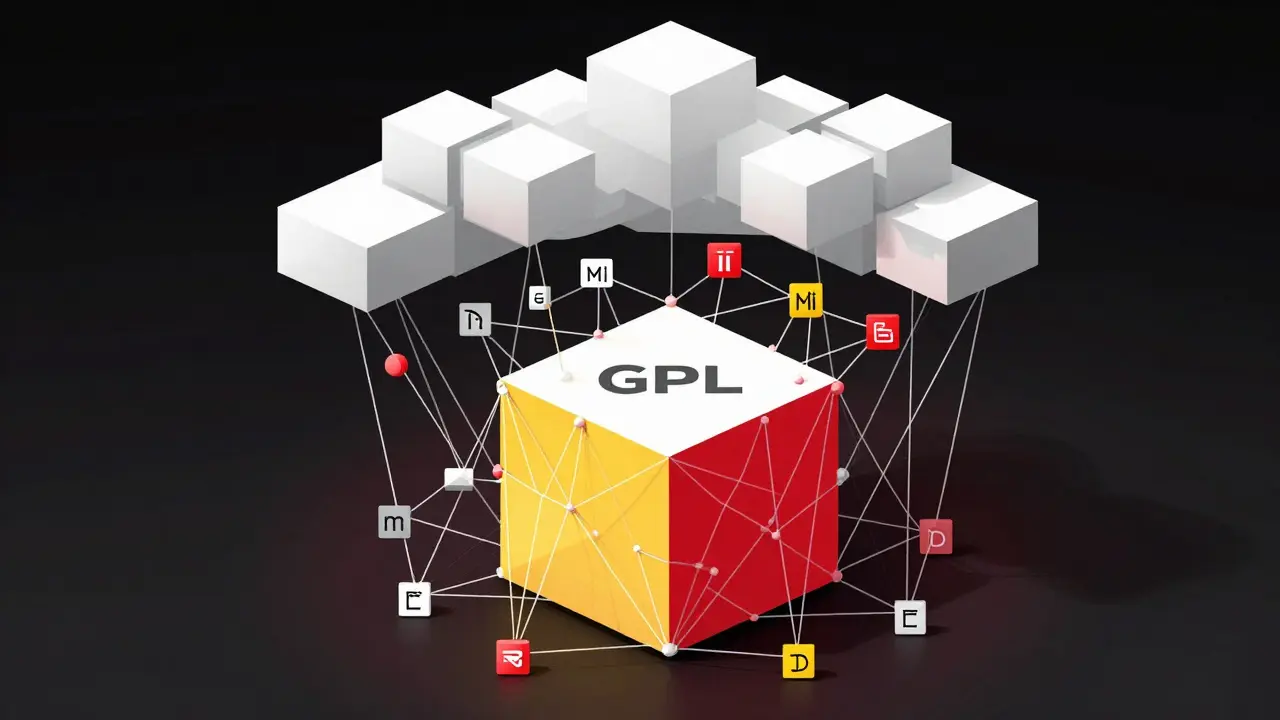
Consider the MIT License. It’s permissive. You can do almost anything with MIT-licensed code, including using it in commercial products, as long as you include the original copyright notice. Now consider the GPL (GNU General Public License). This is viral. If you incorporate GPL-licensed code into your project, your entire project must also be released under the GPL. You cannot close the source. You cannot sell it as proprietary software.
Here is the danger zone for vibe coders: AI models sometimes reproduce snippets of training data verbatim. If your AI assistant outputs a chunk of GPL-licensed code because it was memorized during training, and you integrate that into your proprietary app, you might be violating the GPL. Even if you didn’t knowingly copy it, ignorance is rarely a defense in license compliance.
Major platforms like OpenAI and Anthropic generally grant users ownership of the output they generate. Their terms of service usually state that you own the content you create. However, this ownership is subject to the underlying licenses of the training data. They protect themselves by disclaiming liability for infringement. That means if your AI-generated code infringes on someone else’s patent or copyright, you are on the hook, not them.
Platform Terms: Read the Fine Print
Every vibe coding platform has its own Terms of Service (ToS). These documents define the relationship between you, the platform, and the AI. Here is what you need to look for:
| Platform | Ownership of Output | Data Usage for Training | Commercial Use Allowed? |
|---|---|---|---|
| OpenAI (ChatGPT/Codex) | User owns output | May use anonymized data | Yes |
| Anthropic (Claude) | User owns output | No training on user data | Yes |
| GitHub Copilot | User owns output | Anonymized telemetry used | Yes |
| Replit | User owns output | Depends on plan | Yes |
| Cursor | User owns output | Local processing options | Yes |
Note that these policies change. Always check the latest ToS before deploying a product. Some platforms may claim broader rights over your inputs or outputs in future updates. Also, pay attention to whether the platform uses your code to improve their models. If you are working on proprietary technology, you might want to choose a platform that guarantees data privacy and does not train on your submissions.
Liability: When the Code Breaks
Let’s say your vibe-coded app crashes. Or worse, it has a security vulnerability that gets exploited. Users lose money. Data is leaked. Who is responsible?
Legally, you are. As the publisher and operator of the application, you bear the responsibility for its performance and security. You cannot blame the AI. Courts will view the AI as a tool, similar to a hammer or a compiler. If you use a hammer to build a house and it collapses, you are liable for poor construction, not the hammer manufacturer. Similarly, if you deploy AI-generated code, you are liable for any bugs, vulnerabilities, or harms it causes.
This makes testing critical. Vibe coding speeds up development, but it does not replace quality assurance. You must review the code, run tests, and audit for security flaws. Assuming the AI got it right is a recipe for disaster. In fact, relying blindly on AI output could be seen as negligence if things go wrong.
Practical Steps to Protect Your IP
If you are serious about building a business around vibe-coded apps, here is your action plan:
- Document your process. Keep logs of your prompts, iterations, and manual edits. This evidence helps prove human authorship if you need to enforce copyright later.
- Audit for open-source licenses. Use tools like FOSSA or Black Duck to scan your codebase for licensed dependencies. Ensure you comply with all attribution requirements.
- Add original value. Don’t just copy-paste. Rewrite functions, add unique features, and design custom interfaces. The more human creativity you inject, the stronger your IP position.
- Choose the right platform. Select an AI provider whose ToS aligns with your commercial goals and privacy needs. Prefer platforms that offer clear ownership guarantees.
- Consult a lawyer. For high-stakes projects, get a legal opinion. Intellectual property law is evolving rapidly, and a specialist can help you navigate jurisdiction-specific nuances.
The Future: Will Laws Catch Up?
As of 2026, there is no global consensus on AI-generated IP. The EU’s AI Act focuses on risk classification and transparency, not ownership. The U.S. Copyright Office continues to deny registration for purely AI-generated works. China and other jurisdictions are experimenting with different approaches.
Expect changes. Legislators are watching this space closely. New laws may emerge that create a separate category of rights for AI-assisted works, or they may reinforce the requirement for human authorship. Until then, operate under the assumption that human input is essential for protection.
Vibe coding is powerful. It lowers barriers and accelerates innovation. But power comes with responsibility. Understand the legal boundaries, respect existing licenses, and protect your creations. Do this, and you can build confidently in the age of AI.
Can I copyright code generated entirely by AI?
No. Under current U.S. law, works created solely by AI without human authorship are not eligible for copyright. You must contribute significant creative input through prompting, editing, or structuring to claim ownership.
Do I need to disclose that my app was built with AI?
Currently, there is no universal legal requirement to disclose AI usage in software. However, transparency builds trust with users and investors. Some platforms or app stores may introduce disclosure requirements in the future.
What happens if AI generates code that infringes on someone else's copyright?
You are likely liable for the infringement. AI providers typically disclaim responsibility in their Terms of Service. To mitigate risk, audit your code for known licensed snippets and avoid reproducing large blocks of text from copyrighted sources.
Is vibe coding legal?
Yes, using AI to assist in coding is legal. The legality depends on how you use the output. You must comply with software licenses, respect intellectual property rights, and adhere to platform Terms of Service.
Can I sell an app built with vibe coding?
Yes, most major AI platforms allow commercial use of generated code. However, ensure you have the right to distribute the code under applicable licenses and that you have added sufficient human creative input to establish ownership where possible.
- May, 18 2026
- Collin Pace
- 0
- Permalink
- Tags:
- vibe coding legal rights
- AI generated code copyright
- software licensing for AI apps
- intellectual property ownership vibe coding
- Andrej Karpathy vibe coding law
Written by Collin Pace
View all posts by: Collin Pace