LLMs in Education: Building Personalized Learning Paths
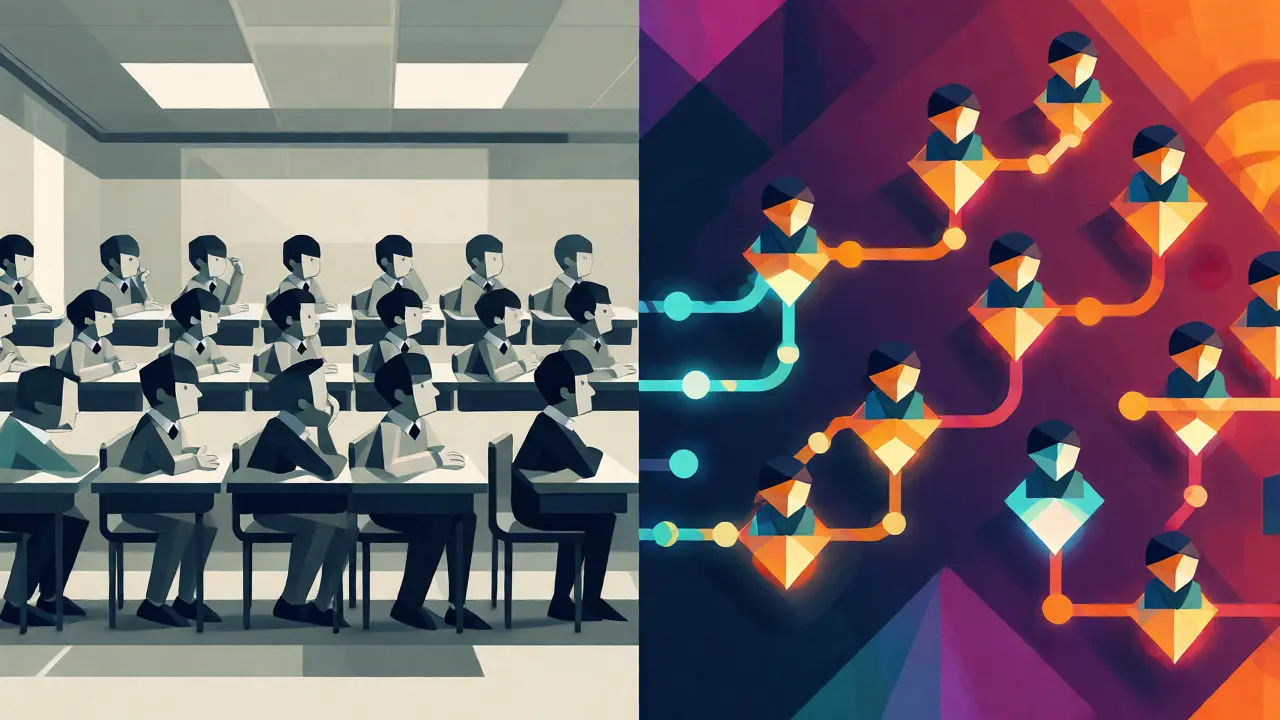
Imagine a classroom with thirty students. The teacher explains a concept, but half the class is lost while the other half is bored. This isn't a hypothetical scenario; it's the daily reality of traditional education. Now, imagine if every student had a tutor who knew exactly where they were struggling, adjusted the difficulty instantly, and never got tired. That’s the promise of Large Language Models (LLMs) in education. These AI systems aren't just chatbots; they are engines for personalized learning paths that adapt to each learner's pace, style, and gaps in real-time.
The Shift from One-Size-Fits-All to Adaptive Tutoring
For decades, differentiated instruction was the holy grail of teaching. Teachers wanted to tailor lessons, but human bandwidth is limited. You can't individually track thirty distinct knowledge graphs simultaneously. LLMs change this equation. By analyzing student interactions, these models identify specific misconceptions and adjust content delivery accordingly. It’s not magic; it’s pattern recognition at scale. A study by Professor Thomas Thesen at Dartmouth showed that an LLM-powered tool could support 190 medical students at once, providing individualized feedback that would be impossible for a single human instructor. This scalability is the core value proposition. We’re moving from static curricula to dynamic, responsive learning environments.
How LLMs Build Personalized Paths
So, how does an LLM actually create a path? It starts with diagnosis. When a student answers a question incorrectly, the model doesn't just say "wrong." It analyzes the error type. Did the student misunderstand the premise? Make a calculation error? Or lack prerequisite knowledge? Based on this, the system retrieves relevant explanations or generates new practice problems. Platforms like SchoolAI use this approach to simplify text for dyslexic students or generate complex scenarios for advanced learners. The goal is to keep the student in the "zone of proximal development"-challenged but not overwhelmed.
| Feature | Human Tutor | Traditional LMS | LLM-Powered Tutor |
|---|---|---|---|
| Scalability | Low (1:1 or small groups) | High (passive content) | Very High (interactive, 1:many) |
| Personalization | High (context-aware) | Low (pre-set modules) | Medium-High (data-driven adaptation) |
| Emotional Intelligence | Excellent | None | Limited (detects frustration poorly) |
| Availability | Restricted hours | 24/7 access | 24/7 instant response |
| Cost per Student | High | Low | Low marginal cost |
Real-World Performance and Limitations
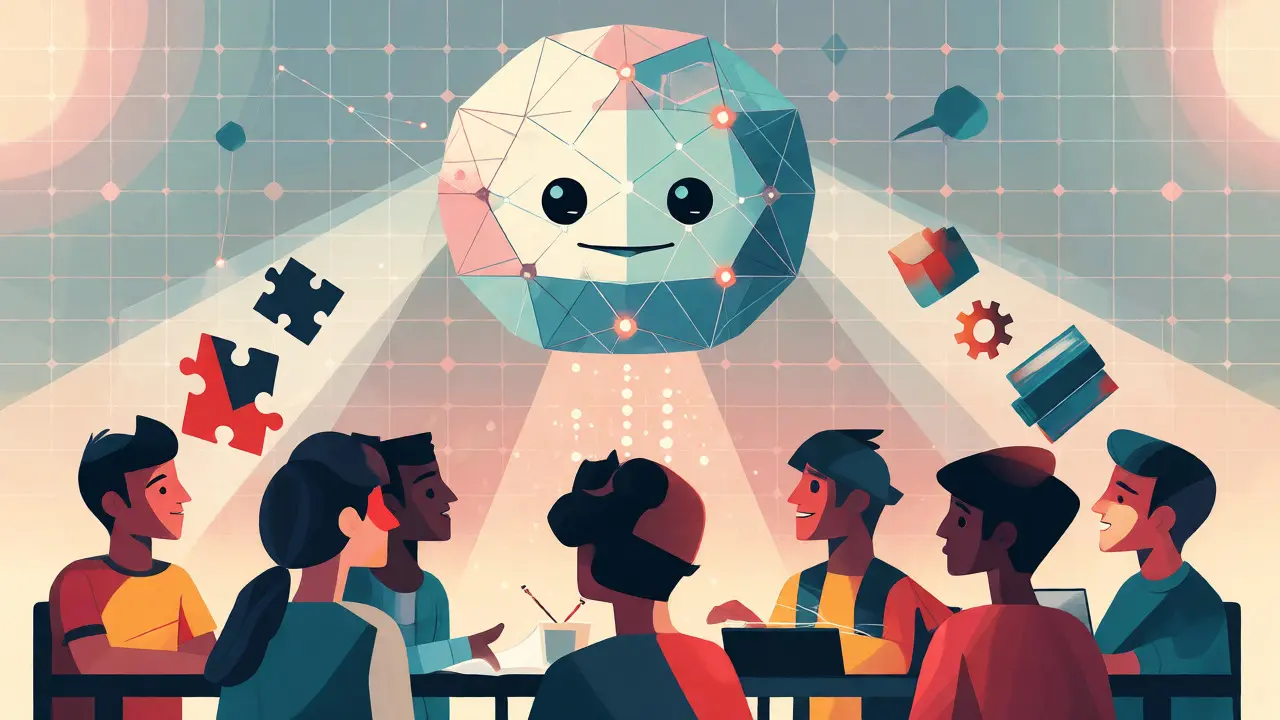
Let’s look at the numbers. LLMs excel at factual recall and language tasks. For well-defined subjects, accuracy can hit 85-95%. But when you ask them to solve novel, complex math problems or interpret subtle social cues, performance drops. A January 2026 analysis noted error rates ranging from 5% for vocabulary exercises to nearly 80% for advanced mathematics. This matters because blind trust leads to learning gaps. Students using tools like NeuroBot TA reported wasting time on plausible-sounding but incorrect information about rare conditions. The lesson? LLMs are powerful assistants, not infallible authorities. They require verification, especially in high-stakes subjects.
Implementation Strategies for Educators
If you’re an educator wondering where to start, don’t try to overhaul your entire curriculum overnight. Successful implementations follow a phased approach. Start with administrative burdens. Use LLMs to draft parent communications, summarize reading materials, or generate quiz questions. This saves teachers 2-3 hours weekly, according to Gallup data. Once comfortable, move to differentiation. Use tools to create multiple versions of a text at different reading levels. Finally, introduce direct student interaction with guardrails. Teach students how to prompt effectively and verify outputs. Remember, the goal isn't to replace the teacher but to free the teacher from repetitive tasks so they can focus on mentorship and critical thinking.
Ethical Considerations and Bias
There’s a shadow side to algorithmic personalization. Training data contains biases. If an LLM is trained primarily on Western academic texts, it might struggle with cultural contexts or non-native English nuances. Dr. Susan Chen from MIT highlighted that LLMs showed 23% lower accuracy for non-native speakers in testing scenarios. Furthermore, privacy is paramount. With FERPA and COPPA regulations tightening, platforms must ensure student data is anonymized and secure. Always check if your chosen tool complies with the 2024 National Education Data Privacy Standards. Don’t let convenience compromise compliance.
The Future of Human-AI Collaboration
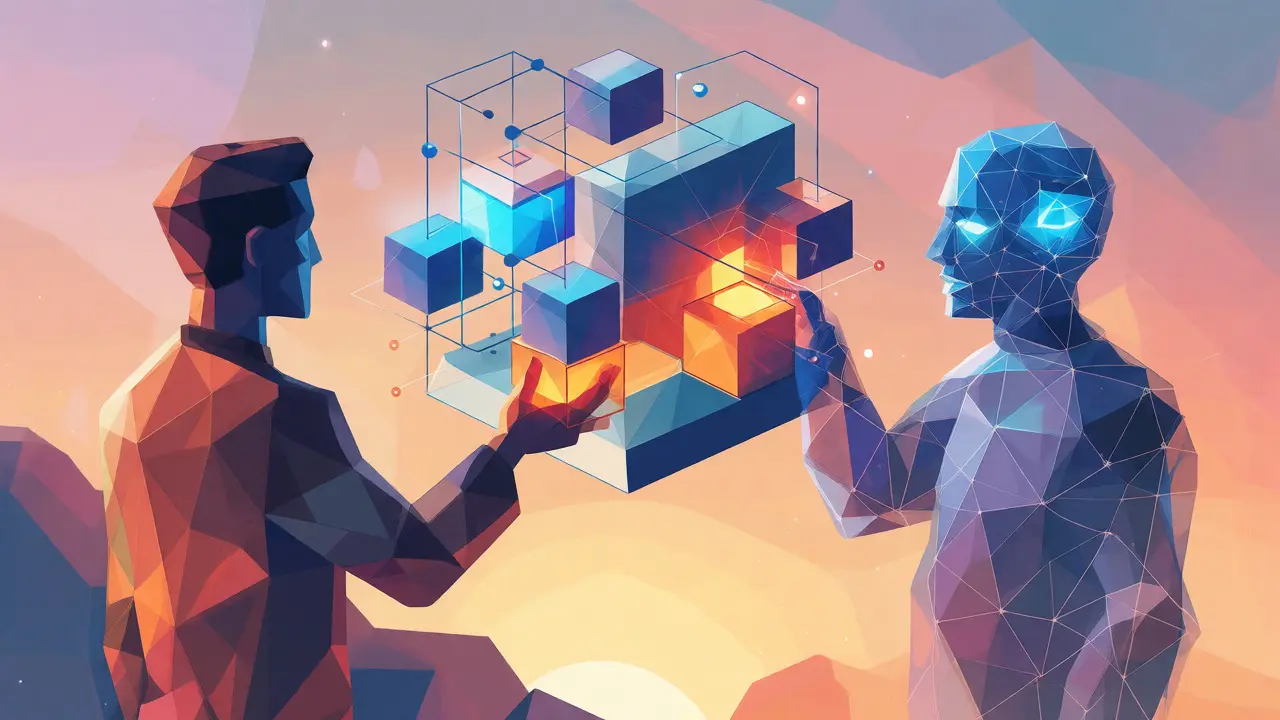
We aren't heading toward robot-only classrooms. The most effective future is hybrid. LLMs handle the scalable, data-heavy lifting of tracking progress and delivering foundational content. Humans provide the emotional connection, ethical guidance, and complex problem-solving facilitation. As we move into 2026 and beyond, expect more multimodal systems that integrate voice, visual, and text inputs. The key is maintaining agency. Students need to understand when to use AI for quick answers and when to use it as a scaffold for deeper learning. Technology should amplify human potential, not diminish it.
Are LLMs better than human tutors?
It depends on the metric. LLMs win on scalability, availability, and consistency for factual reinforcement. Human tutors win on emotional intelligence, motivation, and handling nuanced, open-ended discussions. The best results come from combining both.
How do I prevent students from over-relying on AI?
Focus on process, not just product. Require students to show their work, explain their reasoning, and critique AI-generated answers. Use oral defenses and in-class assessments that cannot be automated. Teach them that AI is a tool for exploration, not a crutch for avoidance.
What are the biggest risks of using LLMs in schools?
Hallucination (confidently wrong answers), bias against diverse learners, and data privacy breaches are the top concerns. Mitigate these by verifying facts, auditing for bias, and choosing compliant platforms.
Do LLMs work for all subjects?
They work best for language arts, history, and basic sciences where text-based reasoning dominates. They struggle with hands-on labs, physical education, and highly creative or ambiguous tasks. Chemistry lab simulations, for example, have shown significantly lower accuracy compared to in-person demonstrations.
Is specialized hardware required for educational LLMs?
Generally, no. Most educational LLM platforms run in standard web browsers. The heavy processing happens on cloud servers. However, enterprise deployments may require secure cloud infrastructure to meet district security standards.
- Oct, 5 2026
- Collin Pace
- 0
- Permalink
Written by Collin Pace
View all posts by: Collin Pace