Market Forecast: Adoption Scenarios for Vibe Coding Through 2030
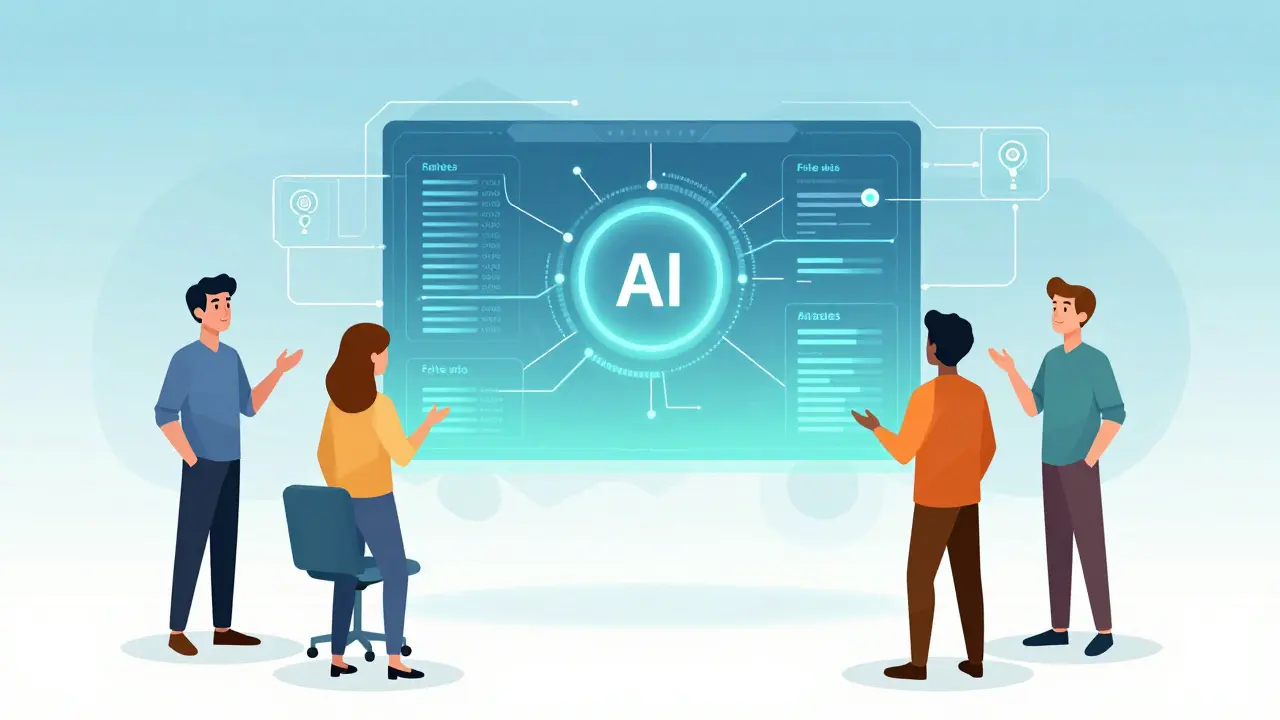
By 2030, half of all new software won’t be written by humans. It’ll be generated-by AI, in real time, from a spoken idea or a dragged-and-dropped visual block. This isn’t science fiction. It’s vibe coding, and it’s already reshaping how code gets made. Forget typing out lines of Python or JavaScript. Now, you say, "Build a dashboard that shows sales by region with real-time alerts," and the AI builds it. No syntax errors. No debugging hell. Just results. The shift isn’t coming. It’s here.
What Exactly Is Vibe Coding?
Vibe coding is the fusion of generative AI and low-code/no-code tools that lets anyone-developer or not-create software using natural language, voice, or visual interfaces. It doesn’t replace developers. It transforms them. Instead of writing loops and conditionals, they describe what they want. The AI handles the boilerplate, the structure, even the testing. Think of it like using Siri to build an app, but far more powerful and precise.
Tools like Cursor, Lovable, and Replit already let you type a prompt and get a working React component or API endpoint. Some platforms let you sketch a UI on a whiteboard, and the AI turns it into responsive HTML and CSS. Others let you talk through a workflow, and the system auto-generates the backend logic. This isn’t automation. It’s co-creation.
Market Growth: The Numbers Don’t Lie
The market for AI-assisted coding is exploding. One analysis says the segment will hit $97.9 million by 2030. Another says $100 billion. The truth? It depends on how you define it. If you count only pure code generators, the number is lower. If you include all AI-powered development tools-visual builders, voice-to-code, AI-driven testing, auto-documentation-you’re looking at a $25 billion to $100 billion market by the end of the decade.
The fastest-growing piece? Code generation itself. It’s projected to grow at a 52% CAGR through 2030. That’s not growth. That’s a tidal wave. In 2024, AI generated maybe 10% of code in enterprise apps. By 2026, Gartner says it’ll be 60%. By 2028, 40% of all new production software in companies will be built using vibe coding tools. That’s not a trend. That’s a new standard.
Who’s Adopting It-and How Fast?
Adoption isn’t uniform. Startups are racing ahead. By 2030, 25% of Y Combinator-backed companies will use AI to generate 80% of their code. That means they ship products 55% faster. They hire fewer engineers. They iterate daily. For them, vibe coding isn’t a luxury. It’s survival.
Enterprises are slower, but they’re moving. By 2029, 80% of mission-critical business apps will run on low-code/no-code platforms. That’s not just marketing. That’s a shift in IT strategy. Why? Because legacy development cycles take months. Vibe coding cuts that to days-or hours. A finance team can build a compliance tracker. A marketing team can automate lead scoring. No IT ticket needed.
The real driver? Cost. Building software the old way is expensive. Hiring senior engineers costs $150,000+ a year. With vibe coding, one engineer can do the work of five. And non-developers? They can finally build what they need without waiting.
The Dark Side: Why Adoption Might Stall
But here’s the catch: adoption isn’t just about technology. It’s about trust.
After a huge spike in mid-2025, traffic to major vibe coding platforms dropped. Lovable lost 40% of users. Vercel’s v0 saw a 64% decline. Why? Because early users hit a wall. The AI generated code that looked right-but had hidden bugs. Security flaws. Poor scalability. Teams deployed AI-built apps, only to find they couldn’t maintain them. The code was a black box. When something broke, no one knew how to fix it.
And the cost to run these tools? Astronomical. Every time you ask the AI to generate code, it’s using massive compute power. That’s expensive. Many startups are burning cash to keep their tools free. That’s not sustainable. If inference costs don’t drop, pricing will rise-and adoption will slow.
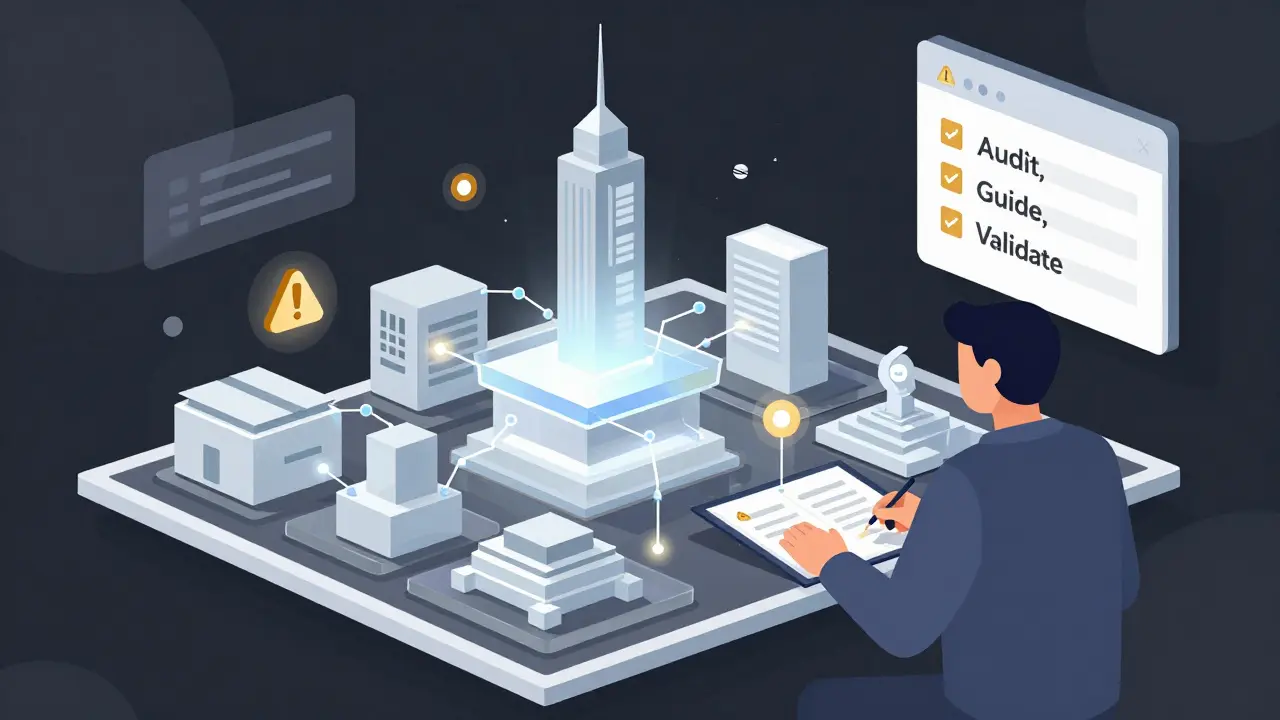
Then there’s the skill gap. Gartner estimates 80% of developers will need retraining by 2027. Not to code. To review. To guide. To audit. To manage AI-generated systems. Most developers today don’t know how to do that. They’re trained to write code, not to supervise AI.
The Future: What Happens After 2030?
By 2030, vibe coding won’t look like what it does today. Voice-to-code will be mainstream. Imagine describing a full app-"I need a mobile app that books appointments, sends reminders, and syncs with Google Calendar"-and watching it appear on your screen. No typing. No clicking. Just talking.
Domain-specific AI assistants will emerge. A banking AI won’t just write code. It’ll know SEC regulations. A healthcare AI will auto-apply HIPAA rules. An education tool will structure lessons according to pedagogical standards. These aren’t features. They’re requirements.
Visual development will replace text. Instead of writing code, you’ll drag and drop components, connect data flows with lines, and watch the AI translate it into production-ready software. You’ll see the system architecture as a map, not a file tree.
And sustainability? It’ll be built in. Carbon-aware pipelines will schedule code generation during off-peak energy hours. Edge-native development will let apps run on low-power devices without constant cloud calls. The future isn’t just faster code. It’s cleaner code.
The Real Challenge: Organizational Change
The biggest barrier to vibe coding isn’t tech. It’s culture.
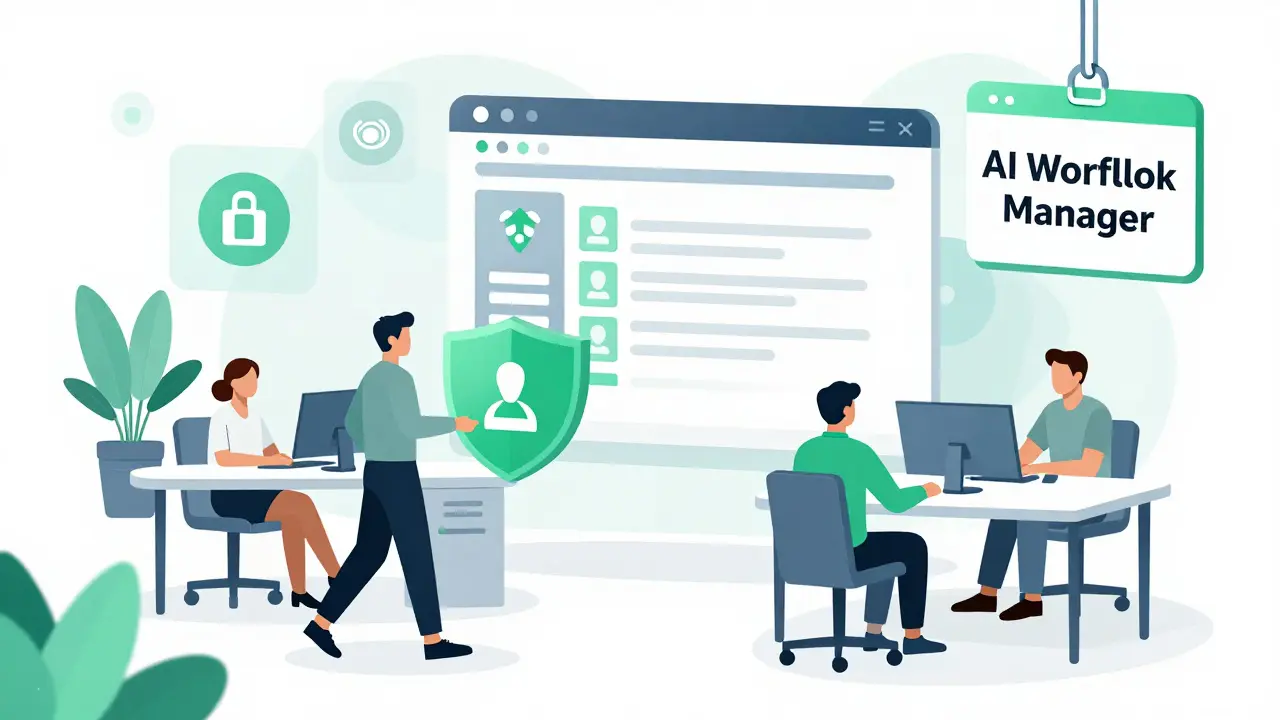
Companies that succeed will be the ones that treat AI as a teammate-not a tool. They’ll create new roles: AI workflow managers, code auditors, prompt engineers. They’ll build governance frameworks. They’ll audit AI-generated code like they audit financial reports. They’ll train teams not just on tools, but on mindset.
Those that don’t? They’ll end up with a mess. Thousands of untracked, unmaintained apps. Security breaches. Compliance failures. A workforce confused and overwhelmed.
The winners will be the ones who realize: vibe coding doesn’t reduce the need for humans. It changes what humans do. We move from typing to thinking. From fixing bugs to designing systems. From coding to leading.
Final Thought: The New Developer
The developer of 2030 won’t be the one who knows every API. They’ll be the one who asks the right questions. Who can spot when the AI is wrong. Who knows how to steer it. Who understands the business need behind the request.
Vibe coding isn’t about replacing programmers. It’s about elevating them. The future of software isn’t written in code. It’s spoken, drawn, and shaped by human intent-guided by AI.
Is vibe coding the same as low-code or no-code?
Not exactly. Low-code and no-code platforms let you build apps using visual builders and pre-built components. Vibe coding adds generative AI on top of that. Instead of dragging buttons and setting properties, you describe what you want in plain language, and the AI builds it for you. So vibe coding is low-code/no-code-but smarter, more flexible, and powered by AI.
Can vibe coding replace software engineers?
No, but it will change what they do. Engineers won’t be writing 90% of the code anymore. Instead, they’ll focus on designing systems, reviewing AI output, handling edge cases, ensuring security, and managing workflows. The role shifts from coder to AI supervisor. The best engineers will be those who can ask the right questions and spot when the AI is making a mistake.
Why are vibe coding startups losing users after early growth?
Because early adopters hit real-world limits. The AI-generated code often looked good but had hidden bugs, security holes, or scalability issues. Teams deployed apps that broke under pressure. Also, running these tools is expensive-each code generation request uses a lot of compute power. Many startups offered free access, but that’s not sustainable. As pricing rises or quality drops, users leave.
Will vibe coding make software development cheaper?
Yes-but not in the way most think. It won’t eliminate jobs. It will reduce the number of engineers needed per project. A team of five might shrink to one, with AI handling the rest. Companies save on salaries, onboarding, and time-to-market. But they’ll need to invest in training, governance, and AI oversight. The cost shifts from labor to process.
What industries will adopt vibe coding first?
Startups and tech-heavy industries like fintech, SaaS, and e-commerce are leading. They move fast and need to iterate daily. Healthcare and government are slower due to regulations, but they’re starting to adopt vibe coding for internal tools-like patient scheduling or compliance dashboards-where speed matters more than public-facing reliability.
- Mar, 6 2026
- Collin Pace
- 7
- Permalink
- Tags:
- vibe coding
- AI code generation
- low-code no-code
- generative AI development
- software development 2030
Written by Collin Pace
View all posts by: Collin Pace