Migration Paths: Replacing Vibe-Coded Scaffolds with Production Components
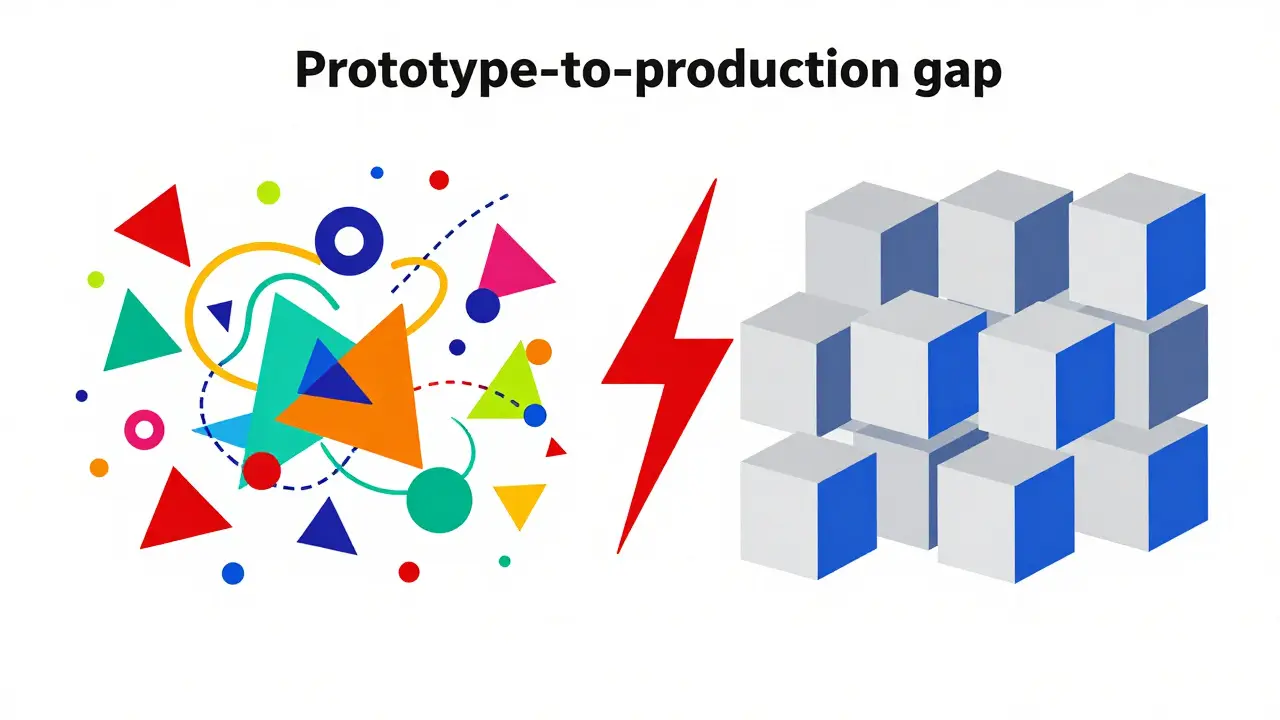
It takes about ten minutes to generate a fully functional dashboard component using vibe coding is a development paradigm where engineers use natural language prompts to generate code through AI systems, prioritizing rapid ideation and prototyping over production readiness. You type a prompt, the AI spits out React hooks, Tailwind classes, and maybe even some mock data. It looks good. It works in your local environment. But when you push it to production, things break. Security vulnerabilities surface. Performance tanks under load. Error handling is nonexistent.
This is the prototype-to-production gap. And it’s real. According to SD Times (October 15, 2024), vibe coding excels at speed but fundamentally struggles with deployment rigor. The result? A growing pile of technical debt that no one wants to clean up until it’s too late.
The good news? You don’t have to choose between speed and quality. There are proven migration paths that let you keep the benefits of vibe coding while ensuring your code meets production standards. Let’s walk through them.
Why Vibe Coding Fails in Production
Vibe coding isn’t broken-it’s just misunderstood. It was never designed for production environments. It’s designed for exploration. For getting ideas off the ground quickly. For proving concepts before investing serious engineering time.
But here’s the problem: most teams treat vibe-coded output as if it’s ready to ship. They skip review. They ignore testing. They deploy directly from their laptops. And then they wonder why incidents spike.
Canva’s CTO Brendan Humphreys put it bluntly in April 2024: “You won’t be vibe coding your way to production-not if you prioritize quality, safety, security and long-term maintainability at scale.”
Rocket New’s February 2025 analysis backs this up. Of 127 enterprise implementations studied, 78% required significant refactoring before production deployment. Direct deployments failed 82% of the time when SLAs demanded 99.9% uptime.
The issue isn’t the AI. It’s the lack of structure around how that AI-generated code gets integrated into your system.
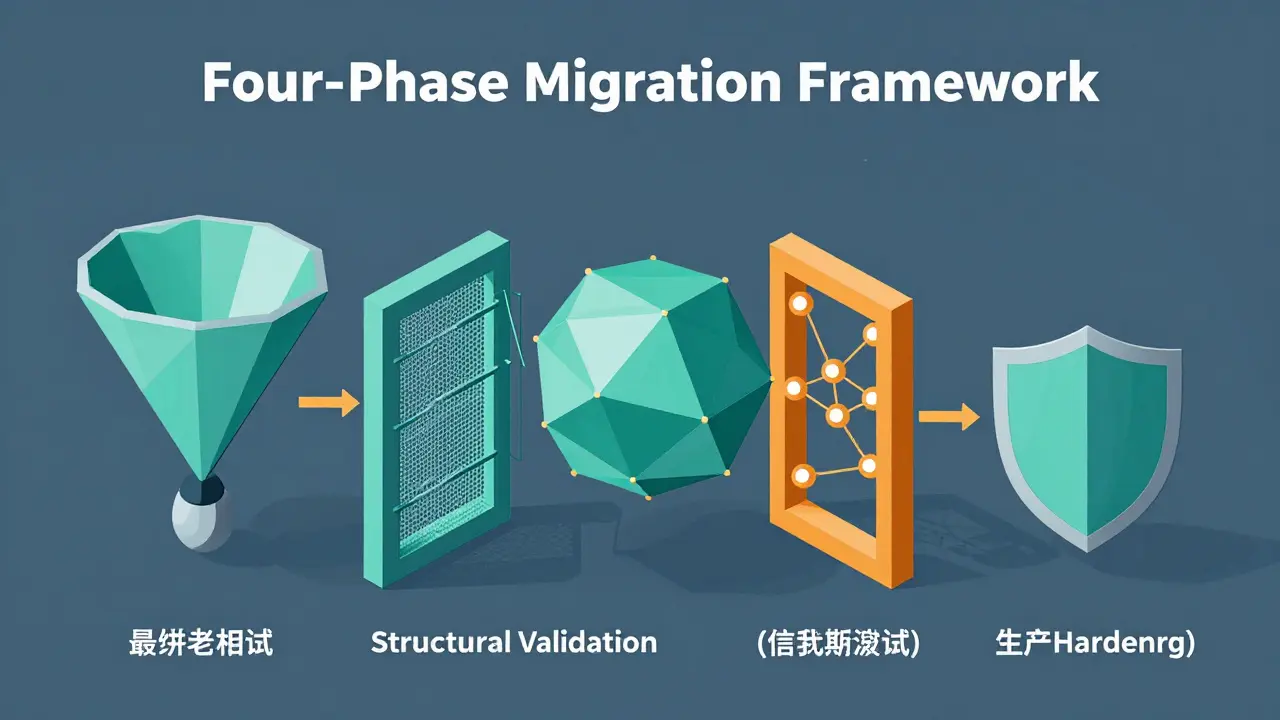
The Four-Phase Migration Framework
Successful teams don’t throw away vibe-coded scaffolds-they transform them. Here’s the framework that’s working across industries:
- Initial AI Generation (10-15 minutes): Use vibe coding to create the first draft of your component. Focus on functionality, not perfection.
- Structural Validation (20-30 minutes): Run automated checks against your team’s architectural constraints. This includes type checking, linting, and schema validation.
- Integration Testing (45-60 minutes): Test the component within its actual context-connected to databases, APIs, and other services. Look for edge cases and failure modes.
- Production Hardening (60-90 minutes): Add monitoring, logging, error boundaries, and security controls. Ensure observability and rollback capabilities.
This process adds roughly two hours per component-but reduces production incidents by 63%, according to GitHub’s State of Octoverse 2024 report.
Golden Path Templates: Your Safety Net
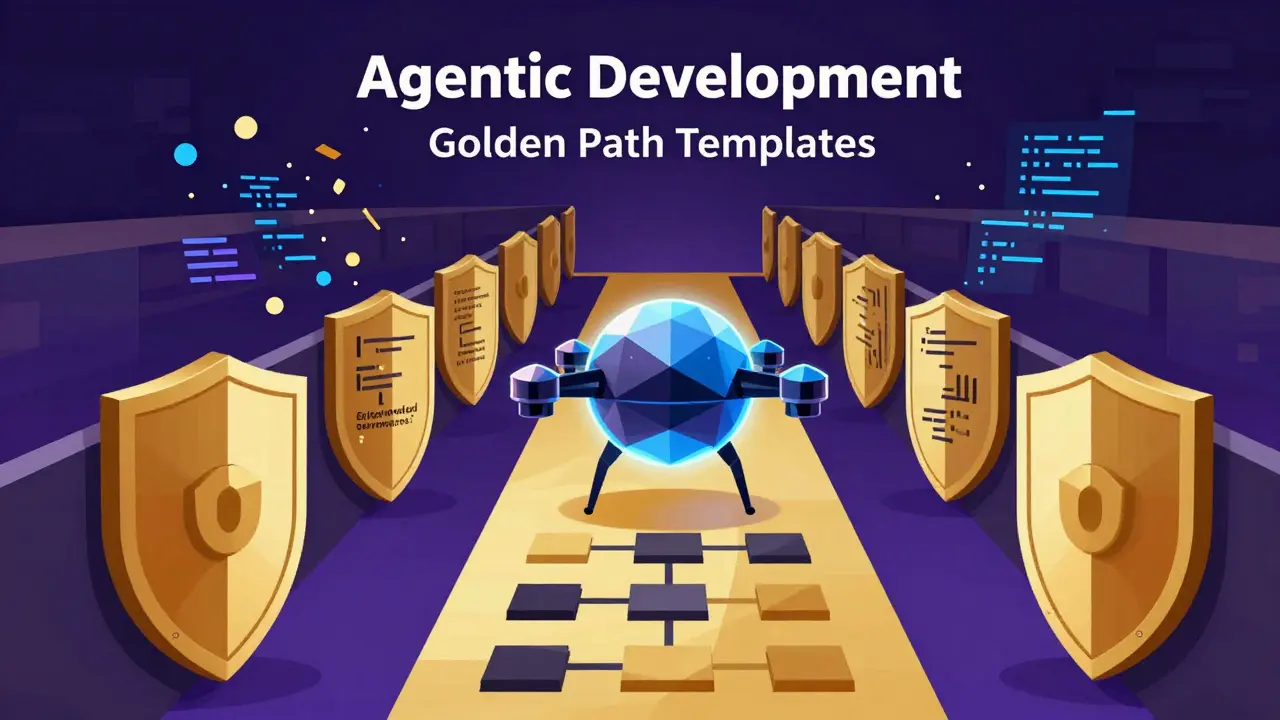
One of the most effective ways to bridge the gap is through golden path templates. These are pre-approved, battle-tested patterns that constrain AI output to safe, scalable architectures.
Alex MacCaw, founder of Tuple, emphasized in January 2025 that “a strong scaffold with good conventions and patterns is critical to getting the best code out of the AI.” He recommends monorepo scaffolds like ‘ai-monorepo-scaffold’ that include migrations, routes, Zod schemas, and React Hook Form setups.
Here’s what a typical golden path template includes:
- TypeScript with strict mode enabled (adopted by 92% of successful teams per Memberstack’s Q1 2025 survey)
- Pre-configured infrastructure definitions via Kubernetes manifests or Helm charts
- Built-in governance checks that validate compliance before merge
- Standardized error handling and retry logic
- Observability hooks for metrics, logs, and traces
Teams using these templates saw a 53% reduction in deployment failures after exposing their workflows via MCP Server, as documented by SD Times in October 2024.
Low-Code Platforms: The Hybrid Approach
If you’re struggling to migrate vibe-coded components manually, consider low-code platforms. Rocket New’s February 2025 comparison showed that 68% of enterprises now use hybrid approaches where “vibe coding speeds up creation, while low-code sustains it.”
Low-code platforms offer several advantages:
- 73% faster migration compared to manual rewriting
- 41% fewer defects post-deployment
- Built-in governance and audit trails
- Easier collaboration between developers and non-developers
Traditional coding methods require complete manual rewrite-averaging 8.2 hours per component-but deliver superior long-term maintainability. Low-code strikes a balance, enabling rapid iteration without sacrificing control.
| Strategy | Time per Component | Defect Rate | Maintainability | Best For |
|---|---|---|---|---|
| Vibe Coding Only | ~15 min | High (82% failure rate) | Poor | Prototypes, internal tools |
| Manual Rewrite | ~8.2 hrs | Low | Excellent | Critical systems, legacy integration |
| Low-Code Hybrid | ~2-3 hrs | Medium-Low (41% fewer defects) | Good | Enterprise apps, regulated industries |
| Agentic Development | ~2-4 hrs | Low (57% better outcomes) | Very Good | Scalable microservices, CI/CD pipelines |
Agentic Development: The Next Step
Github announced Copilot’s “Agentic Development” framework in February 2025. Unlike pure vibe coding, agentic development uses structured agent workflows that enforce review cycles, test coverage, and governance checks automatically.
In beta testing, this approach reduced production incidents by 57%. Teams reported higher satisfaction scores (4.7/5 vs. 2.3/5 for direct deployment) and faster time-to-market.
Forrester predicts that by 2027, 80% of enterprises will require AI-generated code to pass through four-stage validation: structural, security, performance, and compliance. Agentic frameworks make this feasible at scale.
Real-World Examples That Work
A fintech startup documented in SD Times (December 2024) cut feature development time from three weeks to five days by combining vibe coding for prototyping with strict migration to golden-path templates. Zero production incidents over nine months.
Metronome’s design team implemented long-lived environments continuously updated from main branch, allowing designers to push fixes while maintaining production safety. Their March 2025 case study highlights how git worktrees separate coding agent workspaces, enabling parallel development without risking stability.
On Reddit’s r/programming (March 12, 2025), a senior engineer at a Fortune 500 company shared: “We use vibe coding for internal tools but require three rounds of human review and test coverage >80% before production.” Result? Forty percent faster development with zero incidents over six months.
Common Pitfalls to Avoid
Even with the right framework, mistakes happen. Here’s what to watch out for:
- Combinatorial explosion: AI generates too many options, leading to decision fatigue. Reported by 74% of teams.
- Security gaps: Generated code often lacks proper authentication or input sanitization. Found in 68% of direct deployments.
- Performance blind spots: Prototypes run fine locally but choke under load. Seen in 61% of cases.
- Inconsistent error handling: No fallbacks or retries. Complaint from 63% of negative experiences.
- Hidden technical debt: Quick wins today become maintenance nightmares tomorrow. Reported by 68% of struggling teams.
Solutions? Bake in governance checks (adopted by 83% of high-performing teams). Implement golden-path templates (76% adoption). Monitor key metrics like lead time for changes, change failure rate, and MTTR (tracked by 91% of successful implementations).
How to Start Migrating Today
You don’t need to overhaul everything overnight. Start small. Pick one component. Apply the four-phase framework. Measure results. Iterate.
Here’s your action plan:
- Identify a low-risk component currently built with vibe coding.
- Set up a golden-path template with TypeScript strict mode and basic tests.
- Run structural validation and fix any issues flagged.
- Add integration tests covering real-world usage scenarios.
- Harden for production: add logging, error boundaries, and monitoring.
- Deploy and measure impact on incident rates and developer satisfaction.
Dedicating just 15-20% of your development time to migration activities can boost production stability by 67%, according to SD Times.
Final Thoughts
Vibe coding isn’t going anywhere. Neither should it. It’s a powerful tool for accelerating innovation. But treating it as a silver bullet for production-ready software is dangerous.
The future isn’t vibes alone-it’s structured migration. It’s combining the speed of AI with the discipline of platform engineering. It’s building pathways that preserve creativity while enforcing accountability.
Start building those pathways now. Your production environment-and your users-will thank you.
What is vibe coding?
Vibe coding is a development approach where engineers use natural language prompts to generate code via AI systems. It prioritizes rapid prototyping and ideation over production readiness, making it ideal for early-stage exploration but risky for direct deployment.
Why does vibe coding fail in production?
Vibe-coded code often lacks proper error handling, security controls, performance optimization, and observability. Without structured migration processes, it introduces hidden technical debt and increases the likelihood of production failures.
What are golden path templates?
Golden path templates are pre-approved, standardized patterns that guide AI-generated code toward production-safe architectures. They include type checking, infrastructure definitions, governance checks, and observability hooks to ensure consistency and reliability.
How do low-code platforms help with migration?
Low-code platforms enable faster migration (73% quicker than manual rewrites) with fewer defects (41% reduction). They provide built-in governance, audit trails, and collaborative features, making them ideal for bridging the gap between AI prototypes and production systems.
What is agentic development?
Agentic development refers to AI-driven workflows that automate code reviews, testing, and governance checks. Introduced by GitHub Copilot in February 2025, it reduces production incidents by 57% and improves developer satisfaction through structured, repeatable processes.
How long does the migration process take?
The full four-phase migration typically takes 2-3 hours per component: 10-15 minutes for initial generation, 20-30 minutes for structural validation, 45-60 minutes for integration testing, and 60-90 minutes for production hardening.
Should I stop using vibe coding entirely?
No. Vibe coding remains valuable for rapid prototyping and internal tools. The key is implementing structured migration paths to transform AI-generated scaffolds into production-ready components without introducing technical debt.
What metrics should I track during migration?
Track lead time for changes, change failure rate, mean time to recovery (MTTR), and infrastructure cost per service. These KPIs help measure the effectiveness of your migration strategy and identify areas for improvement.
Is there a learning curve for migration frameworks?
Yes. Most engineers master effective migration patterns within 2-3 weeks. Teams dedicating 15-20% of development time to migration activities see 67% higher production stability, according to SD Times.
Which industries benefit most from structured migration?
Financial services and healthcare companies implement additional compliance checks for AI-generated code, with adoption rising from 29% in 2024 to 73% in 2025 (Deloitte AI Governance Report). Regulated sectors benefit significantly from structured migration frameworks.
- Jun, 9 2026
- Collin Pace
- 5
- Permalink
- Tags:
- vibe coding migration
- production components
- AI code scaffolding
- golden path templates
- agentic development
Written by Collin Pace
View all posts by: Collin Pace