On-Prem and Private Cloud LLMs for Regulated Data Handling: A Guide
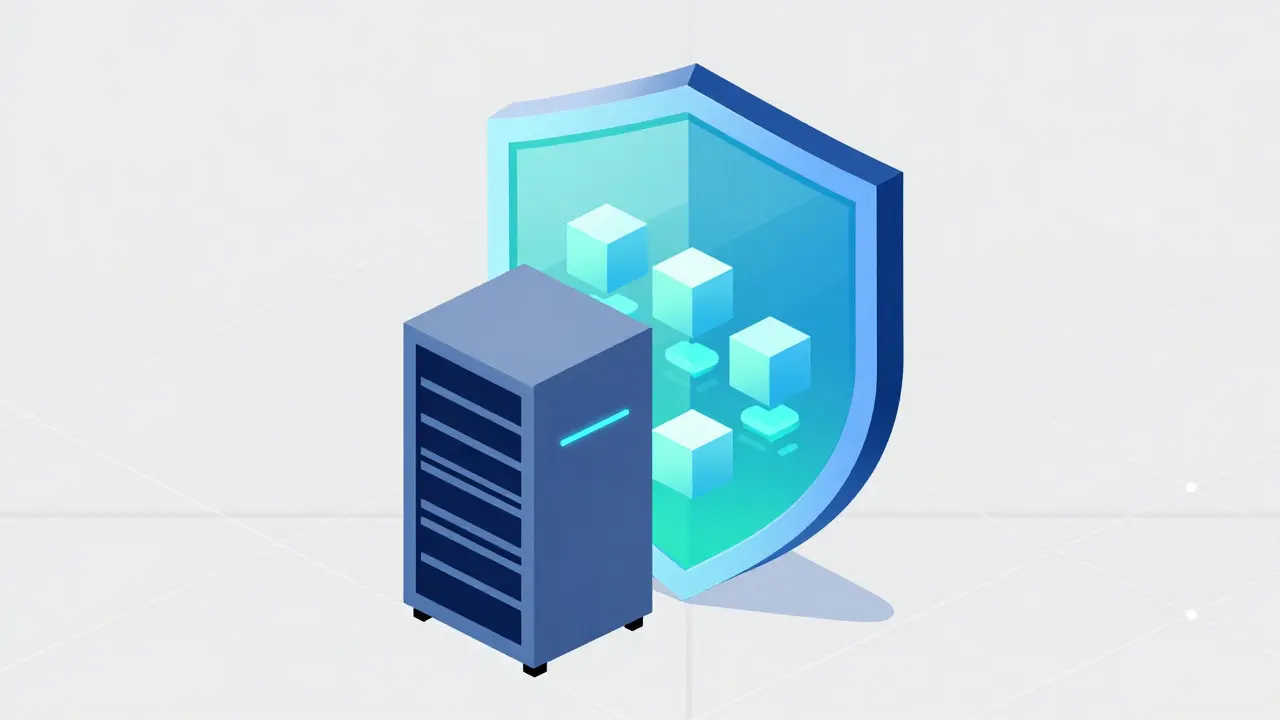
You’ve probably heard the hype about Large Language Models (LLMs) transforming business operations. But if you work in healthcare, finance, or government, that hype often comes with a nagging question: where does my data go when I send it to an AI?
For most companies, sending customer records to a public API is fine. For regulated industries, it’s a nightmare. The core problem isn’t just about technology; it’s about trust and legal liability. This is why On-Premise and Private Cloud LLMs are becoming essential tools for organizations that need to handle sensitive information without violating strict regulations like HIPAA or GDPR.
This guide breaks down exactly what these deployment models are, how they differ from standard cloud AI, and whether your organization needs to invest in them right now.
What Are On-Premise and Private Cloud LLMs?
To understand the solution, we first need to define the infrastructure. An on-premise LLM means the AI model runs entirely on hardware owned and controlled by your company. It lives in your physical data center, behind your firewalls, and never touches the public internet during inference.
A private cloud LLM takes a slightly different approach. Instead of buying servers, you rent dedicated resources within a major cloud provider’s network-like AWS, Azure, or Google Cloud Platform-but inside a Virtual Private Cloud (VPC). Think of it as having your own private apartment building within a massive city. You share the utilities with the landlord, but no one else can enter your unit.
Both approaches share one critical goal: keeping data residency strictly under your control. Unlike public APIs where your data might be processed on shared servers alongside competitors’ data, these methods ensure isolation.
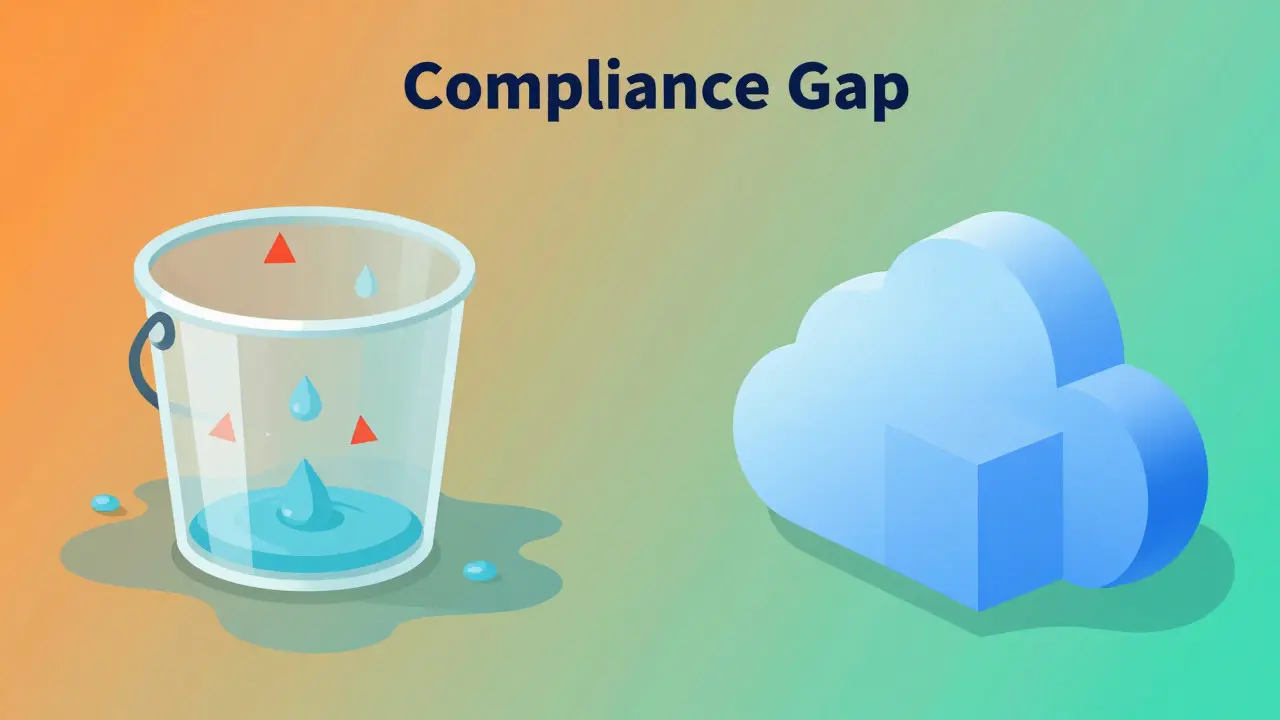
The Compliance Gap: Why Public Cloud Isn't Always Enough
Many organizations assume that because a cloud provider is "compliant," their data is safe. This is a dangerous misconception. Most public LLM services operate under a shared responsibility model. The vendor secures the infrastructure, but you are responsible for securing the data you put into it.
Here is the reality check:
- Data Leakage Risk: When you send patient health records to a generic chatbot API, that data leaves your trusted network. Even if the vendor promises not to use it for training, the transmission itself introduces risk.
- Lack of Visibility: With public endpoints, you have limited visibility into how logs are handled. You can’t easily audit every single token processed.
- Regulatory Friction: Regulations like HIPAA (healthcare), GDPR (privacy), and SOC 2 (security) often require specific data residency locations. If your local laws mandate that financial data stays within country borders, a global public API might technically violate those terms unless carefully configured.
On-premise deployments solve this by placing full compliance ownership on the organization. You know exactly where the data is, who has access, and how long it is stored. There is no guessing game.
On-Prem vs. Private Cloud: Choosing Your Infrastructure
Not all private deployments are created equal. You generally have two main paths, each with distinct trade-offs regarding cost, complexity, and control.
| Feature | Fully On-Premise | Private Cloud (VPC) |
|---|---|---|
| Control Level | Maximum (Hardware to Software) | High (Software & Access Control) |
| Upfront Cost | Very High (CapEx for GPUs) | Moderate (OpEx based on usage) |
| Scalability | Low (Limited by purchased hardware) | High (Elastic scaling within VPC) |
| Maintenance Burden | High (Internal IT manages everything) | Medium (Provider manages hardware) |
| Best For | Defense, Air-gapped environments | Finance, Healthcare, Enterprise SaaS |
Fully on-premise setups are ideal for defense contractors or banks with air-gapped networks where zero internet connectivity is required. However, they demand significant capital expenditure for GPU servers and a dedicated team to manage cooling, power, and driver updates.
Private cloud deployments using VPCs are currently the most popular choice for US-based enterprises. They offer the best balance: the cloud provider handles the heavy lifting of hardware maintenance, while you retain complete control over software configuration, access policies, and data encryption. Tools like AnythingLLM or specialized enterprise platforms allow you to deploy open-source models like LLaMA 2, Mistral, or Mixtral directly into these isolated environments.
The Rise of Small Language Models (SLMs)
You don’t always need a massive model to get the job done. In fact, for regulated data handling, smaller is often better. Small Language Models (SLMs) are optimized versions of larger LLMs designed to run efficiently on limited hardware.
Why do SLMs matter for on-premise deployments?
- Cost Efficiency: Running a 70-billion parameter model requires expensive H100 GPUs. An SLM might run perfectly well on a single consumer-grade GPU or even locally on a laptop using tools like Private LLM for Apple.
- Latency: Smaller models process queries faster, which is crucial for real-time applications like fraud detection in banking.
- Focus: SLMs can be fine-tuned specifically for your domain. A model trained only on legal contracts will outperform a general-purpose model on contract review tasks, reducing hallucinations and improving accuracy.
Organizations like CloverDX demonstrate this by embedding local AI/ML models directly into data pipelines. This allows for tasks like data classification and anonymization to happen instantly within the user’s private infrastructure, ensuring that personally identifiable information (PII) is stripped before it ever reaches broader analytics systems.
Implementation Steps for Regulated Industries
If you’re ready to move forward, here is a practical roadmap to deploying private LLMs securely.
1. Conduct a Data Audit
Before buying hardware, sit down with your legal and security teams. Map out exactly what data will interact with the model. Is it PII? Protected Health Information (PHI)? Trade secrets? Define the compliance implications for each data type. If the answer is "none," you might not need an on-premise solution at all.
2. Select the Right Model Architecture
Choose an open-source model that fits your resource constraints. For high-security needs, look for models with strong community support and transparent licensing. Mistral and LLaMA variants are current industry standards due to their performance-to-size ratio.
3. Build the Infrastructure Layer
Decide between CapEx (buying servers) and OpEx (renting VPCs). Ensure your networking setup includes proper containerization (using Docker or Kubernetes) and orchestration. You’ll need robust monitoring and logging systems to maintain audit trails-a requirement for most regulatory frameworks.
4. Implement Governance Controls
Technology alone doesn’t ensure compliance. You need policies. Enforce data classification labels, restrict API access to authorized personnel only, and implement encryption both at rest and in transit. Regularly audit your logs to ensure no unauthorized data exfiltration occurs.

The Hybrid Approach: Best of Both Worlds
Does going fully on-premise mean abandoning the cloud entirely? Not necessarily. Many organizations adopt a hybrid strategy.
In this model, sensitive workloads-like processing patient records or reviewing legal documents-run on on-premise or private cloud infrastructure. Non-sensitive tasks, such as general content generation or market trend analysis, are offloaded to public cloud APIs.
This approach optimizes costs. You pay for reserved, lower-cost GPUs for steady, sensitive demand on-premise, while using burstable cloud capacity for peak loads or non-critical tasks. It provides flexibility without compromising the security of your most valuable assets.
Is the Investment Worth It?
Let’s be honest: on-premise LLMs are hard. They require skilled engineers, expensive hardware, and ongoing maintenance. If your data isn’t highly sensitive, the overhead may not justify the benefits.
However, for regulated industries, the ROI isn’t just about efficiency-it’s about risk mitigation. Avoiding a single data breach or regulatory fine can save millions. Furthermore, private LLMs enable automation in areas previously considered too risky for AI, such as automated compliance checks or confidential contract reviews. By bringing AI in-house, you turn a potential liability into a strategic advantage, ensuring that innovation doesn’t come at the cost of trust.
What is the difference between on-premise and private cloud LLMs?
On-premise LLMs run on hardware physically owned and managed by your organization within your data centers. Private cloud LLMs run on dedicated, isolated infrastructure (like a VPC) rented from a major provider like AWS or Azure. Both keep data secure, but on-premise offers maximum control, while private cloud reduces maintenance burden.
Are private cloud LLMs HIPAA compliant?
Private cloud infrastructure can be configured to meet HIPAA requirements, but compliance depends on how you set it up. You must ensure Business Associate Agreements (BAAs) are signed with vendors, data is encrypted, and access controls are strict. On-premise solutions give you direct control over these factors.
Which open-source models are best for on-premise deployment?
Popular choices include LLaMA 2, Mistral, and Mixtral. These models offer strong performance relative to their size, making them suitable for running on limited hardware. Small Language Models (SLMs) derived from these architectures are particularly effective for specific, regulated tasks.
Do I need a large engineering team to run an on-premise LLM?
Yes, typically. Managing GPU servers, networking, containerization, and model updates requires specialized skills. If your team is small, a private cloud solution or a managed service provider might be a more viable option than a fully self-hosted on-premise setup.
How does a hybrid LLM strategy work?
A hybrid strategy splits workloads based on sensitivity. Sensitive data (PII, PHI) is processed on secure on-premise or private cloud instances. Non-sensitive data (general research, marketing copy) uses public cloud APIs. This balances security, cost, and scalability.
- Aug, 11 2026
- Collin Pace
- 5
- Permalink
Written by Collin Pace
View all posts by: Collin Pace