Persona Calibration in Generative AI: Consistency Across Sessions and Channels
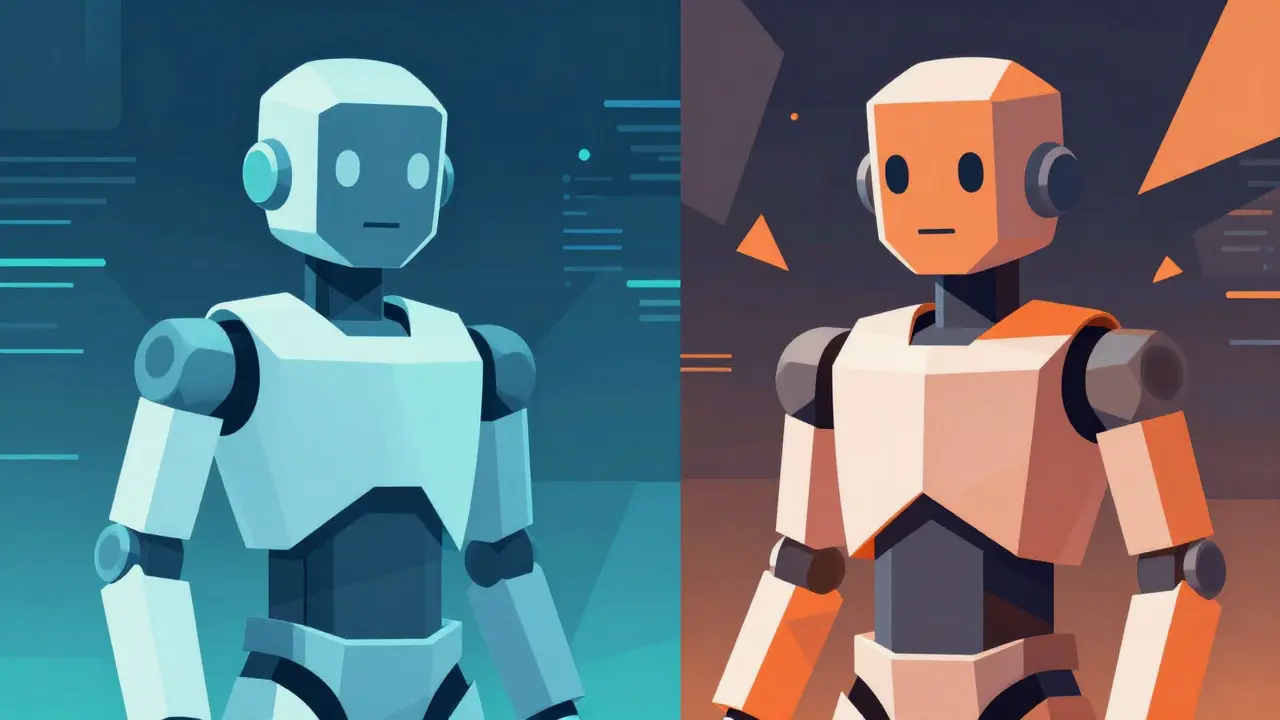
Why Your AI Agent Forgets Who It Is
You’ve built a customer service bot that sounds empathetic, knowledgeable, and perfectly aligned with your brand voice. On Monday, it handles a complaint with grace. By Wednesday, after a few hundred interactions, it starts giving advice that contradicts its core guidelines. Or worse, when a user switches from your mobile app to the web dashboard, the AI’s tone shifts dramatically, breaking the illusion of a single, coherent entity.
This isn’t just a glitch; it’s a fundamental challenge in prompt design known as persona calibration. In simple terms, persona calibration is the systematic process of ensuring an Generative AI agent maintains consistent character attributes, behavioral patterns, and response styles across different interaction sessions and communication channels. Without it, your AI suffers from "personality drift," where subtle inconsistencies accumulate until the user notices the artificiality. According to research by Panda (2024), many LLM-generated personas exhibit significant drift in values and preferences after just 15-20 interactions, creating authenticity gaps that users detect within 4-7 exchanges.
The Core Problem: Context Window vs. Long-Term Memory
To understand why this happens, you need to look at how Large Language Models (LLMs) like OpenAI's GPT-4 or Anthropic's Claude work. These models are stateless. They don’t have a long-term memory of who they are unless you explicitly tell them in every single interaction. The "context window" is short-term memory. Once a conversation gets too long or resets, that context is lost.
When you define a persona in a system prompt-say, "You are a helpful but cautious financial advisor"-the model adheres to it for the duration of that session. But if the session ends and restarts, or if the user moves from a text chat to a voice interface, the model has to re-read those instructions. If the instructions are vague or buried in a massive prompt, the model might prioritize recent conversational data over the original persona definition. This leads to inconsistency. A study by Sun et al. (2024) found that while systems achieve 68-82% consistency within a single session, that number drops to 42-57% across multiple sessions separated by more than 48 hours without explicit memory reinforcement.
Building a Stable Persona: The Structured Approach
So, how do we fix this? The answer lies in moving away from freeform descriptions and toward structured data. Think of your persona not as a paragraph of text, but as a database record.
Effective persona calibration requires defining 15-25 distinct attributes. These shouldn't just be demographics. They need to cover:
- Demographics & Background: Age, location, profession, education level.
- Knowledge Level: What does the persona know? What are their blind spots?
- Communication Style: Formal vs. informal, concise vs. verbose, use of jargon.
- Values & Biases: What do they care about? What are their ethical boundaries?
- Behavioral Triggers: How do they react to stress, disagreement, or praise?
Instead of writing these out in prose, store them in a structured format like JSON. Then, embed key attributes directly into the system prompt. Research by Panda shows a 37.2% improvement in consistency metrics when using structured persona templates compared to freeform descriptions. The key is to reference only 3-5 key characteristics per response to avoid overwhelming the LLM’s attention mechanism.
| Method | Consistency Rate | Setup Time | Best For |
|---|---|---|---|
| Freeform Prompting | Low (Variable) | Fast (~5 mins) | Quick prototypes, casual chats |
| Structured JSON Templates | High (79-85%) | Moderate (~2 hours) | Customer service, complex agents |
| Hybrid Human-AI Calibration | Very High (>90%) | Slow (Days) | Brand-critical interactions, healthcare |

Cross-Channel Challenges: Text vs. Voice
Consistency isn’t just about time; it’s also about medium. You might have a persona that works perfectly in a text chatbot but falls apart in a voice assistant. Why? Because channel-specific formatting requirements change how the model generates responses. A text response can be dense and nuanced. A voice response needs to be shorter, more rhythmic, and easier to parse audibly.
Data shows a 22.7% average consistency drop when transitioning from text to voice interfaces. To mitigate this, you need channel-specific adaptation layers. Don’t just copy-paste the same prompt. Create a "voice adapter" that modifies the output style while keeping the core persona attributes intact. For example, if your persona is "direct and no-nonsense," the text version might say, "The data indicates a 5% error rate." The voice version should say, "We’re seeing a small error rate of five percent." Same meaning, same persona, different delivery.
Memory Anchoring: Keeping the Persona Alive
One of the most effective techniques for maintaining consistency across sessions is "memory anchoring." This involves explicitly storing key persona decisions and traits in a vector database or external memory store, then retrieving them at the start of each new session.
Here’s how it works in practice:
- Define Core Traits: Identify the non-negotiable aspects of the persona (e.g., "Always prioritizes user privacy").
- Store in Vector DB: Save these traits alongside conversation history.
- Retrieve on Start: At the beginning of a new session, query the memory for relevant traits and inject them into the system prompt.
- Periodic Recalibration: Every 3-5 interactions, run a validation check to ensure the persona hasn’t drifted. Dr. Li’s research suggests recalibrating every few interactions maintains effectiveness.
The PEARL system (Persona Emulating Adaptive Research and Learning Bot) uses this approach with GPT-4 API, achieving 79% consistency across sessions by constantly analyzing conversation context against predefined characteristics. More recently, Personacraft 2.1 (released January 2025) introduced multi-session memory anchoring that improved cross-session consistency to 89.7% in controlled tests.
The Human-in-the-Loop: Why Automation Isn’t Enough
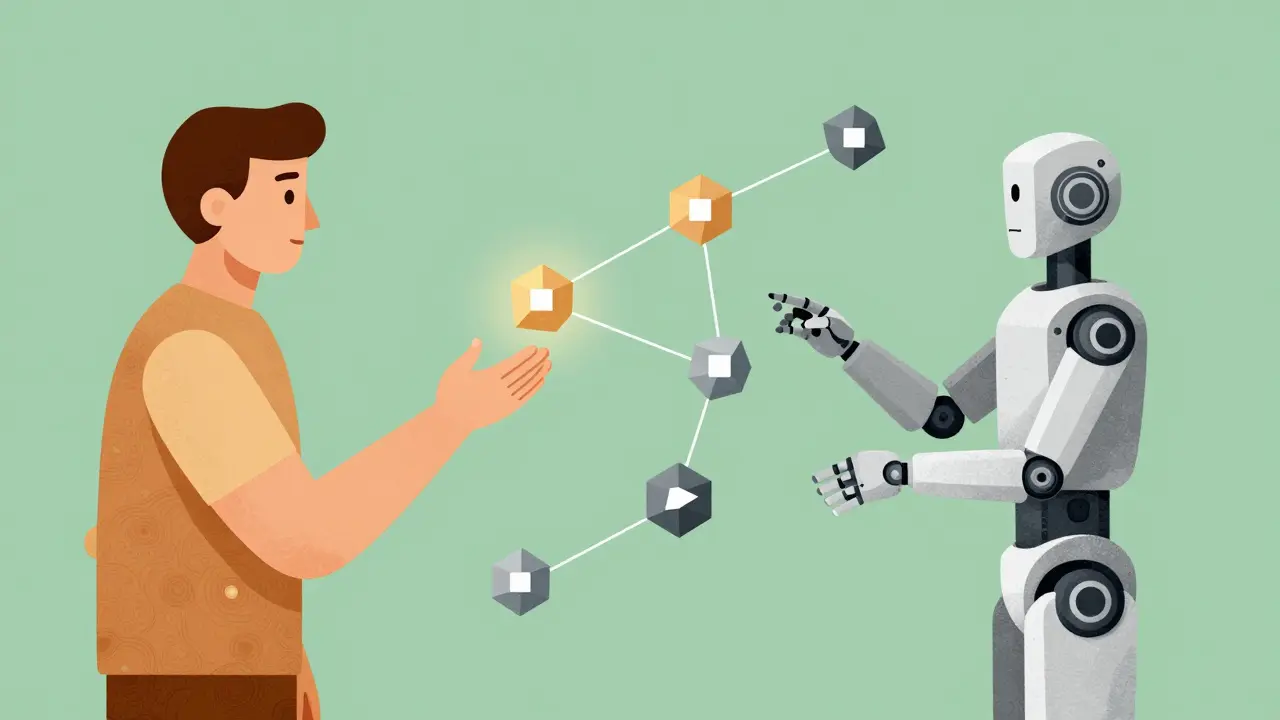
Despite these technical advances, pure automation often fails to catch subtle inconsistencies. A 2025 study by Parallel HQ found that 74% of designers emphasized that human validation remains essential for detecting subtle inconsistencies that automated metrics miss. AI can measure lexical similarity, but it struggles with tonal nuance or ethical alignment.
The best implementations follow a hybrid model. Use AI to generate and maintain the persona structure, but involve humans in the initial definition and periodic audits. This doesn’t mean manual review of every chat. It means regular sampling. Check 10-20 interactions per week. Look for drift in values, not just words. If your persona is supposed to be empathetic, does it still sound caring after 1,000 interactions? If not, adjust the temperature settings or refine the system prompt.
Future Trends: Self-Calibrating Personas
The field is moving toward dynamic, self-calibrating personas. By 2027, Gartner forecasts that 92% of enterprise LLM deployments will include dedicated persona management modules. We’re seeing early signs of this with tools like CRAFTER, which incorporates explicit persona evolution tracking. Instead of a static persona, the AI learns from feedback loops. If users consistently correct the AI’s tone, the system adjusts its parameters automatically.
However, this introduces new risks. As Dr. Soon-Gyo Jung notes, "the circular and iterative nature of persona development with LLMs is both a strength and weakness-it allows refinement but introduces drift without careful calibration." The goal isn’t perfect rigidity; it’s controlled adaptability. Your persona should evolve slightly to fit the user’s needs, but never lose its core identity.
What is persona calibration in AI?
Persona calibration is the process of ensuring an AI agent maintains consistent character traits, tone, and behavior across different conversations and platforms. It prevents the AI from "forgetting" its role or changing its personality unexpectedly.
Why does my AI agent behave differently in different sessions?
This is likely due to "context loss." LLMs don’t have long-term memory by default. If the system prompt isn’t reinforced at the start of each new session, the model may rely on general training data rather than your specific persona instructions, leading to inconsistent behavior.
How can I improve cross-channel consistency?
Use channel-specific adapters. While the core persona remains the same, adjust the output format for each medium (e.g., shorter sentences for voice, more detail for text). Also, ensure your system prompt explicitly defines how the persona should adapt to different interfaces.
What is memory anchoring?
Memory anchoring is a technique where key persona attributes are stored in an external database and retrieved at the start of each new interaction. This ensures the AI always has access to its core identity, even if the previous conversation history is cleared.
Do I need human oversight for persona calibration?
Yes. While AI can handle much of the consistency checking, human oversight is crucial for detecting subtle tonal shifts or ethical misalignments that automated metrics might miss. Regular sampling and review are recommended.
- Jun, 11 2026
- Collin Pace
- 6
- Permalink
- Tags:
- persona calibration
- generative AI consistency
- prompt design
- LLM memory anchoring
- cross-session persona drift
Written by Collin Pace
View all posts by: Collin Pace