Recordkeeping for Generative AI Decisions: Logging, Retention, and E-Discovery
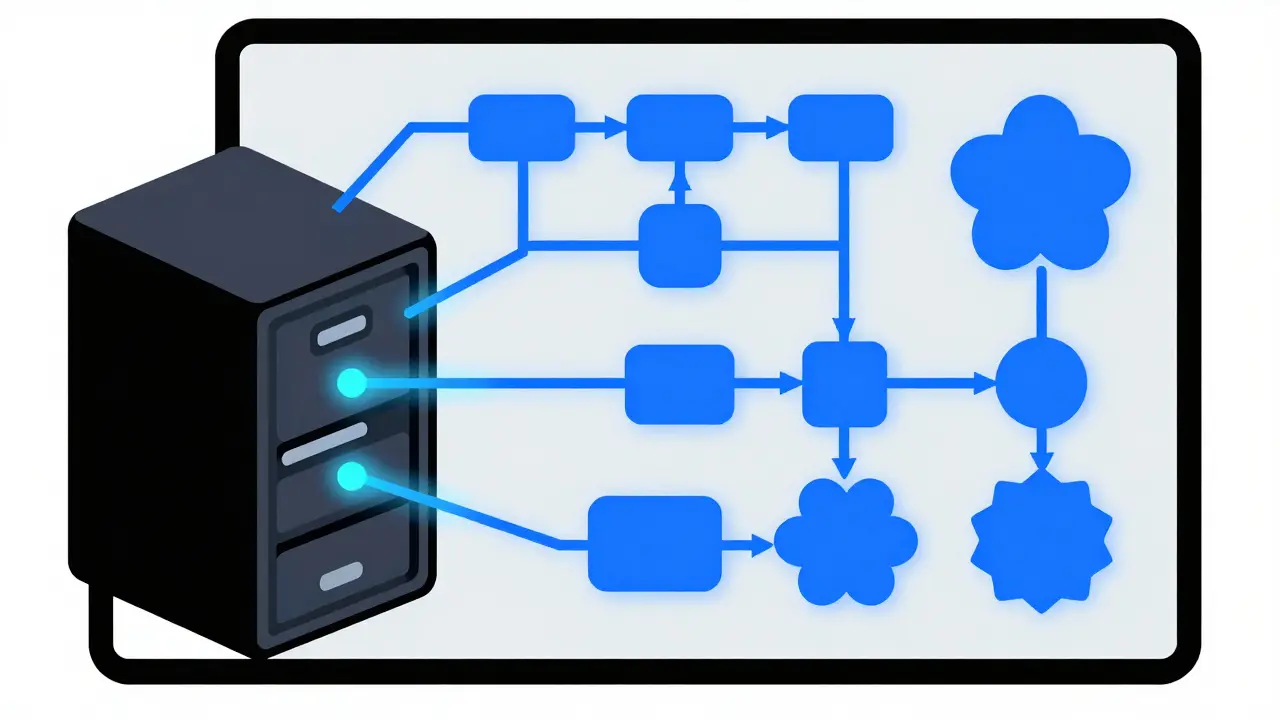
You cannot manage what you do not measure, and you cannot defend what you cannot prove. By March 2026, the days of treating generative AI as a 'black box' that simply generates text are officially gone. If your organization deploys AI models to make decisions, you need more than just the final output. You need the story of how that decision was reached. Without robust recordkeeping, you are walking into regulatory hearings and lawsuits blindfolded. The difference between a compliant AI system and a legal nightmare often comes down to one thing: did you keep the logs?
The landscape has shifted significantly since the initial rollout of large language models. We are no longer talking about experimental code running in a sandbox. We are discussing systems that influence customer support interactions, healthcare triage, and financial risk assessments. In this environment, Generative AI Recordkeeping is not an IT afterthought. It is the backbone of your organizational liability shield. It encompasses logging system activities, maintaining audit trails, and ensuring every decision can be traced back to its input data and processing logic.
Why Traditional Logging Fails Generative AI
If you look at your server logs today, you see IP addresses, timestamps, and status codes. That works fine for a website selling shoes. It fails completely when dealing with Generative AI Systems software applications that produce unique content based on input prompts.. Conventional logging captures state changes but misses the nuance of reasoning. A model might output "Yes" to a loan application, but why? Did it hallucinate income figures? Did it misinterpret a policy exception?
To build true accountability, you need to capture the complete lineage of the interaction. This means documenting the prompt (the input provided to the model), the completion (the output generated), and the intermediate reasoning steps. Some frameworks now support exposing the 'chain of thought'-the logical progression between question and answer. If you don't log this chain, you lose the ability to debug bias or errors later. Imagine trying to solve a mystery where half the evidence vanished automatically. That is exactly what happens when organizations skip deep logging protocols.
The stakes are real. Regulatory bodies have moved past asking if you have a policy; they want to see proof of execution. Without granular records, you cannot demonstrate that your guardrails functioned correctly during critical incidents.
Defining Your Logging Strategy
Capturing every keystroke across a global workforce creates a tsunami of data. You end up paying for cloud storage on noise rather than signal. The secret is balancing granularity with feasibility. Industry experts compare good logging to lab notes in scientific research-you need measured impact, not assumptions.
You must decide what constitutes a critical event. High-level system health is easy to track, but detailed operational logs reveal the truth. Standardizing your approach ensures that whether a developer in New York or an operator in London needs to investigate an issue, they speak the same language. This involves setting log levels that indicate severity:
| Log Level | Purpose | Example Context |
|---|---|---|
| DEBUG | Detailed technical info for developers | Memory usage spikes, token counts per request |
| INFO | General expected events | User session started, successful generation |
| WARNING | Potential issues without disruption | Input flagged as sensitive but processed |
| ERROR | Functionality affected | Model timeout, rate limit exceeded |
| CRITICAL | System failure imminent | Guardrail breach detected, security alert |
Implementing structured formats is non-negotiable. Plain text entries are nearly impossible to query at scale. You need machine-parseable formats like JSON with key-value pairs. Each entry must carry specific metadata: a timestamp (down to the millisecond), a source module ID, and unique identifiers like user IDs or request IDs. These identifiers act as the glue that ties together disparate parts of a conversation or transaction, allowing you to reconstruct the exact timeline of an incident.

Sampling Strategies for Scale
In high-traffic environments, capturing 100% of every single prompt and completion can break your budget before you even analyze the data. Smart teams employ sampling strategies. This doesn't mean guessing; it means selecting intelligently.
- Rate-based sampling: Capture a fixed percentage of normal traffic-for instance, 1 out of every 100 successful transactions-to maintain statistical relevance without the bloat.
- Event-based sampling: Trigger logging only on specific conditions. If you get a 500 Internal Server Error, log it immediately. Ignore the routine 200 OK responses unless necessary for a full forensic review.
- Anomaly-based sampling: Use machine learning to detect outliers. If a fraud detection system flags a suspicious pattern, the entire session gets logged. Normal behavior goes untouched.
This approach allows you to keep the most valuable data while discarding the redundancy. However, remember that sampling requires validation. You must periodically verify that the sampled data accurately reflects overall system performance. If you rely solely on samples, you might miss a rare but dangerous edge case that occurs outside your sampling window.
Navigating Retention Policies
Data isn't free, and indefinite storage is a liability. You face a constant tug-of-war between keeping enough history for compliance and managing storage costs. Retention Policies rules determining how long data is kept before deletion must align with regulatory mandates. As we move through 2026, adherence to standards like the EU AI Act is mandatory for many sectors. These regulations specify minimum retention periods for high-risk AI applications.
Your policy shouldn't be a static document sitting on a shelf. It needs to be dynamic. Different types of logs require different lifespans. A log showing a system crash might need to live indefinitely for product improvement. A log containing PII (Personally Identifiable Information) in a chat transcript might need aggressive redaction or shorter retention to minimize privacy risks under laws like GDPR. Automated processes should handle expiration dates. If a file ages beyond the required limit, a script should wipe it securely. Manual reviews create loopholes where data sits forgotten, creating hidden litigation risks.
Balancing these factors requires a risk assessment. Ask yourself: What is the longest statute of limitations for a potential lawsuit in my industry? Can I store the necessary metadata without storing the actual conversation payload if it contains sensitive info? The answer usually involves splitting data streams-keeping the structural audit trail forever, but purging the content payload after a defined period unless flagged for legal hold.

E-Discovery and Legal Preparedness
This is where the rubber meets the road. When an unexpected behavior emerges-a bot gives harmful advice, a hiring algorithm discriminates against a demographic-comprehensive logging is your defense. This transforms your logs from operational tools into legally significant records.
During E-Discovery legal process for discovery of electronic information, opposing counsel or regulators will demand to see the decision-making process. If your logs show a clear, unbroken chain of custody, demonstrating which model version was active at which time and what inputs were used, you establish transparency. If your logs are fragmented or missing, you are forced to admit ignorance. In legal contexts, admitting ignorance looks like negligence.
Preparing for this phase starts today, not tomorrow. Ensure your logs have immutable timestamps so no one can alter them later. Maintain a registry of your model versions linked to those logs. If your team retrained the model last week, does your logging system reflect that version change instantly? These technical details often become the primary line of questioning in depositions regarding AI liability.
Tooling and Automation
Don't try to roll your own solution from scratch unless you are a massive tech giant with unlimited engineering resources. The tooling landscape has evolved specifically to address the gap between general-purpose monitoring and generative AI requirements.
Specialized platforms now exist to capture prompts, completions, and intermediate reasoning steps that traditional ML platforms overlook. Tools like Sumo Logic offer clustering capabilities that group similar log entries, revealing recurring patterns that would take humans weeks to find manually. Others, like Onspring, provide AI-augmented risk management, potentially automating duplicate detection or summarizing control documents to help you navigate the bureaucracy faster.
Regardless of the tool, the integration method matters. Agents or libraries must be embedded directly into the AI pipeline, not placed as an external observer after the fact. You cannot 'bolt on' tracking effectively once the system is live. Integrating instrumentation during the development lifecycle ensures you capture the right data at the right time without performance lag.
Governance best practices also emphasize cross-team collaboration. Data scientists need to speak the same logging language as operations teams. When root cause analysis becomes necessary-such as when an AI system provides incorrect predictions-logs containing detailed information about inputs given to the system become essential. Finding root causes becomes more convenient with comprehensive logs, allowing systems to be corrected quickly. This rapid resolution capability represents a significant operational benefit of maintaining thorough recordkeeping practices.
What specific data points should I log for generative AI compliance?
You must log the prompt (input), completion (output), model version ID, timestamp, user identity (for access controls), and guardrail triggers. Intermediate reasoning steps are crucial for explaining complex decisions. Ensure data includes unique request IDs to link inputs and outputs together reliably.
How long should I retain AI decision logs?
Retention depends on your jurisdiction and industry. Under the EU AI Act, high-risk systems may require multi-year retention. Balance this by categorizing logs: keep structural audit trails permanently, but purge sensitive PII data payloads according to local privacy laws (like GDPR) to reduce liability.
Is it possible to log everything without impacting performance?
Logging 100% of high-volume traffic can degrade performance and spike costs. Use sampling strategies like anomaly-based logging or rate limiting to capture only critical events. This maintains data integrity for auditing without overwhelming your infrastructure.
What makes logs admissible in court?
Admissibility requires a verifiable chain of custody. Timestamps must be synchronized and tamper-proof (immutable). The logs must clearly attribute actions to specific users or system components. Regular third-party audits of your logging infrastructure add credibility to the evidence.
Can I use existing web server logs for AI governance?
No. Web server logs track network requests, not AI reasoning or content generation. You need specialized AI-specific logging that captures the semantic context of prompts and completions, which standard HTTP logs miss entirely.
- Mar, 30 2026
- Collin Pace
- 10
- Permalink
Written by Collin Pace
View all posts by: Collin Pace