Reducing Hallucinations in LLM Agents: RAG and Guardrails Guide
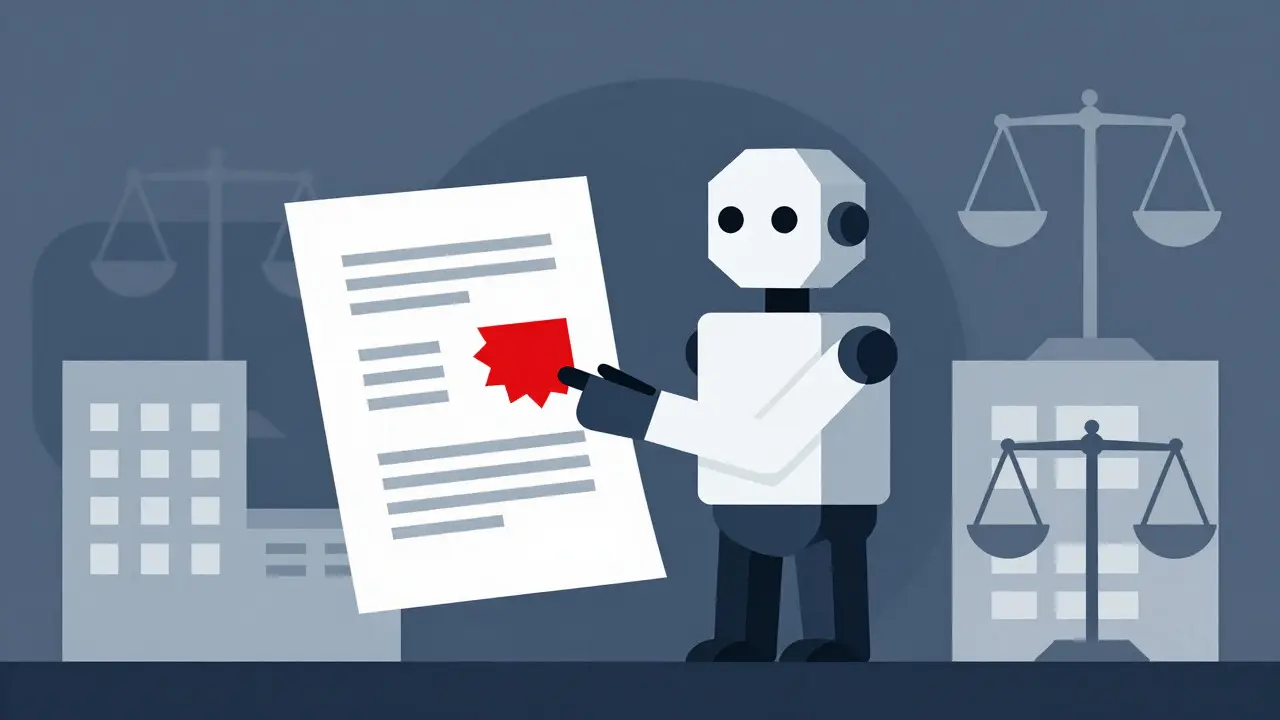
Imagine asking your AI agent to summarize a legal contract. It sounds confident, cites specific clauses, and even invents a penalty fee that doesn't exist. That’s not just an error; it’s a hallucination. In high-stakes environments like healthcare or finance, these fabricated facts can cost you money, trust, or even lawsuits. The good news? You don’t have to accept this as the price of using Large Language Models (LLMs). By combining Retrieval Augmented Generation (RAG) with robust guardrails, you can drastically cut down on these errors and build agents that actually stick to the facts.
The Core Problem: Why Agents Make Things Up
LLM Hallucinations are instances where models generate plausible but factually incorrect information based on their training data rather than current reality. This happens because LLMs are probabilistic engines. They predict the next most likely word, not the next most true one. When an agent lacks access to specific, up-to-date data, it fills the gaps with its general knowledge, which might be outdated or simply wrong for your specific context.
The issue gets worse in agentic systems. Unlike simple chatbots, agents take actions. If an agent hallucinates an API endpoint and calls it, your system crashes. If it hallucinates a customer’s address, the package goes to the wrong house. The stakes are higher because the model isn't just chatting; it's executing.
RAG: Grounding Answers in Reality
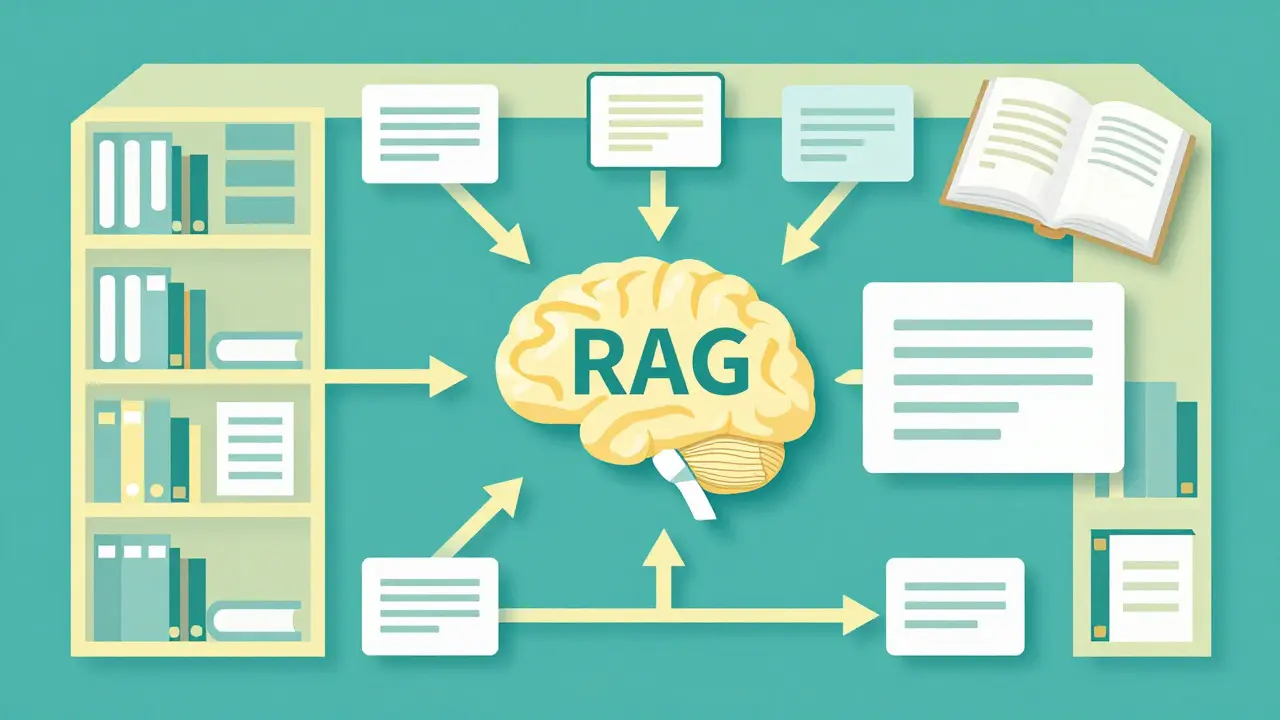
Retrieval Augmented Generation (RAG) is a technique that retrieves external documents to provide factual context to an LLM before generation. Think of RAG as giving the model open-book exam conditions instead of closed-book. Instead of relying on its internal memory, the system first searches a vector database for relevant chunks of text-like product manuals, legal docs, or support tickets-and injects them into the prompt.
Here is how the workflow typically looks:
- Ingestion: Your documents are split into chunks and converted into vectors using embedding models.
- Retrieval: When a user asks a question, the system finds the most similar vectors in your database.
- Augmentation: These retrieved chunks are added to the user's prompt.
- Generation: The LLM generates an answer based strictly on that provided context.
This shift changes the task from "recall what you know" to "summarize what is here." Studies show that when the retrieval quality is high, hallucination rates drop significantly because the model has less room to improvise.
Guardrails: The Safety Net
RAG reduces the chance of hallucination, but it doesn't eliminate it. Sometimes the retrieved document is ambiguous, or the model still tries to fill gaps. That’s where AI Guardrails come in. Guardrails are programmable validation layers that check LLM outputs against defined rules and source materials before delivery.
Modern guardrail systems, such as those offered by Guardrails AI or Amazon Bedrock, use provenance validators. These tools compare the generated output sentence-by-sentence against the source documents used in the RAG step. If a sentence claims something not supported by the retrieved text, the guardrail flags it.
You can configure these checks with specific thresholds. For example, setting a sensitivity threshold of 0.3 means any deviation from the source material above 30% triggers an alert. Depending on your needs, the system can either block the response entirely, ask the model to regenerate it, or flag it for human review.
Comparing Mitigation Strategies
Not all solutions are created equal. Some are faster, some are more accurate, and some require more engineering effort. Here is a breakdown of the primary methods for reducing hallucinations in agent systems:
| Technique | How It Works | Best For | Main Limitation |
|---|---|---|---|
| RAG | Injects external facts into prompts | Domain-specific knowledge tasks | Dependent on retrieval accuracy |
| Guardrails | Validates output against sources/rules | High-stakes compliance & accuracy | Adds latency to response time |
| Chain-of-Thought | Forces intermediate reasoning steps | Complex logical problems | Doesn't fix factual gaps |
| Human-in-the-Loop | Routes low-confidence answers to humans | Critical decisions & edge cases | Slower throughput & higher cost |
Building a Layered Defense
The most effective approach isn't choosing one tool; it's layering them. A robust architecture combines enhanced model quality, precise RAG pipelines, strict guardrails, and advanced prompting techniques.
Start with strong prompting. Using Chain-of-Thought prompting encourages the model to show its work, which makes it easier for guardrails to detect logical leaps. Combine this with few-shot examples that demonstrate exactly how to cite sources. Then, implement RAG to ensure the model has the right facts. Finally, wrap the whole thing in guardrails that verify every claim against the retrieved evidence.
For enterprise deployments, consider integrating evaluation metrics like RAGAS (Retrieval Augmented Generation Automatic Score). RAGAS measures answer correctness and relevancy automatically. If a score drops below a predefined threshold, the system can trigger an SNS notification to route the query to a human expert. This creates a feedback loop where your agents get smarter over time because they learn from the corrections made by humans.

Practical Implementation Tips
When deploying these systems, keep these practical tips in mind to avoid common pitfalls:
- Chunk Size Matters: Don't feed entire books into your vector database. Smaller, semantically coherent chunks improve retrieval precision. Use embedding models like Cohere or BERT to ensure your vectors capture meaning, not just keywords.
- Monitor Latency Trade-offs: Agentic workflows with multiple validation steps add latency. If real-time response is critical, balance the depth of your guardrail checks. Static workflows are faster but less adaptable; dynamic agent workflows are flexible but slower.
- Define Failure Modes: Decide upfront what happens when a guardrail fails. Do you want the agent to say "I don't know"? Or should it escalate to a human? Explicitly coding these behaviors prevents silent failures.
- Keep Knowledge Fresh: RAG is only as good as your data. If your product documentation changes weekly, your vector database must update automatically. Stale data leads to new types of hallucinations.
FAQ
Can RAG completely eliminate LLM hallucinations?
No, but it significantly reduces them. RAG provides the correct context, but if the retrieval process misses the right document or the model misinterprets the provided text, hallucinations can still occur. Combining RAG with guardrails offers the highest level of protection.
What is the difference between RAG and fine-tuning?
RAG allows the model to access new information at inference time without changing its weights. Fine-tuning involves retraining the model on specific data, which bakes the knowledge into the model itself. RAG is generally faster to update and better for frequently changing data, while fine-tuning is better for teaching specific formats or styles.
How do guardrails affect response speed?
Guardrails add computational overhead because they validate the output after generation. Depending on the complexity of the checks and the length of the response, this can add anywhere from milliseconds to seconds. For real-time applications, you may need to optimize the validation logic or run checks asynchronously.
What is RAGAS and why is it useful?
RAGAS is an evaluation framework specifically designed for RAG systems. It uses LLM-based metrics to score answer correctness, faithfulness, and relevance without needing manual labeling. This helps teams continuously monitor the health of their hallucination mitigation strategies.
Should I use human-in-the-loop for every query?
Probably not, due to cost and speed constraints. Instead, use confidence scores. Route queries to humans only when the model's confidence is low or when the guardrails flag a potential hallucination. This hybrid approach balances automation efficiency with human oversight for critical cases.
- Aug, 27 2026
- Collin Pace
- 0
- Permalink
- Tags:
- LLM hallucinations
- Retrieval Augmented Generation
- AI guardrails
- agent reliability
- fact-checking AI
Written by Collin Pace
View all posts by: Collin Pace