Target Architecture for Generative AI: Data, Models, and Orchestration Strategy
Most generative AI projects fail not because the models are bad, but because the plumbing is broken. You might have access to the latest large language model, but if your data is messy, your retrieval system is slow, or your security layers are missing, you’re just building a very expensive chatbot that lies confidently. The real challenge in 2026 isn’t finding a model; it’s building a target architecture for generative AI that connects data, models, and orchestration into a reliable, secure, and scalable system.
We’ve moved past the hype cycle of simply wrapping an API around a foundation model. Enterprises now need production-grade systems that handle millions of requests, maintain factual accuracy, and comply with strict regulations like the EU AI Act. This guide breaks down the five critical layers of a modern generative AI architecture, showing you exactly how to structure your data, choose your orchestration framework, and deploy models without burning through your budget or compromising security.
The Five-Layer Foundation of Modern AI Architecture
A robust generative AI system isn’t a single tool; it’s a stack. Based on current industry standards from AWS, Snowflake, and leading research labs, effective architectures follow a five-layer structure. Skipping any of these layers usually leads to brittle systems that break under load or produce hallucinated outputs.
- Data Processing Layer: This is where raw information becomes usable knowledge. It involves collection, cleaning, transformation, and feature engineering. Without this, even the smartest model fails.
- Model Layer: Home to the neural networks-whether Large Language Models (LLMs), Generative Adversarial Networks (GANs), or Vision Transformers. This layer handles training, fine-tuning, and inference.
- Feedback and Evaluation Layer: Critical for continuous improvement. It captures human feedback and automated metrics to refine outputs over time.
- Application Layer: The user interface and integration points where end-users interact with the AI via APIs, dashboards, or chat interfaces.
- Infrastructure Layer: The hardware and cloud resources supporting everything, including GPUs, TPUs, and container orchestration platforms.
Dr. Fei-Fei Li noted in her June 2024 keynote that 70% of generative AI failures stem from inadequate data architecture rather than model limitations. If your data layer is weak, no amount of compute power will save you.
Data Architecture: The Unsung Hero
You cannot build a house on sand, and you can’t build an AI on dirty data. The data processing layer is often underestimated, yet it consumes 45-60% of total development effort according to Info-Tech’s 2024 implementation guide. Here’s why it matters so much.
First, you need a solid Data Integration Pipeline. This pipeline extracts data from various sources (SQL databases, CRMs, document repositories), transforms it into a consistent format, and loads it into your storage system. For generative AI, this often means converting unstructured text into embeddings.
This brings us to Vector Databases. Unlike traditional relational databases that store rows and columns, vector databases store high-dimensional numerical representations of data (embeddings). They allow the AI to find semantically similar content quickly. Gartner’s July 2024 Magic Quadrant found that architectures using vector databases like Pinecone or Azure Cosmos DB outperform traditional RDBMS-integrated solutions by 22% in retrieval accuracy. However, they add complexity, introducing 37% more configuration points.
| Database Type | Best Use Case | Retrieval Accuracy | Complexity |
|---|---|---|---|
| Relational (RDBMS) | Structured transactional data | Low for semantic search | Low |
| Vector Database | Semantic similarity, RAG | High (22% better than RDBMS) | High (37% more config) |
| Knowledge Graph | Complex relationships, reasoning | Very High for structured logic | Very High |
A common pitfall? Improper chunking. A developer on Reddit’s r/MachineLearning forum shared that their Retrieval-Augmented Generation (RAG) implementation failed initially because documents weren’t chunked correctly. Accuracy dropped from 85% to 52% until they implemented semantic chunking, which respects sentence boundaries and context windows rather than splitting text arbitrarily.
Model Selection and Execution
Once your data is ready, you need a model. But which one? The landscape has shifted dramatically since the introduction of transformers in 2017. Today, you have three main paths:
- Fine-tuned Open Source Models: Like Meta’s Llama 3 or Mistral. These offer control and lower costs but require significant ML engineering expertise to tune and maintain.
- Proprietary Foundation Models: Like OpenAI’s GPT-4o or Google’s Gemini Ultra. These provide state-of-the-art performance out of the box but come with higher per-token costs and less transparency.
- Hybrid Multi-Model Approaches: Using different models for different tasks (e.g., a small, fast model for classification and a large model for generation). By 2025, 45% of enterprises adopted this approach, up from 18% in 2023.
For most enterprise applications, Retrieval-Augmented Generation (RAG) is the gold standard. Instead of relying solely on the model’s pre-trained knowledge (which can be outdated or hallucinated), RAG retrieves relevant documents from your vector database and feeds them to the model as context. AWS’s 2024 documentation shows that RAG improves factual accuracy by 35% and reduces hallucination rates from 27% to 9% in enterprise settings.
However, RAG is only as good as its retrieval. If the wrong documents are fetched, the model will generate confident nonsense. This is why the orchestration layer is critical.
Orchestration Frameworks: The Glue That Holds It Together
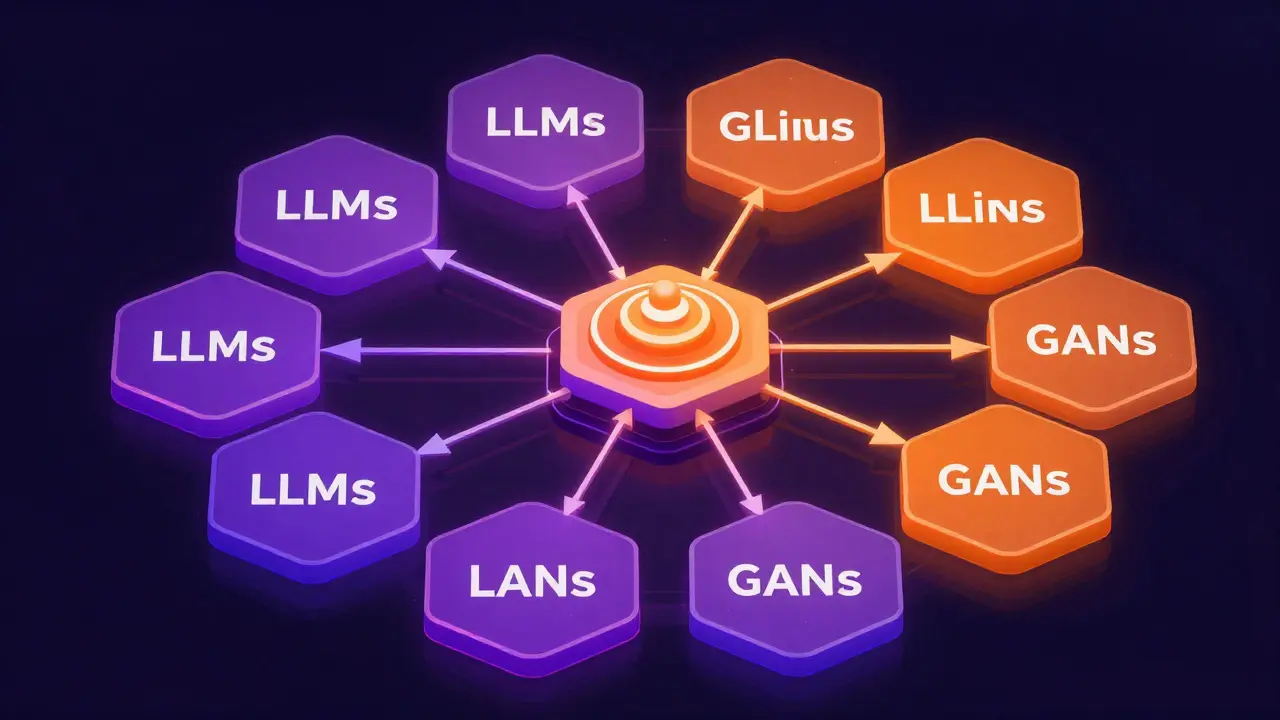
Orchestration frameworks manage the flow of data between components. They decide when to retrieve data, which model to call, how to handle errors, and when to stop generating. Dr. Andrew Ng called orchestration frameworks “the unsung heroes of production generative AI,” transforming brittle point solutions into robust systems.
Popular frameworks include LangChain, LlamaIndex, and Microsoft Semantic Kernel. Each has strengths:
- LangChain: Highly flexible, large community, but can become complex and hard to debug at scale.
- LlamaIndex: Specialized in data indexing and retrieval, making it ideal for RAG-heavy applications.
- Semantic Kernel: Deeply integrated with Azure services, offering strong enterprise support and type safety.
Without proper orchestration, you risk “prompt injection” vulnerabilities. OWASP’s 2024 report found that 57% of implementations had prompt injection flaws, where malicious users trick the AI into bypassing instructions. Good orchestration includes guardrails-like AWS’s Guardrails service-to sanitize inputs and validate outputs before they reach the user.
Infrastructure and Cost Management
Running generative AI is expensive. Flexera’s 2024 Cloud Report cites average monthly costs of $14,500 per application. To manage this, you need a thoughtful infrastructure strategy.
Training requires massive compute. Enterprise implementations typically need 8-16 high-performance GPUs (like NVIDIA A100s or H100s) for training and 2-4 for inference. If you don’t want to buy hardware, cloud providers offer managed services. Google Cloud’s Vertex AI, updated in September 2024, features automated data pipeline construction, reducing implementation time by 35%. Microsoft’s Azure AI Studio, launched in November 2024, reduced integration points by 40% compared to previous approaches.
But cost isn’t just about GPUs. Inference latency matters too. Info-Tech’s Q1 2024 benchmarking study shows that enterprise applications typically require response times between 200-500ms. If your vector database is slow or your model is too large, you’ll miss this target. Atlassian’s Confluence AI rollout faced this issue: inadequate vector database configuration caused 45-second response times, leading to poor user adoption despite a 78% interest rate.
To optimize costs, consider:
- Model Distillation: Training smaller models to mimic larger ones for faster, cheaper inference.
- Caching: Storing responses to frequent queries to avoid redundant API calls.
- Dynamic Routing: Sending simple queries to cheap, small models and complex ones to expensive, large models.
Security, Compliance, and Feedback Loops
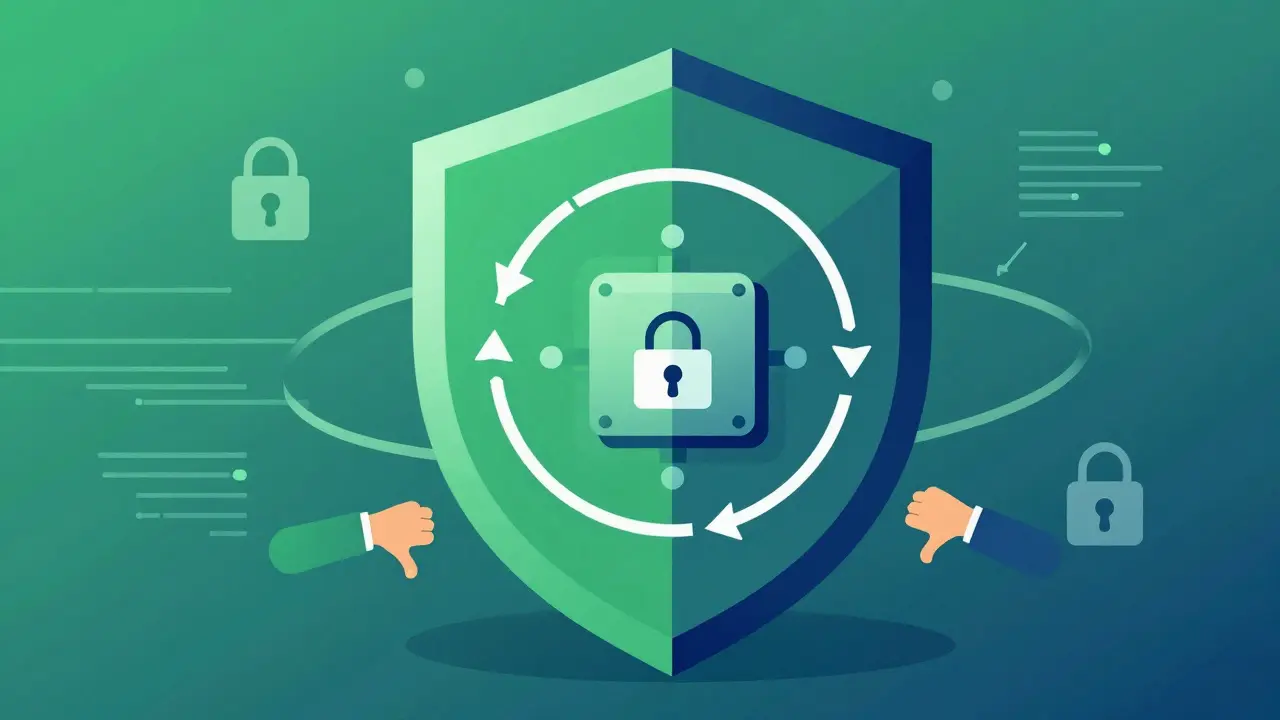
As the EU AI Act takes effect in August 2024, compliance is no longer optional. High-risk AI applications must demonstrate transparency, accuracy, and security. Your architecture must include a dedicated Security & Compliance Layer.
This layer should handle:
- Data Privacy: Ensuring sensitive information (PII) is redacted before being sent to external models.
- Access Control: Managing who can use the AI and what data they can access.
- Audit Trails: Logging all prompts, responses, and decisions for regulatory review.
Finally, don’t forget the feedback loop. MIT’s 2024 study found that implementations with human feedback loops achieved 41% higher user satisfaction, though they required 30% more development time. Build mechanisms for users to thumbs-up or thumbs-down responses. Use this data to retrain your ranking algorithms or fine-tune your models. The Mayo Clinic’s diagnostic support system, announced in March 2024, improved diagnostic accuracy by 29% specifically through clinician input mechanisms integrated into their feedback layer.
Building Your Roadmap: A Phased Approach
Don’t try to boil the ocean. Bloomberg’s successful GPT finance model followed a phased approach:
- Months 1-2: Data Architecture. Clean your data, set up vector databases, and define embedding strategies.
- Months 3-5: Model Selection & Orchestration. Test multiple models, implement RAG, and build the orchestration framework.
- Months 6-9: Security & Feedback. Add guardrails, compliance checks, and user feedback mechanisms.
- Ongoing: Refinement. Monitor performance, address data drift (which affects 63% of models within 6 months), and iterate.
By focusing on data quality, robust orchestration, and continuous feedback, you’ll build a generative AI system that delivers real value, not just novelty.
What is the most important layer in a generative AI architecture?
The Data Processing Layer is often the most critical. Research shows that 70% of generative AI failures stem from poor data architecture rather than model limitations. Without clean, well-structured, and properly embedded data, even the best models will produce inaccurate results.
How does RAG improve accuracy compared to standalone LLMs?
Retrieval-Augmented Generation (RAG) improves factual accuracy by 35% and reduces hallucination rates from 27% to 9% in enterprise settings. It works by retrieving relevant, up-to-date documents from your own database and providing them as context to the LLM, grounding its responses in verified facts.
What are the typical costs of running a generative AI application?
According to Flexera’s 2024 Cloud Report, the average monthly cost per generative AI application is approximately $14,500. Costs vary based on model size, inference frequency, and whether you use proprietary APIs or self-hosted open-source models. Techniques like caching and dynamic routing can help reduce these expenses.
Why is orchestration necessary for enterprise AI?
Orchestration frameworks manage the complex interactions between data retrieval, model selection, security checks, and output formatting. They transform fragile prototypes into robust, scalable systems capable of handling edge cases, errors, and varying user intents reliably.
How long does it take to implement a generative AI architecture?
Enterprise deployments typically require 6-12 months. Data preparation alone consumes 45-60% of this time. Teams lacking dedicated ML engineers may face timelines 3.2 times longer. A phased approach starting with data architecture helps mitigate delays.
What is the role of vector databases in generative AI?
Vector databases store numerical representations (embeddings) of text, images, or other data. They enable semantic search, allowing the AI to find conceptually similar content rather than just keyword matches. This is essential for RAG systems, improving retrieval accuracy by 22% compared to traditional databases.
How can I prevent prompt injection attacks?
Implement a dedicated Security & Compliance Layer with guardrails. Tools like AWS Guardrails or open-source libraries can sanitize inputs, detect malicious patterns, and restrict model behavior. Additionally, never trust user input directly; always validate and filter it before passing it to the LLM.
- Jun, 23 2026
- Collin Pace
- 0
- Permalink
- Tags:
- generative AI architecture
- AI orchestration
- vector databases
- RAG implementation
- LLM infrastructure
Written by Collin Pace
View all posts by: Collin Pace