Token-Level Logging Minimization: Protecting Privacy in LLM Systems
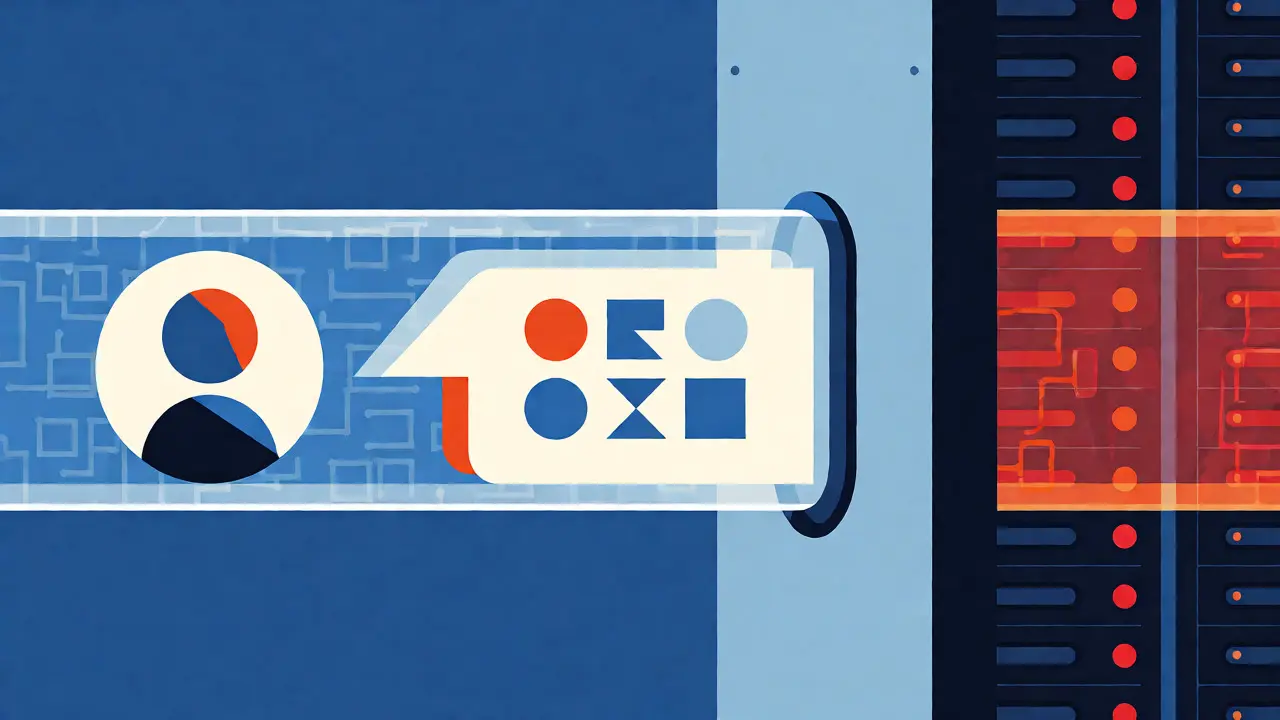
Imagine you ask a chatbot to summarize your medical history. You paste in a paragraph containing your name, date of birth, and a specific diagnosis. The bot gives you a great summary. But what happened to that raw text? In many enterprise setups, it sat in a log file for months, readable by any engineer with access. This is the silent leak in modern Large Language Model (LLM) systems. It’s not just about what the model sees; it’s about what gets written down after the fact.
This is where token-level logging minimization comes in. It’s not enough to scrub entire prompts or responses. You need to target individual tokens-the smallest units of text the model processes-to strip out Personally Identifiable Information (PII) before it ever hits your storage. Recent data from Protecto AI shows that implementing deterministic tokenization can reduce privacy incidents by 92% in enterprise deployments. That’s not a marginal gain; that’s the difference between a minor compliance headache and a massive GDPR fine.
Why Standard Logging Fails LLMs
Traditional application logging was built for static data. A user logs in, a record is fetched, an error occurs. The context rarely changes mid-stream. LLMs are different. They are stateful and conversational. A risk identified by the European Data Protection Board (EDPB) in their April 2025 guidance highlights a critical vulnerability: multi-turn conversations. An innocuous query in turn five might indirectly reference private data provided in turn one. If you only scrub the current input, you miss the context carried over from previous turns.
Standard sample-level defenses often fail here because they treat each request as isolated. Token-level minimization recognizes that privacy risks are distributed across the sequence. By operating at the token level, you ensure that even if a name appears in the third word of a long sentence, it is masked before the system records it. This granularity is essential because LLMs don’t just process words; they process embeddings derived from these tokens. If the raw token remains in the log, the privacy breach is complete, regardless of how well the model performed.
The Core Mechanism: Deterministic Tokenization
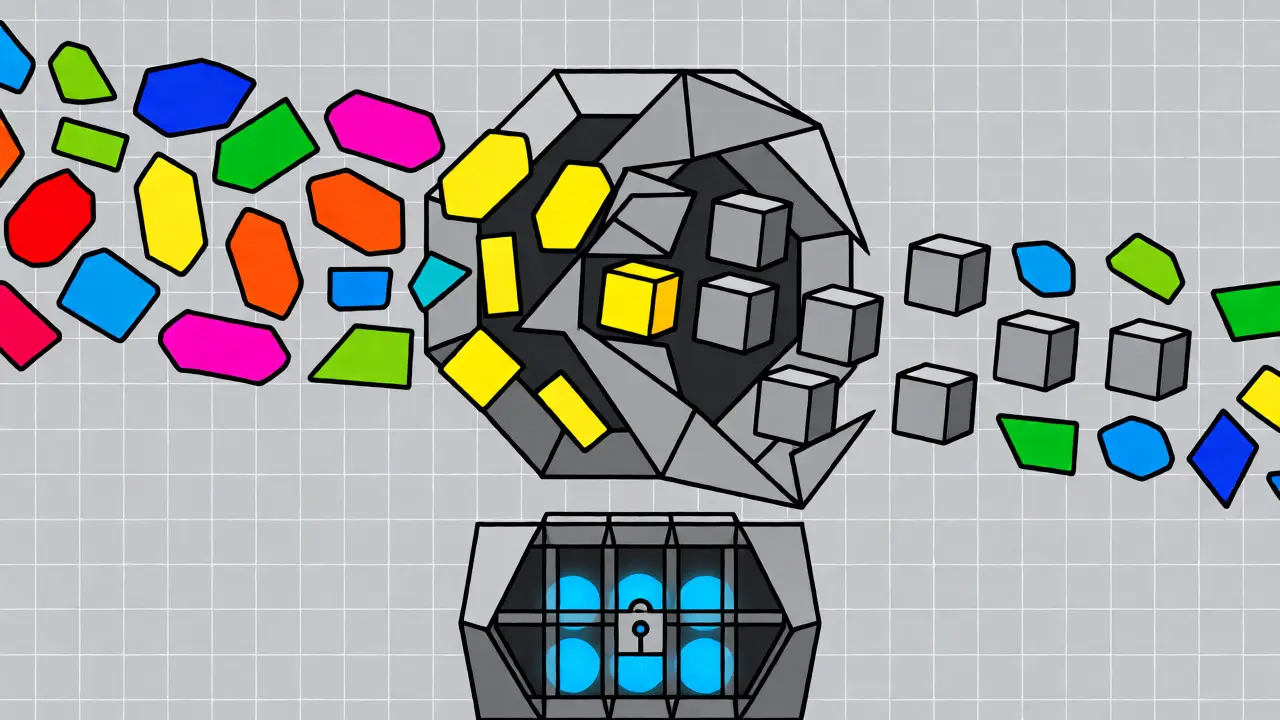
The most effective method for achieving this is deterministic tokenization. Unlike random masking, which breaks consistency, deterministic tokenization replaces sensitive fields with consistent placeholders. For example, every instance of "John Doe" becomes "NAME_1234" throughout the session. This preserves the structural integrity of the data for debugging purposes while hiding the actual values.
The implementation follows a strict four-step pipeline:
- Field Identification: Detect direct identifiers (emails, SSNs) and quasi-identifiers (zip codes combined with job titles).
- Token Format Selection: Choose a format that maps back to the original value securely, such as "ID_
". - Secure Mapping Vault: Store the mapping between the token and the real value in an encrypted vault, separate from the application logs.
- Pipeline Integration: Apply tokenization before the data reaches the LLM and reverse it only after results are produced, ensuring the raw PII never touches the log stream.
This approach is favored because it balances security with utility. Random masking destroys the ability to trace errors. Full encryption adds significant latency. Deterministic tokenization offers a middle ground where engineers can still analyze patterns without seeing the underlying personal data.
Performance Trade-offs and Latency
Engineers often worry that adding privacy layers will slow down response times. The numbers suggest otherwise. According to IBM’s October 2024 technical analysis, token-level filtering adds approximately 12-18ms of latency per request. In the world of high-speed API calls, this represents a performance overhead of just 0.8-1.3%. Most enterprise customers accept this trade-off willingly because the alternative-full data encryption-adds 45-60ms per request, nearly quadrupling the delay.
Furthermore, token-level minimization is more efficient than sample-level filtering when dealing with complex contexts. Research presented at the 2024 PrivateNLP workshop showed that contextual token manipulation achieves 23.7% better privacy preservation while maintaining 94.2% of the original model accuracy compared to naive rule-based approaches. You aren’t just hiding data; you’re preserving the model’s ability to understand the context without exposing the source.
Handling Multi-Turn Context Risks
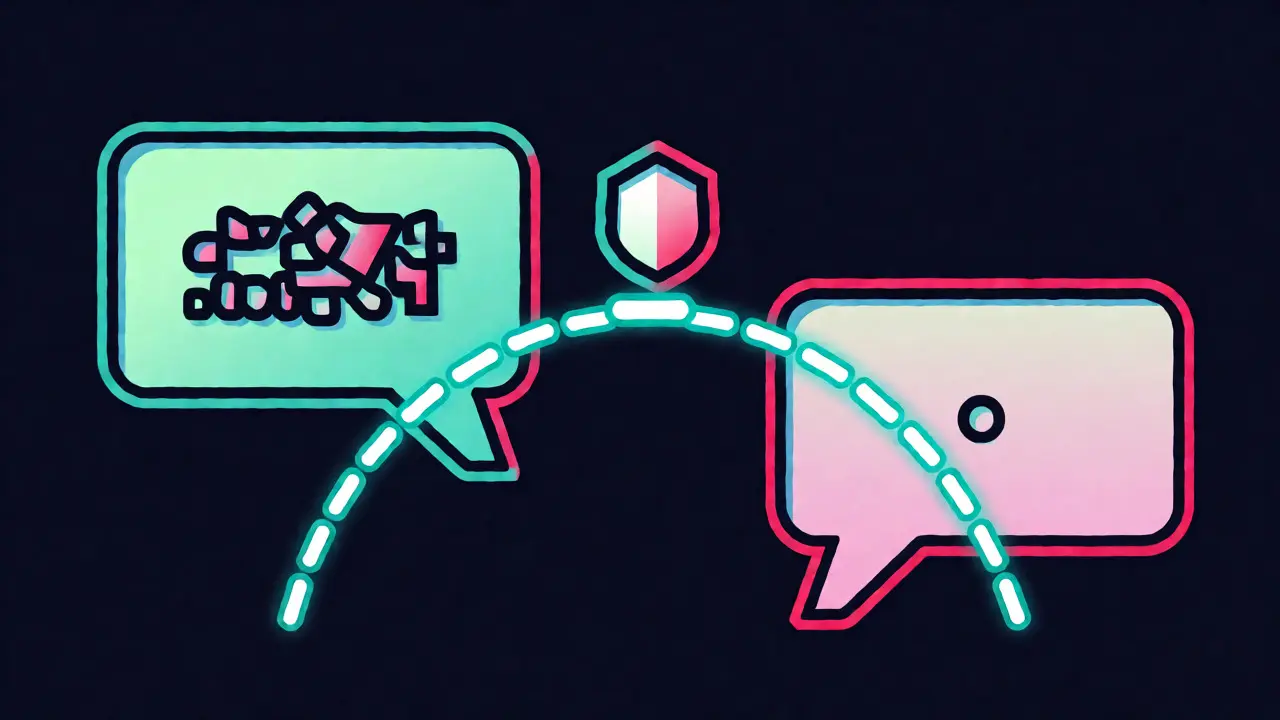
The biggest challenge isn’t masking a single email address. It’s handling references that span multiple messages. Consider a scenario where a user says, "My wife, Sarah, has diabetes," in message one, and then asks, "What medications should she avoid?" in message three. A simple regex filter on message three won’t catch "she." It requires semantic understanding of the session history.
This is where advanced tools like Protecto AI’s "Multi-Turn Memory Scanning" come into play. Their January 2026 release reduced false positives by 34% by using improved semantic analysis to track these references. Without this capability, 73% of initial implementations failed to properly track contextual references, according to Galileo AI’s case study of 47 enterprise deployments. You need a system that scans the combination of older and newer messages to flag potential leaks before they are logged.
Regulatory Drivers and Market Adoption
Compliance is no longer optional. The EU AI Act and GDPR Article 32 mandate data minimization by design. Gartner reports that 68.3% of Fortune 500 companies have already implemented token-level privacy controls. In highly regulated sectors like financial services and healthcare, adoption rates exceed 87%. These industries cannot afford the risk of storing raw patient or customer data in unstructured logs.
The market is shifting rapidly. While open-source solutions like the TOSS framework hold an 18.2% share, proprietary platforms dominate due to superior documentation and support. Protecto AI leads with a 31.7% market share, largely because their tools integrate seamlessly with Retrieval-Augmented Generation (RAG) systems. In RAG architectures, the retrieval step must be permission-aware, filtering out sensitive documents before they are fed into the model. Token-level minimization ensures that even retrieved snippets don’t leak PII into the final log entry.
Implementation Checklist for Teams
If you are rolling this out, keep these practical steps in mind. First, budget for training. Developers need 35-45 hours to master robust token-level minimization. Second, build reusable evaluation sets. Test your models against known leakage patterns regularly; Galileo AI found this reduced false negatives by 41%. Third, don’t rely solely on tokenization. Pair it with end-to-end encryption of prompt logs for auditability.
| Approach | Latency Overhead | Privacy Preservation | Complexity |
|---|---|---|---|
| Naïve Rules (Regex) | < 5ms | Low (easily reversed) | Low |
| Deterministic Tokenization | 12-18ms | High (92% incident reduction) | Medium |
| Full Encryption | 45-60ms | Maximum | High |
| Sample-Level Filtering | Variable | Medium (misses context) | Low |
Token-level logging minimization is becoming the standard for responsible AI deployment. It offers the best balance of security, performance, and regulatory compliance. As attacks evolve, particularly token reconstruction techniques, continuous evolution of these methods will remain critical. Start small, measure the impact, and scale up your semantic scanning capabilities as your conversation complexity grows.
What is token-level logging minimization?
It is a technique that removes or masks personally identifiable information (PII) at the individual token level in LLM logs, rather than scrubbing entire prompts or responses. This prevents sensitive data from being stored in raw text form while maintaining operational visibility.
How much latency does token-level minimization add?
Typically, it adds 12-18 milliseconds per request, representing a 0.8-1.3% performance overhead. This is significantly lower than full encryption methods, which can add 45-60ms.
Is deterministic tokenization secure against attackers?
Yes, when implemented correctly with a secure mapping vault. However, simple rule-based substitution can be reversed by knowledgeable attackers. Advanced contextual manipulation provides higher security but requires more computational resources.
Why is multi-turn context important for privacy?
Because users often refer to previously shared data using pronouns or indirect references. If you only scrub the current message, you may miss links to sensitive data mentioned earlier in the conversation, leading to potential leaks.
Which industries benefit most from this technology?
Financial services and healthcare lead adoption, with over 87% implementation rates, due to strict regulations like HIPAA and GDPR. Retail and manufacturing follow with lower but growing adoption rates.
- Oct, 25 2026
- Collin Pace
- 0
- Permalink
Written by Collin Pace
View all posts by: Collin Pace