Travel and Hospitality with Generative AI: Itineraries, Offers, and Service Recovery
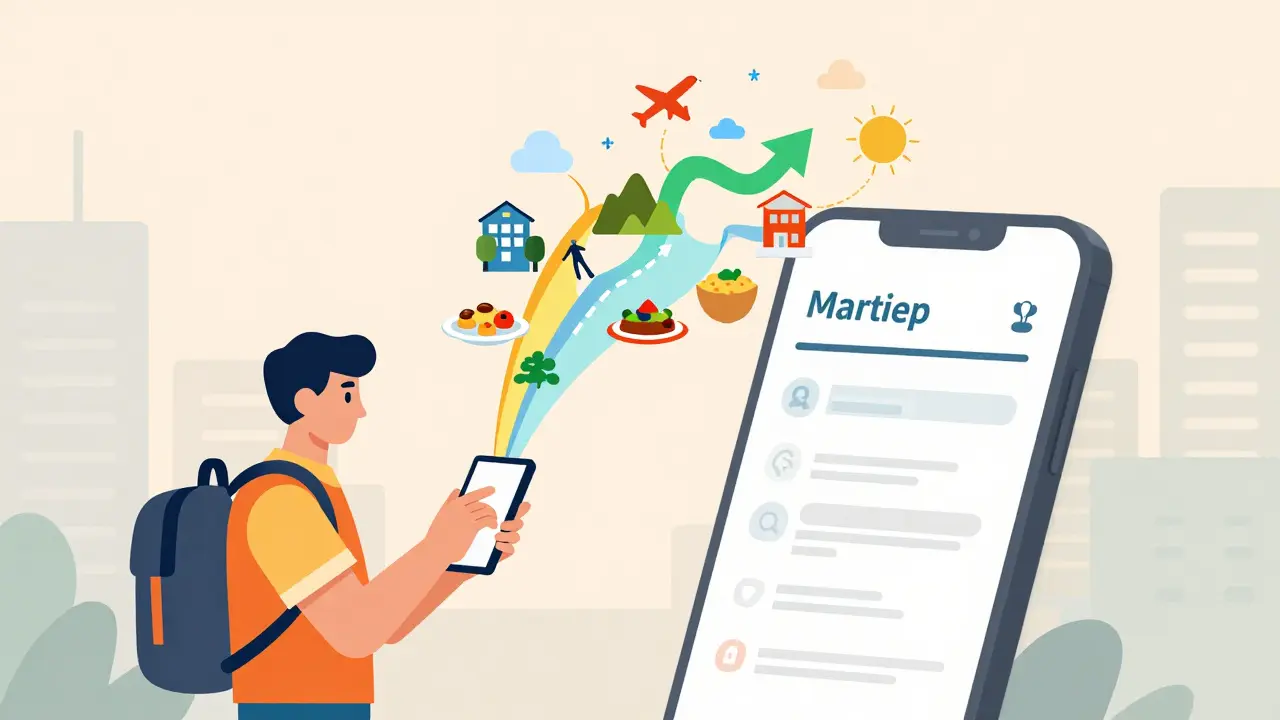
Travel in 2026 doesn’t start with a website. It starts with a question. "What’s the best week-long trip for my family under $2,500 that includes hiking, food, and no crowds?" That’s not a Google search anymore. That’s a prompt you type into your phone, and within seconds, you get a full itinerary-hotels, flights, restaurant reservations, even weather-adjusted packing lists. This isn’t science fiction. It’s happening right now, and it’s changing how we plan, book, and recover when things go wrong.
Itineraries That Think Like a Local
Forget scrolling through 50 hotel listings or comparing 12 flight options. Generative AI cuts through the noise. Platforms like Booking.com’s AI Trip Planner and Google’s integrated travel tools now interpret natural language like a human travel agent who knows your habits. Ask for "a quiet beach trip with good snorkeling and kid-friendly meals" and you don’t get a list-you get a curated plan with exact dates, prices, and even local tips like "avoid the pier on weekends because of jet skis."It works because the AI doesn’t just pull data. It learns. If you’ve booked mountain cabins before, it knows you prefer early check-in. If you always skip breakfast buffets, it skips them in your plan. One traveler in Austin told me she used ChatGPT to plan a 10-day Europe trip with her 75-year-old parents. The AI factored in mobility limits, dietary restrictions, and even their preference for afternoon naps. The result? A seamless trip with zero stress. No more spreadsheets. No more 3 a.m. research sessions.
Augmented reality is now part of the preview. Before booking a hotel in Bali, you can step into a 3D tour that shows you exactly how the view looks from your balcony at sunset. You can walk through the lobby, check if the pool is noisy, or see if the spa has the massage you want. This isn’t a gimmick. It’s cutting return rates by 18% in hotels that use it.
Offers That Know You Better Than Your Spouse
The old model of travel marketing-sending the same discount to everyone-is dead. In 2026, offers are alive, adaptive, and personal. AI watches what you click, what you cancel, what you search for but don’t book. If you’ve been looking at ski resorts but never pulled the trigger, you’ll get a tailored offer: "Your favorite lodge has a last-minute deal-20% off, includes hot cocoa and guided snowshoeing."Expedia’s Romie chatbot and Hopper’s price prediction engine don’t just notify you of deals. They predict them. Hopper told me last month that my flight from Chicago to Miami would drop $87 in 72 hours. I waited. It did. I booked. No one else got that alert. That’s because it analyzed my booking history, my typical travel windows, and even how often I change plans.
Hotels are doing the same. Your room isn’t just ready when you arrive-it’s adjusted. If you’ve previously asked for extra pillows, they’re there. If you’ve never used the minibar, it’s empty. If you always order room service at 8 p.m., the tablet on your nightstand opens to the menu before you even ask. This isn’t creepy. It’s expected. A 2026 survey found 57% of travelers are willing to share data if it means fewer decisions and more personalization.
Restaurants in major airports and city centers now use AI to suggest dishes based on your past orders, allergies, and even your mood. A traveler who ordered spicy ramen twice last trip gets a note: "We’ve got a new miso broth with extra chili-thought you’d like it."

Service Recovery That Stops Problems Before They Start
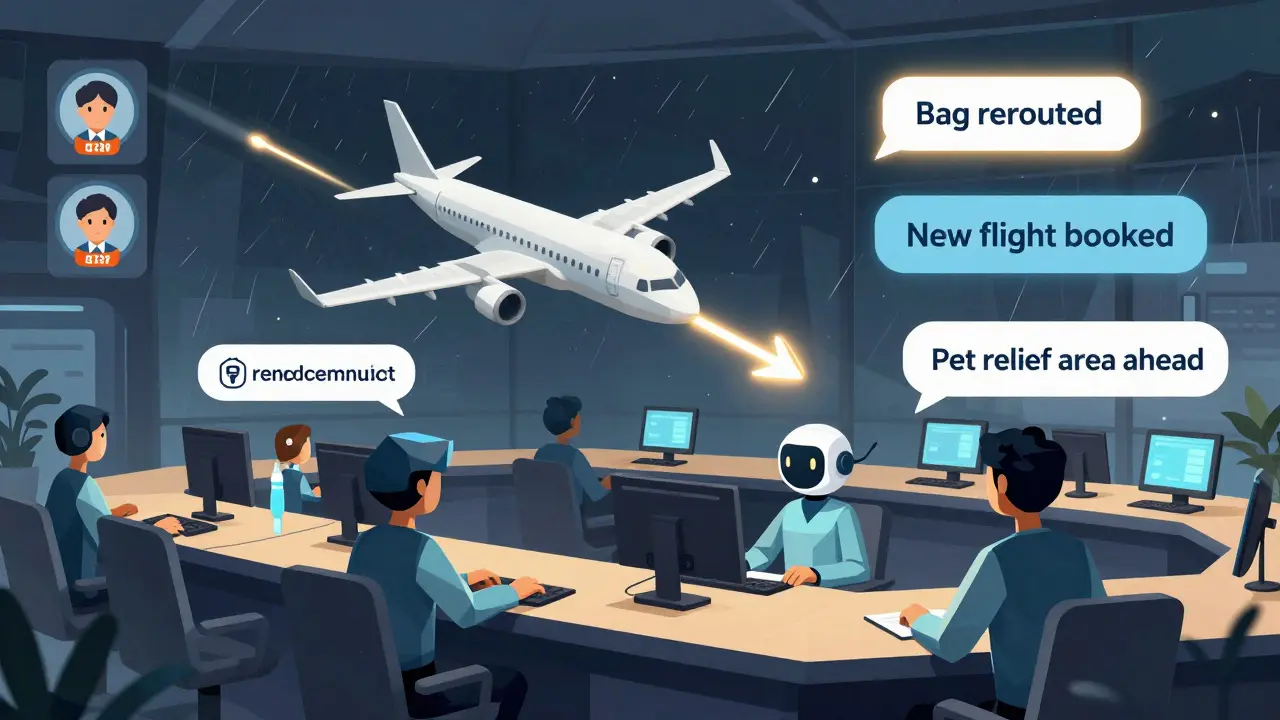
The biggest win for travelers isn’t booking faster. It’s not getting stranded.Airlines have gone from reactive to predictive. When a storm hits Atlanta, you don’t get a delayed flight alert. You get a new flight, a hotel voucher, and a text saying, "Your checked bag is rerouted to your new destination. You’ll get it at baggage claim by 9 p.m. local time." All before you even realize your flight’s canceled.
That’s because airlines now connect flight data, passenger history, loyalty status, and real-time weather into one system. If you’re a platinum member who always flies with your dog, the AI doesn’t just rebook you-it finds a flight with pet-friendly seating and a nearby pet relief area. If you’re traveling solo and have a connecting flight under 45 minutes, it automatically moves you to an earlier flight to avoid missing your connection.
Hotels do the same. If your AC breaks, the AI doesn’t wait for you to call. It sees the sensor alert, checks your room history (you’ve complained about temperature before), and sends a technician within 10 minutes. While they’re on the way, it texts: "We’ve moved you to Room 412, same view, cooler temp. Your original room will be fixed by 3 p.m. We’ve also credited your account $75 for the inconvenience."
This isn’t customer service. It’s ambient intelligence. The system doesn’t wait for you to speak. It anticipates.
The Rise of the AI Agent
The next wave isn’t just AI helping you. It’s AI doing it for you.By 2026, AI agents are booking trips without human input. Imagine telling your assistant: "Plan my next trip to Japan next fall. I want to avoid crowds, stay in ryokans, and try Michelin-starred food under $100 per meal." The agent doesn’t ask for clarification. It checks your budget, your past trips, your dietary restrictions, your flight history, and your loyalty points. It books your flights, your stays, your reservations at three restaurants, and even your train tickets between cities-all in 90 seconds.
That’s not fantasy. IDC predicts 30% of all travel bookings will be handled by AI agents by 2030. And when they do, the travel industry changes. Hotels that don’t have real-time, unified data disappear from these agents’ search results. If your room rates aren’t synced with your loyalty program, or your breakfast menu isn’t updated, the AI skips you. No one sees your listing. No one books you.
Superapps like Apple Travel, WeChat Travel, and Google Travel are becoming the central hubs. They don’t just book. They pay. They redeem points. They unlock doors. They call for a car. They even adjust your itinerary if your flight is delayed. You don’t open five apps. One agent handles it all.
The Data That Makes It All Work
None of this happens without clean, real-time data. A hotel with separate systems for bookings, loyalty, housekeeping, and guest feedback can’t personalize. An airline that doesn’t link passenger history to flight disruptions can’t predict recovery. A restaurant that can’t sync its menu with delivery apps can’t suggest the right dish.The winners in 2026 are the ones who built a single data fabric-where every touchpoint talks to every other. Your booking triggers your profile update. Your profile triggers your room setup. Your room setup triggers your breakfast suggestion. And if you cancel a reservation? The system learns why and adjusts future offers.
It’s not just about technology. It’s about trust. Travelers are giving up privacy for convenience. And they expect it to be flawless. One missed connection. One wrong room. One outdated menu. That’s all it takes to break trust.
What This Means for Travelers and Businesses
For travelers, this is the best time ever to go on vacation. You get more control, more personalization, and fewer headaches. You don’t need to be a planner. You just need to say what you want.For businesses, the choice is clear: adapt or disappear. If your website still looks like it’s from 2019, if your staff still answers calls instead of AI, if your offers are generic-you’re losing. The AI isn’t replacing humans. It’s replacing outdated systems. The best hotels and airlines now use AI to handle routine tasks so their people can focus on the moments that matter: a warm greeting, a handwritten note, a surprise upgrade.
By 2027, if you haven’t integrated generative AI into your itineraries, offers, and recovery systems, you won’t just be behind. You’ll be invisible.
- Mar, 5 2026
- Collin Pace
- 8
- Permalink
- Tags:
- generative AI travel
- AI itineraries
- personalized travel offers
- AI service recovery
- travel AI 2026
Written by Collin Pace
View all posts by: Collin Pace