Trustworthy AI for Code: Verification, Provenance, and Watermarking
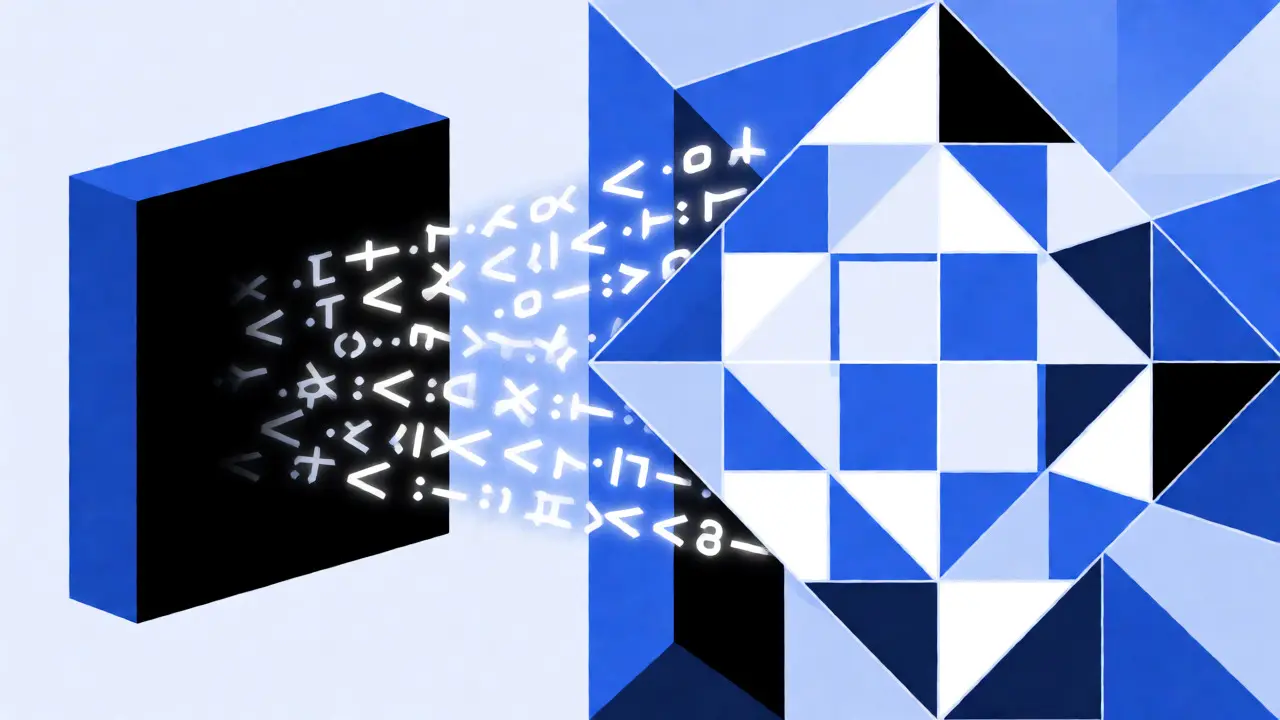
You just merged a pull request generated by an AI agent. It looks clean, the tests pass, and the logic seems sound. But did you actually verify that the code does exactly what it claims to do? Or did you just trust the black box?
This is the central problem of modern software engineering in 2026. We have moved past the novelty phase of AI coding assistants. Today, tools like GitHub Copilot and OpenAI Codex are producing millions of lines of code daily. The volume has outpaced human oversight. When autonomous agents write code for critical systems-from medical devices to financial ledgers-we can no longer rely on manual review alone. We need Trustworthy AI for Code is a framework ensuring reliability, security, and accountability through verification, provenance, and watermarking. This isn't just about catching bugs; it's about establishing mathematical certainty and legal traceability in a probabilistic world.
The Verification Gap: Why Trust Needs Proof
Traditional code review relies on human intuition and experience. But when an AI generates a complex algorithm, humans struggle to spot subtle logical errors or edge-case failures. The gap between what an AI produces and what we can reliably check is widening. Enter Formal Methods is a collection of mathematically rigorous techniques for specifying, developing, and verifying software and hardware systems.
Companies like TrustInSoft provides static analysis and formal verification tools for safety-critical software are leading this charge. Their approach doesn't guess if code is safe; it proves it. Using techniques like Model Checking and Abstract Interpretation, they analyze the entire state space of a program. If the tool says your memory handling is correct, it is mathematically guaranteed to be correct under all possible inputs. This contrasts sharply with standard unit testing, which only checks specific scenarios.
Jeannette Wing, a prominent computer scientist at Columbia University, argues that current probabilistic models require new verification techniques. Standard logic doesn't work well on stochastic processes. We need tools that can handle probability distributions and non-linear functions. Without these, we are flying blind. The risk isn't just a crash; it's a silent failure that corrupts data over time.
Provenance: Tracing the Origin of Every Line
If verification answers "is this code correct?", provenance answers "where did this code come from?" In an era where AI models are trained on vast datasets, including copyrighted material, knowing the lineage of your code is legally and ethically critical. Code Provenance refers to the metadata describing the origin, creation process, and modification history of software artifacts.
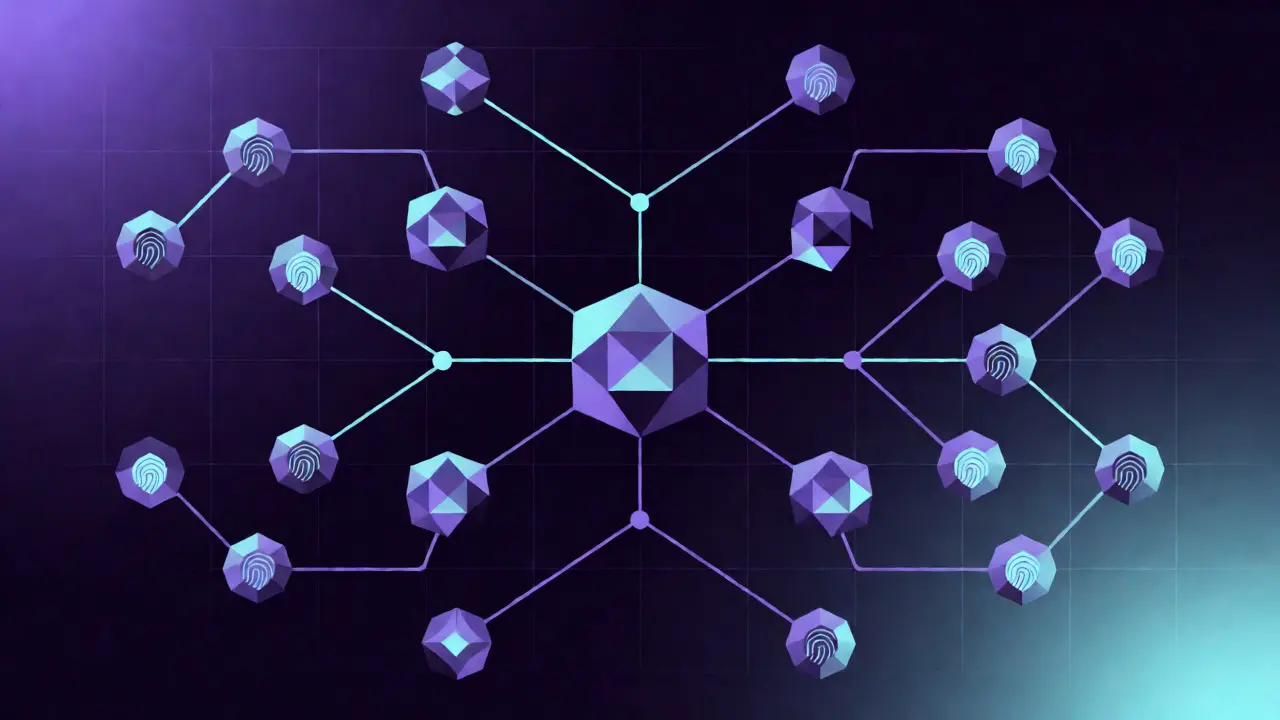
Imagine you deploy a microservice written by an AI agent. Six months later, a vulnerability is discovered in the underlying library. How do you know if your specific instance used the vulnerable version? With robust provenance tracking, every line of AI-generated code carries a digital fingerprint. This fingerprint includes the model version, the prompt context, and the training data subset used. It creates an immutable audit trail.
This is crucial for compliance. The EU AI Act, implemented in late 2025, demands transparency for high-risk AI systems. Enterprises in finance and healthcare are already adopting provenance standards. They aren't doing it because it's trendy; they're doing it because regulators require them to prove their algorithms weren't hallucinating legal precedents or financial figures. Provenance turns opaque AI outputs into auditable assets.
Watermarking: Protecting Intellectual Property
As AI models become more sophisticated, distinguishing between human-written and AI-generated code becomes harder. This raises questions about intellectual property (IP) ownership. Did you write that function, or did the model? To solve this, researchers are implementing AI Watermarking involves embedding unique identifiers into AI-generated content without affecting its functionality.
Watermarking works by subtly altering the probability distribution of token generation. For example, an AI might slightly prefer certain variable names or comment structures based on a secret key. These patterns are invisible to the developer but detectable by specialized tools. This allows organizations to track which parts of their codebase were created by which internal or external models.
Consider a scenario where a competitor copies your proprietary algorithm. If your AI-generated code contains a statistical watermark linked to your private model weights, you can prove origin. It’s not perfect-watermarks can sometimes be stripped-but it adds a significant layer of deterrence and evidence. It shifts the burden of proof. Instead of proving you didn't copy someone else, you can prove who created it first.
Comparing Verification Approaches
Not all verification methods are created equal. Some prioritize speed, others rigor. Choosing the right mix depends on your application's criticality. Below is a comparison of the leading approaches currently dominating the market in 2026.
| Feature | Formal Methods (e.g., TrustInSoft) | LLM-Based Reviewers (e.g., OpenAI) | Cryptographic Proofs (e.g., Provably.ai) |
|---|---|---|---|
| Verification Type | Mathematical Deduction | Statistical Pattern Matching | Zero-Knowledge Proofs (ZK) |
| Guarantee Level | Absolute (if spec is correct) | High Probability | Cryptographic Certainty |
| Performance Impact | High (CPU intensive) | Low (API latency) | Moderate (Proof generation) |
| Best Use Case | Safety-critical systems (Medical, Aerospace) | Rapid development cycles (Web, SaaS) | Data integrity & SQL transactions |
| Adoption Barrier | Steep learning curve | False positives/negatives | Integration complexity |
Notice the trade-offs. Formal methods offer peace of mind but slow down deployment. LLM reviewers are fast but fallible. Cryptographic proofs bridge the gap for data operations but don't verify general logic yet. Most mature enterprises use a hybrid pipeline: LLMs for initial linting, formal tools for core logic, and cryptographic checks for database interactions.

Implementation Strategies for Teams
How do you actually implement this? You don't need to rewrite your entire stack overnight. Start small. GitHub released a six-step framework in early 2026 that serves as a solid baseline for teams integrating AI verification.
- Functional Checks: Ensure the code meets the basic requirements before worrying about elegance.
- Context Verification: Check if the AI understood the broader system architecture, not just the isolated function.
- Quality Assessment: Use static analysis tools to catch style and maintainability issues.
- Dependency Scrutiny: Verify that any libraries introduced by the AI are up-to-date and secure.
- AI-Specific Pitfalls: Look for hallucinated APIs or deprecated syntax common in older training data.
- Tool Usage: Automate these steps in your CI/CD pipeline so humans only review flagged items.
Teams that follow this structured approach report a 40% reduction in production bugs. However, it requires discipline. You must resist the urge to merge quickly. The goal is to shift left-catching errors during generation rather than after deployment.
For those using advanced tools like Provably.ai uses zero-knowledge protocols to verify SQL computations performed by AI agents, integration takes longer. Expect a 3-6 month ramp-up period. Your engineers will need training in both the new tools and the underlying concepts of cryptographic verification. But the payoff is tangible: near-zero false negatives in data integrity checks.
The Future: From Probabilistic to Deterministic
We are witnessing a fundamental shift. Software is moving from being "probably correct" to "provably correct." By 2028, Gartner predicts that 90% of enterprise AI code generation will require integrated verification solutions. This isn't speculation; it's driven by regulatory pressure and operational necessity.
The future lies in tighter integration. Imagine an IDE where every keystroke triggers a background formal verification. As you type, the system highlights potential logical contradictions in real-time. Watermarking becomes automatic, tagging every commit with its generative source. Provenance records are stored on decentralized ledgers, making tampering impossible.
But challenges remain. Scaling formal methods to massive, distributed systems is still computationally expensive. Researchers are working on AI-specific templates to reduce this overhead. Until then, we must balance rigor with velocity. The technology is ready; the organizational change management is lagging.
Ultimately, trustworthy AI for code isn't about restricting developers. It's about empowering them to build faster with confidence. When you know your code is verified, traced, and watermarked, you stop fearing the machine and start leveraging it. That is the true promise of this emerging field.
What is the difference between code verification and validation?
Verification asks "Did we build the product right?" It ensures the code conforms to specifications using methods like formal proofs or static analysis. Validation asks "Did we build the right product?" It checks if the software meets user needs through testing and feedback. Trustworthy AI focuses heavily on verification to ensure technical correctness, while validation remains largely human-centric.
Is AI watermarking foolproof?
No, it is not foolproof. Sophisticated attackers can potentially strip watermarks by rewriting code or translating it. However, removing a watermark usually degrades performance or introduces detectable anomalies. It serves as a strong deterrent and evidentiary tool rather than an absolute barrier against copying.
Why is provenance important for copyright law?
Copyright laws generally protect human authorship. If AI generates code, determining ownership is legally murky. Provenance tracks the input prompts, model versions, and human edits. This metadata helps establish whether a piece of code is primarily human-created, AI-assisted, or fully AI-generated, which influences licensing and liability decisions.
Can formal methods handle large-scale AI projects?
Scaling formal methods to entire codebases is difficult due to computational complexity. Current best practices involve applying formal verification to critical modules (like encryption or financial calculations) while using lighter-weight static analysis for the rest. Newer AI-driven formal tools are improving scalability, but full-project verification remains resource-intensive.
How long does it take to implement verification tools?
Simple integrations like LLM-based code reviewers can be set up in days. Complex formal method implementations, such as those offered by TrustInSoft, typically require 3-6 months for full enterprise adoption. This timeline includes staff training, pipeline configuration, and tuning false positive rates.
- Sep, 8 2026
- Collin Pace
- 5
- Permalink
Written by Collin Pace
View all posts by: Collin Pace