Vibe Coding Adoption Metrics and Industry Statistics That Matter in 2026
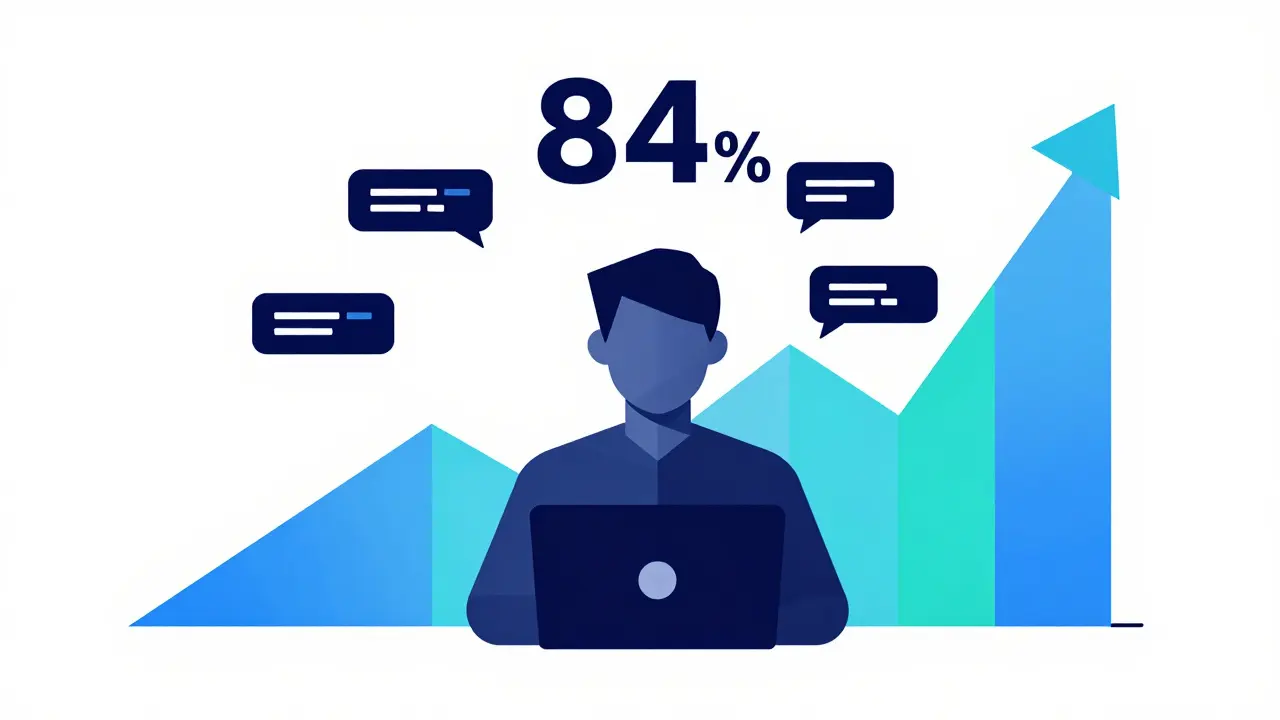
Stop guessing if your team is ready for vibe coding. The hype cycle has peaked, and the real numbers are finally coming in. By mid-2026, this isn't just a weekend experiment anymore; it’s a core part of how software gets built. But here’s the catch: while adoption is skyrocketing, so are the headaches. You’re seeing faster prototypes, sure, but you’re also dealing with messy codebases and serious security gaps. If you’re trying to figure out whether to push this across your organization or stick to traditional methods, you need the hard data, not the marketing fluff.
The landscape has shifted dramatically since GitHub Copilot launched its public preview in June 2021. Back then, it was a novelty. Today, platforms like Cursor, Replit, Loveable, and Windsurf have turned natural language programming into a viable workflow for millions. But does the math add up? Let’s look at the actual metrics driving the industry right now.
The Real Numbers on Developer Adoption
If you want to know where things stand, look at the Stack Overflow Developer Survey from 2025. They polled over 90,000 developers, and the results were stark. A massive 84% of respondents said they are either already using AI coding assistants or plan to use them soon. That’s a huge jump from just 70% in 2023. This isn’t a niche trend; it’s becoming the standard.
However, usage doesn’t always mean success. Here is the reality check from MktClarity’s Q3 2025 analysis:
- Acceptance Rate: Only 30% of AI-generated code suggestions are actually accepted by developers. Think about that. For every three lines the AI suggests, two get tossed.
- Vulnerability Rate: Between 40% and 45% of AI-generated code contains security vulnerabilities. That is a staggering number when you consider how much code is being churned out.
- Productivity Trade-off: While these tools cut routine coding time by 35-55%, they increase debugging time by 20-30% for complex tasks. You save time writing, but you spend more time fixing.
This data tells us that vibe coding is great for speed, but it demands heavy oversight. It’s not replacing the developer; it’s changing their job from writer to editor.
Platform Breakdown: Who Dominates Which Niche?
Not all AI coding tools are created equal. The market has segmented quickly based on who needs what. Understanding these distinctions helps you pick the right tool for your specific context.
| Platform | Primary Audience | Market Share / User Base | Key Differentiator | Pricing (Approx.) |
|---|---|---|---|---|
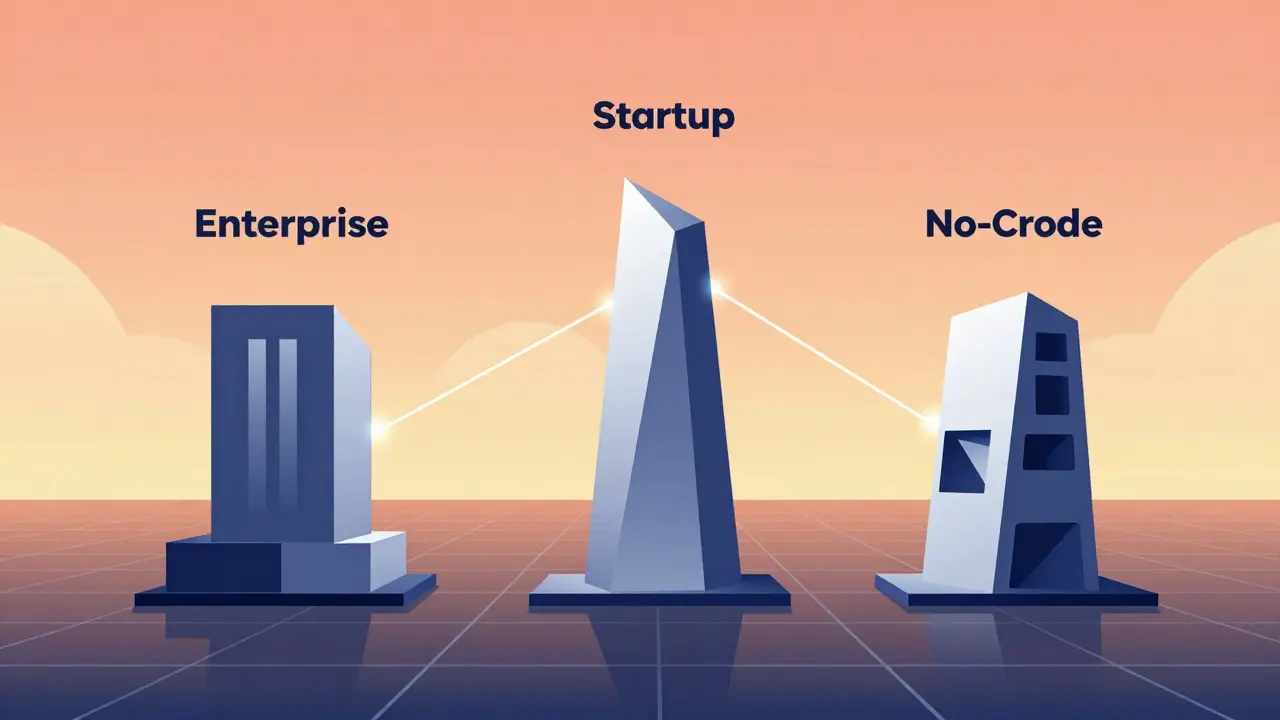
| GitHub Copilot | Enterprise | 45% enterprise share; 30% QoQ growth in paid subs | Seamless IDE integration (VS Code, JetBrains); broad language support | $10/user/mo (Individual), $19/user/mo (Enterprise) |
| Cursor | Startups & Pros | 35% share among Y Combinator companies; 1M daily active users | Local model execution for privacy; high performance | $20/month (Pro tier) |
| Replit | Educators & Beginners | 30 million users worldwide; 25% education market share | Cloud-based collaborative environment; no setup required | Freemium model |
| Loveable | No-Code/Low-Code Users | 15% no-code segment share; 2.3 million users | UI generation focus; rapid prototyping for non-tech founders | $20/user/mo (Business features) |
GitHub Copilot remains the heavyweight champion for large organizations, largely because it plugs directly into existing workflows. Its version 2.5, released in September 2025, added better security scanning, which helped ease some corporate fears. However, it still struggles with trust issues-12% of Fortune 500 companies have banned it due to data privacy concerns.
On the other end of the spectrum, Cursor has become the darling of the startup world. Founded by former Facebook engineers, it grew from $1 million to $100 million in annual recurring revenue in just one year. Its ability to run models locally addresses the biggest fear techies have: sending proprietary code to the cloud. But there’s a cost-it’s resource-heavy. You need at least 16GB of RAM and an i5 processor to run it smoothly, which locks out lower-end machines.
Then there’s Loveable, which targets people who aren’t traditional coders. With an 8% conversion rate from free to paid users (well above the 2-5% industry average), it proves that non-technical founders see value here. They love the speed of UI generation, but experienced devs often find it too limiting once they try to customize beyond basic templates.
The Security Elephant in the Room
You can’t talk about vibe coding stats without addressing the security nightmare lurking underneath. The convenience of typing "build me a login page" comes with hidden dangers.
John Feminella, Principal Engineer at Microsoft, warned in his August 2025 whitepaper that the 40-45% vulnerability rate in AI code is an existential threat. He’s not exaggerating. The IEEE’s 2025 Security Assessment found that 62% of AI-generated SaaS platforms lacked proper rate limiting on authentication endpoints. In plain English? Hackers can brute-force their way in easily because the AI forgot to put up a guardrail.
We’ve seen real-world consequences. Security engineer Jane Rodriguez documented a case in late 2025 where AI-generated code bypassed authentication in a fintech app. Fixing that mess took three weeks of remediation. That’s not just a bug; that’s a business risk.
So, what’s the fix? It’s not banning the tools. It’s changing how you audit them. Companies like Amazon, Google, and Visa are integrating AI code into their stacks (aiming for 30-50% AI-generated code internally), but they pair it with rigorous automated testing and human review. If you’re adopting vibe coding, you must assume the output is untrusted until proven otherwise.
Expert Opinions: Hype vs. Reality
The expert community is split, and honestly, it should be. On one side, you have enthusiastic adopters. GitHub CEO Thomas Dohmke reported in July 2025 that enterprise customers saw a 55% boost in feature delivery speed using these tools. That kind of efficiency is hard to ignore.
On the other side, you have cautionary voices. Dr. Sarah Chen, an MIT Computer Science Professor, argues that vibe coding creates a "dangerous illusion of competence." She worries that junior developers are relying on AI to write code they don’t understand, leaving them helpless when things break. Gartner agrees, placing vibe coding at the "Peak of Inflated Expectations" in their 2025 Hype Cycle. They predict mainstream maturity won’t hit until 2028-2030.
User feedback mirrors this divide. On Reddit, developers praise Cursor for cutting prototyping time by 70%, but complain about spending 40% more time debugging the result. Trustpilot reviews for Loveable highlight its ease for non-tech users but note a steep learning curve for customization. The consensus? Great for getting started, painful for finishing strong.
Implementation Challenges and Skills Gap
Adopting vibe coding isn’t just about installing a plugin. It requires a shift in skills. According to LunaBase’s 2025 Skills Assessment, while basic usage takes only 1-3 hours to learn, mastering advanced prompt engineering and AI code auditing requires 40-60 hours of dedicated practice.
Enterprises face additional hurdles. Ptech Partners’ implementation study shows that deploying these tools securely takes 2-4 weeks due to compliance checks. Legacy system integration is another pain point, cited by 65% of enterprise users as a major difficulty. If your codebase is old and undocumented, AI might struggle to provide relevant context, leading to hallucinations or broken integrations.
Documentation quality varies wildly. GitHub Copilot scores a 4.7/5 for docs, supported by a massive community (350,000+ Stack Overflow questions). Newer players like Windsurf score lower (3.2/5) and have slower community response times (up to 72 hours). When you’re stuck at 2 AM, that support gap matters.
Future Outlook: Where Is This Heading?
The market is exploding, but predictions vary wildly. Roots Analysis values the current market at $2.96 billion, while MktClarity puts it at $12 billion for 2025. Projections for 2030 range from $24 billion to $65 billion, with some optimistic forecasts hitting $325 billion by 2040.
Funding reflects this uncertainty and excitement. Startups raised over $300 million in 2025 alone, with Rocket and Emergent securing $150 million Series B rounds in Q3 2025. Geographic adoption is led by North America (55% market share), followed by Europe (30%) and Asia-Pacific (15%).
Looking ahead, consolidation is inevitable. SaaStr predicts only 3-4 major platforms will survive past 2030. We’ll likely see increased regulatory scrutiny, especially in healthcare and finance. Business models may shift from per-user subscriptions to value-based pricing tied to actual productivity gains.
For now, vibe coding is a powerful co-pilot, not an autopilot. Use it to accelerate the boring stuff, but keep your hands on the wheel for mission-critical systems. The stats show it works, but only if you stay vigilant.
What is the current adoption rate of vibe coding among developers?
According to the 2025 Stack Overflow Developer Survey, 84% of developers are using or planning to use AI coding assistants, up from 70% in 2023. This indicates widespread acceptance across the industry.
Is AI-generated code secure?
Security is a major concern. MktClarity reports that 40-45% of AI-generated code contains vulnerabilities. Additionally, 62% of AI-built SaaS platforms lack proper rate limiting on authentication endpoints, making manual auditing essential.
Which vibe coding platform is best for enterprises?
GitHub Copilot holds a 45% market share in the enterprise sector due to its deep integration with Visual Studio Code, JetBrains IDEs, and Azure DevOps. It offers robust SSO/SAML support, though some companies ban it due to data privacy concerns.
How does vibe coding affect developer productivity?
It reduces routine coding time by 35-55% but increases debugging time by 20-30% for complex tasks. Only 30% of AI suggestions are accepted, meaning developers spend significant time reviewing and correcting output.
What are the system requirements for running local AI coding models?
Platforms like Cursor that offer local model execution require higher specs, typically at least 16GB of RAM and an Intel i5 processor (or equivalent) to run optimally. Cloud-based options like Replit only need a modern browser.
Will vibe coding replace professional developers?
Unlikely in the near term. Experts warn of an "illusion of competence" among juniors, and only 9% of developers deploy vibe coding for the majority of production applications. It serves best as a tool for prototyping and internal tools rather than mission-critical systems.
- Jul, 9 2026
- Collin Pace
- 0
- Permalink
- Tags:
- vibe coding statistics
- AI coding adoption metrics
- developer productivity data
- AI code security risks
- GitHub Copilot vs Cursor
Written by Collin Pace
View all posts by: Collin Pace