Vibe Coding in Regulated Industries: Why Finance and Healthcare Lag

You can build a working app in an afternoon using Vibe Coding, but you cannot deploy it to a bank or a hospital without risking a lawsuit. That is the hard truth for developers in regulated sectors today. While tech startups are shipping features at breakneck speed using AI-driven workflows, finance and healthcare institutions are stuck in slow-motion development cycles. The gap isn't just about technology; it's about a fundamental clash between the "move fast and break things" mentality of AI-assisted coding and the "prove it works before you touch anything" mandate of regulatory bodies.
| Factor | Unregulated Tech Sector | Regulated Sectors (Finance/Health) |
|---|---|---|
| Primary Goal | Rapid iteration and market fit | Auditability and risk mitigation |
| Code Origin | AI-generated via natural language prompts | Requires traceable lineage and human review |
| Compliance Burden | Minimal (internal standards) | High (HIPAA, SOX, FDA, PCI-DSS) |
| Adoption Status (2026) | Standard practice | Limited to prototyping/internal tools |
The Regulatory Paradox: Speed vs. Traceability
Vibe coding is a prompt-based development model where large language models generate code based on natural language instructions. It prioritizes conversational interaction over formal architectural planning. For a consumer app developer, this is a dream. You describe what you want, the AI writes the code, and you iterate. But in Finance and Healthcare, regulators don't care how fast you built it; they care that you can prove why it was built that way.
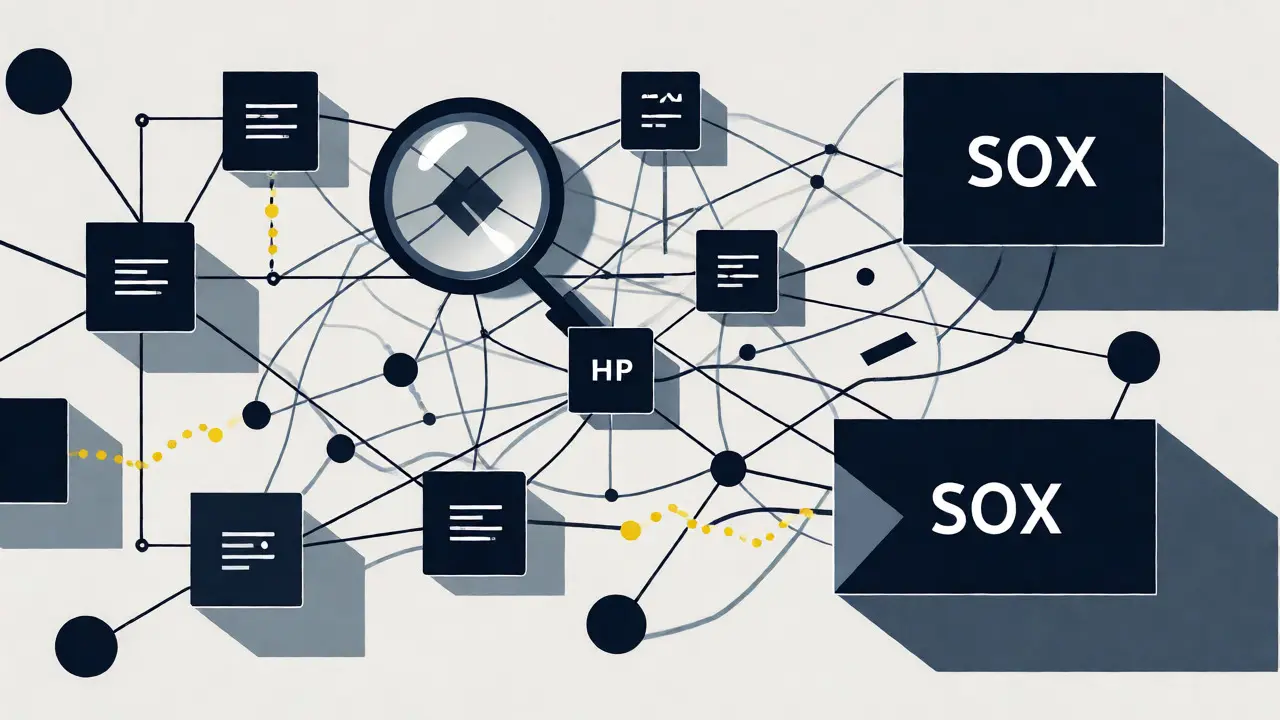
This creates a "regulatory paradox." Regulations like HIPAA in healthcare or SOX in finance demand complete traceability. Auditors need to see a direct line from a specific requirement to the code implementation, the test case, and the approval signature. Vibe coding often produces code with no inherent documentation of its origin. When an auditor asks, "Why did the AI choose this specific encryption method?", the answer "It felt right" doesn't fly. You need a documented rationale, which vibe coding typically skips to save time.
Why Audit Trails Break Down
The core issue isn't that AI writes bad code; it's that AI writes unexplainable code. In traditional software engineering, every function has a purpose defined in a design document. In vibe coding, the logic emerges from the conversation. If you change a prompt slightly, the code structure might shift entirely. This volatility makes it nearly impossible to maintain the static documentation required by frameworks like FDA 21 CFR Part 11 for electronic records or PCI-DSS for payment security.
Consider a medical device application. Under ISO/IEC 62304, every software component must be validated against safety requirements. If you use vibe coding to generate a data processing module, you now have to reverse-engineer the code to write validation tests. You end up spending more time documenting the AI's output than if you had written the code yourself. The efficiency gain vanishes under the weight of compliance overhead.
Where Vibe Coding Actually Works
Despite the barriers, vibe coding isn't banned in these sectors-it’s just quarantined. Successful adoption happens in low-risk zones where audit trails matter less. The most common safe harbor is rapid prototyping. Teams use AI to build mockups of Electronic Medical Record (EMR) interfaces or banking dashboards using fake data. These prototypes help stakeholders visualize ideas quickly without exposing patient data or violating transaction rules.
Another viable area is internal tooling. Think of backend schedulers, ETL pipelines for data migration, or administrative scripts that don’t touch customer-facing systems. These tools still need quality checks, but they don’t require the same level of formal validation as a system handling insurance claims or drug dosages. By segregating vibe-coded utilities from production-critical code, organizations can enjoy the speed benefits without triggering regulatory alarms.
Governance Frameworks for Safe Adoption
To bridge the gap, forward-thinking firms are adopting strict governance models. One effective approach is the V.E.R.I.F.Y. checklist, which acts as a gatekeeper for any AI-generated code entering the repository:
- Validate: Check correctness against functional specs.
- Enforce: Apply coding standards manually since AI may ignore them.
- Review: Require senior engineer sign-off, not just peer review.
- Inspect: Run security scans for vulnerabilities introduced by AI hallucinations.
- Format: Generate documentation artifacts automatically.
- Yield: Archive the full audit trail including prompts and outputs.
Beyond checklists, successful implementations rely on cross-functional task forces. Engineers alone cannot decide if code is compliant. Legal, compliance, and IT security teams must define which AI tools are approved and what data can be included in prompts. For example, pasting real patient names into a public LLM could violate privacy laws. Defining these boundaries upfront prevents accidental leaks during the "vibe" phase.
Regulatory Evolution: Sandboxes and PreCert
Regulators aren't ignoring this shift. The FDA’s Digital Health Software Precertification (PreCert) Program represents a significant step toward accommodating iterative development. Instead of reviewing each product update individually, PreCert evaluates the organization’s culture of quality. If a company proves it can manage risk continuously, it might get permission to deploy vibe-coded updates faster, monitoring real-world evidence post-launch rather than waiting for pre-market approval.
Similarly, regulatory sandboxes allow companies to pilot AI-driven tools under regulator observation. These environments let developers experiment with vibe coding while regulators assess risks in real-time. However, as of 2026, these programs remain limited pilots. Most banks and hospitals still operate under traditional waterfall-style compliance expectations, meaning meaningful integration of vibe coding into core systems is likely years away.

The Competitive Cost of Caution
While regulated sectors hesitate, their competitors race ahead. Unregulated tech companies are leveraging vibe coding to reduce time-to-market by 30-50%. This productivity gap threatens to widen through 2028. Financial institutions that cling to traditional development methods may find themselves unable to compete with fintech startups that ship new features weekly. The same applies to healthcare providers trying to offer modern digital experiences compared to agile health-tech disruptors.
Talent retention is another hidden cost. Senior engineers often prefer working with modern, efficient tools. If your institution forces them to spend hours writing boilerplate documentation for AI-generated snippets, they might leave for a startup where they can focus on architecture rather than audit paperwork. The lag in adoption isn't just a technical problem; it's a strategic risk to innovation capacity.
Future Outlook: Bifurcated Development
The most likely scenario for the next five years is a bifurcated development model. Core production systems handling sensitive data will remain under strict, traditional governance. Meanwhile, peripheral systems, internal analytics, and customer-facing non-critical features will increasingly rely on vibe coding. This segmentation allows organizations to balance innovation with compliance.
For finance, expect cautious experimentation in back-office automation first. For healthcare, look for vibe coding in patient engagement apps and research tools before it touches clinical decision support. The key to success lies in clear segregation: never let vibe-coded code mix directly with safety-critical components without a rigorous translation layer of human oversight and automated testing.
What is vibe coding?
Vibe coding is a software development methodology where developers use natural language prompts to instruct AI models to write code. It emphasizes rapid iteration and conversational interaction over traditional detailed specification and manual coding.
Why do banks avoid vibe coding for core systems?
Banks face strict regulations like SOX and PCI-DSS that require comprehensive audit trails and traceability. Vibe coding often lacks inherent documentation of code origins and decisions, making it difficult to satisfy auditors who need to verify every change and its rationale.
Can healthcare use AI-generated code safely?
Yes, but primarily in non-production environments like prototyping or internal tools. For production systems involving patient data, strict validation processes under standards like ISO/IEC 62304 are required, which adds significant overhead to the AI-generated code.
What is the biggest barrier to adoption in regulated sectors?
The primary barrier is the lack of auditability. Regulators require proof of why code was implemented a certain way. AI-generated code often lacks this traceable lineage, forcing teams to spend extra time reverse-engineering documentation to meet compliance standards.
Are there any regulatory changes supporting vibe coding?
Yes, initiatives like the FDA's PreCert program and regulatory sandboxes are evolving to accommodate iterative AI development. These approaches focus on organizational quality management and continuous monitoring rather than rigid pre-market approval for every minor update.
- Sep, 29 2026
- Collin Pace
- 0
- Permalink
- Tags:
- vibe coding
- regulated industries
- AI development
- healthcare compliance
- financial services adoption
Written by Collin Pace
View all posts by: Collin Pace