Vibe Coding in Startups: What Y Combinator’s AI-Generated Codebases Reveal
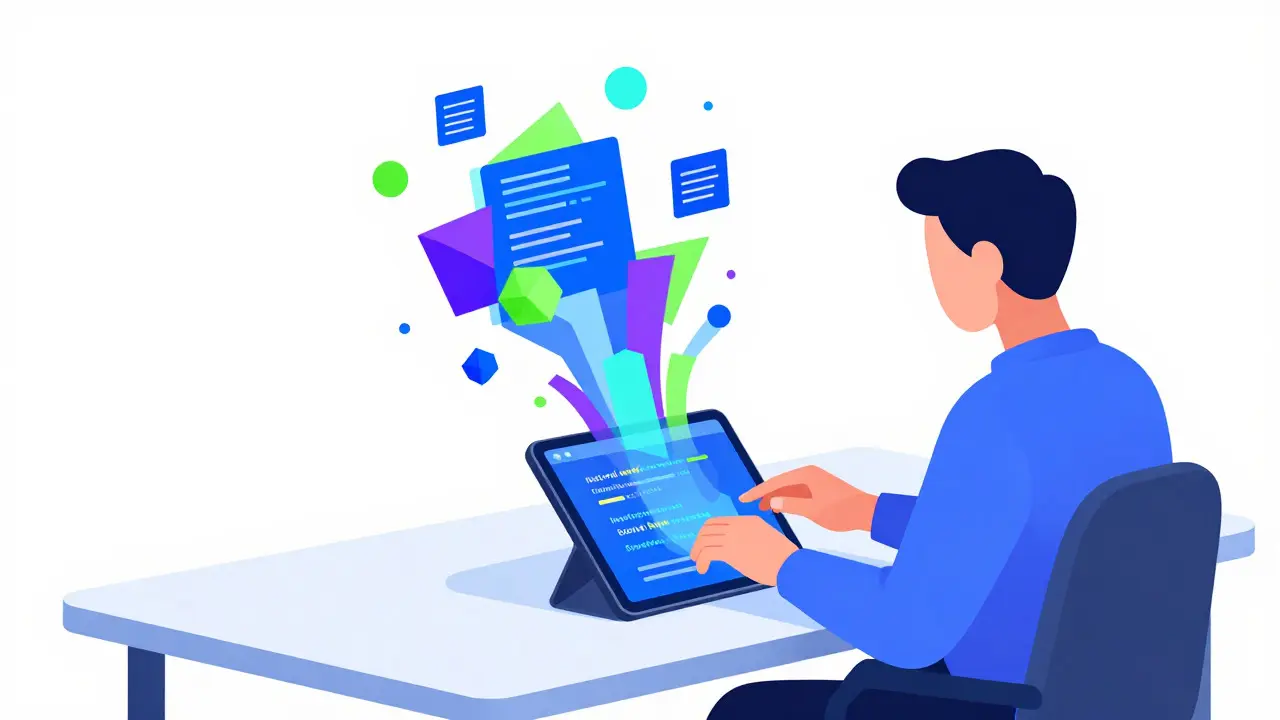
Imagine building a startup app without writing a single line of code yourself. You just describe what you want to an AI chatbot, and it spits out the source code. Sounds like science fiction? It’s happening right now. In early 2025, a new term entered the developer lexicon: vibe coding. Vibe coding is a software development approach where developers rely on large language models (LLMs) to generate code based on natural language prompts, often accepting the output without deep inspection. By March 2025, Y Combinator, the world’s most famous startup accelerator, reported that 25% of its Winter 2025 batch had codebases that were 95% AI-generated. Some reports even suggested figures as high as 90%. This isn’t just a trend; it’s a fundamental shift in how software is built.
The Birth of Vibe Coding
The concept didn’t appear out of thin air. It was coined by Andrej Karpathy, a former AI leader at Tesla and co-founder of OpenAI, in February 2025. Karpathy described vibe coding as "fully giving in to the vibes" and forgetting that the code even exists. The idea builds on his earlier claim that English is the hottest new programming language. Instead of learning syntax, developers give goals, examples, and feedback via natural language instructions. Karpathy used this method to build prototypes like MenuGen, demonstrating that rapid iteration was possible without traditional coding skills.
However, not everyone agreed on the definition. Programmer Simon Willison argued that if you review, test, and understand the AI-generated code, you’re just using an LLM as a typing assistant. True vibe coding, he said, involves accepting code without fully understanding it. This distinction matters because it highlights a growing divide between developers who trust the process and those who fear the black box.
Quality vs. Speed: The Hidden Costs
Speed is the obvious benefit. But what about quality? A December 2025 analysis by CodeRabbit examined 470 open-source GitHub pull requests and found troubling results. Code co-authored by generative AI contained approximately 1.7 times more "major" issues than human-written code. Logic errors, incorrect dependencies, and flawed control flow were 75% more common. Even worse, security vulnerabilities appeared 2.74 times more frequently in AI-generated code. Readability suffered too, with formatting errors and naming inconsistencies plaguing many projects.
These findings contradict the narrative of effortless efficiency. While vibe coding accelerates prototyping, it introduces substantial trade-offs. For a startup racing to market, speed might outweigh risk. But for a product handling user data or financial transactions, these vulnerabilities could be catastrophic. The question isn’t whether AI can write code-it clearly can-but whether that code is safe, maintainable, and scalable.
| Metric | Human-Written Code | AI-Co-Authored Code |
|---|---|---|
| Major Issues | Baseline | 1.7x higher |
| Logic Errors | Baseline | 75% more common |
| Security Vulnerabilities | Baseline | 2.74x higher |
| Readability | Generally consistent | Frequent formatting/naming issues |
Y Combinator’s Take: Taste Over Tools
Despite these concerns, Y Combinator leadership embraced the trend. During a panel discussion titled "Vibe Coding Is the Future," CEO Garry Tan and general partner Diana Hu acknowledged the risks but emphasized the need for judgment. Hu stated, "You have to have the taste and enough training to know that an LLM is spitting bad stuff or good stuff." In other words, vibe coding doesn’t eliminate the need for expertise; it shifts the focus from writing code to evaluating it.
Tan raised scalability concerns. If a startup with 95% AI-generated code hits 100 million users, will it hold up? He noted that current reasoning models struggle with debugging. Founders still need classical coding training to sustain products long-term. This suggests that vibe coding is a tool for acceleration, not a replacement for foundational knowledge.

The Scaling Problem: Why Prototypes Fail in Production
Developers on Hacker News reported significant challenges as projects grew beyond simple prototypes. One experienced engineer noted, "Once your codebase reaches the size needed to solve actual business problems, the quality of the output varies wildly." The complexity of prompts required to produce useful code increases dramatically. Output often requires significant editing to integrate without bugs.
This points to a core limitation of LLMs: they excel at pattern recognition but struggle with novel problem-solving. Cognitive scientist Gary Marcus criticized vibe coding demonstrations, arguing that apps like LunchBox Buddy succeeded because the model reproduced existing code patterns rather than solving unique problems. As codebases expand, hallucinations-plausible but incorrect outputs-become more frequent. The larger the problem space, the less accurate the model tends to be.
Homogenization and Ecosystem Health
Beyond individual code quality, there’s a broader concern about software diversity. Researcher Maya Posch highlighted a "homogenization of software development." LLMs gravitate toward large, established libraries that appear frequently in training datasets. This removes the organic selection process for tools, making it harder for newer open-source projects to gain traction. Additionally, AI lacks the awareness to submit useful bug reports or engage with maintainers, potentially weakening the ecosystem over time.
If every startup uses the same AI-suggested libraries and patterns, innovation may stagnate. We risk creating a monoculture where vulnerabilities in one library affect thousands of applications simultaneously. This isn’t just a technical issue; it’s a systemic risk for the entire software industry.

Practical Workarounds for Developers
So, how do developers make vibe coding work? Community members share several strategies:
- Strict Type Systems: Using TypeScript or similar tools to catch errors early.
- Comprehensive Testing: Requiring extensive test coverage to validate AI output.
- Regular Refactoring: Simplifying code periodically to reduce complexity.
- Prompt Engineering: Asking for "clean, simple, and elegant code" to guide the model.
Is Vibe Coding the Future?
The trajectory from Karpathy’s February 2025 introduction to widespread adoption by March 2025 is remarkable. Yet, comprehensive best practices remain elusive. The industry has adopted vibe coding pending problem-solving, not after resolving technical concerns. For throwaway weekend projects, it’s brilliant. For mission-critical applications, caution is warranted.
As AI models improve, we may see better debugging capabilities and reduced hallucinations. But until then, developers must balance speed with sustainability. Vibe coding isn’t a silver bullet; it’s a powerful tool that demands respect, scrutiny, and skill. The future of software development isn’t about replacing humans-it’s about augmenting them wisely.
What is vibe coding?
Vibe coding is a development approach where developers use natural language prompts to generate code via large language models (LLMs), often accepting the output without deep inspection. It emphasizes speed and iteration over traditional coding practices.
Who coined the term "vibe coding"?
The term was introduced by Andrej Karpathy, former AI leader at Tesla and co-founder of OpenAI, in February 2025.
How much of Y Combinator's Winter 2025 batch used AI-generated code?
Y Combinator reported that 25% of its Winter 2025 batch had codebases that were 95% AI-generated, with some sources citing up to 90%.
Are AI-generated codebases less secure?
Yes. A CodeRabbit analysis found that AI-co-authored code contained 2.74 times more security vulnerabilities and 1.7 times more major issues than human-written code.
Can vibe coding replace professional developers?
Not entirely. While it accelerates prototyping, experts like Diana Hu emphasize that developers still need "taste" and training to evaluate AI output. Classical coding skills remain essential for debugging and maintenance.
What are the main criticisms of vibe coding?
Critics point to increased bugs, security risks, lack of novelty in solutions, and potential homogenization of software ecosystems. Gary Marcus argues it relies on reproducing existing patterns rather than solving new problems.
How can developers mitigate risks in AI-generated code?
Strategies include using strict type systems, comprehensive testing, regular refactoring, and prompt engineering. Fine-tuning models on specific code examples can also improve quality.
Is vibe coding suitable for production environments?
Currently, it’s risky for complex, mission-critical applications due to scaling issues and debugging limitations. It’s better suited for prototypes and simple projects unless rigorous validation processes are in place.
What does "homogenization of software" mean in this context?
It refers to LLMs favoring popular, established libraries over newer alternatives, reducing diversity in tech stacks and making it harder for innovative open-source tools to gain visibility.
Will AI eventually solve the debugging problem in vibe coding?
Future improvements in reasoning models may help, but current versions struggle with complex debugging. Experts believe foundational coding knowledge will remain necessary for the foreseeable future.
- Aug, 15 2026
- Collin Pace
- 0
- Permalink
- Tags:
- vibe coding
- Y Combinator startups
- AI-generated code
- Andrej Karpathy
- software development trends
Written by Collin Pace
View all posts by: Collin Pace