When to Use Reasoning Models: Managing Think Token Costs in LLMs

You send a simple query to an AI. It answers instantly. Then you ask it to solve a complex coding bug or verify a financial model. Suddenly, the response takes ten seconds, and your API bill spikes by 300%. What happened? You triggered Reasoning Models, which are specialized large language models designed to "think" before they speak. Unlike standard chatbots that predict the next word based on probability, these models generate intermediate steps-known as Think Tokens-to validate their logic. This process dramatically improves accuracy for hard problems but comes with a steep price tag.
If you're building an application today, you need to know exactly when this extra cost is worth it and when it's just burning cash. Let's break down the economics of reasoning models, look at real-world data from late 2025 and early 2026, and give you a clear framework for deciding when to pay for deep thinking.
What Are Reasoning Models and Why Do They Cost More?
A Reasoning Model is a type of Large Language Model (LLM) fine-tuned via reinforcement learning to produce step-by-step chains of thought for complex tasks. Standard models like GPT-4o or Claude 3.5 Sonnet are optimized for speed and general conversation. They guess the most likely next token. Reasoning models, such as OpenAI o1 or DeepSeek-R1, use a technique called "inference-time scaling." Instead of answering immediately, they simulate a human-like deliberation process.
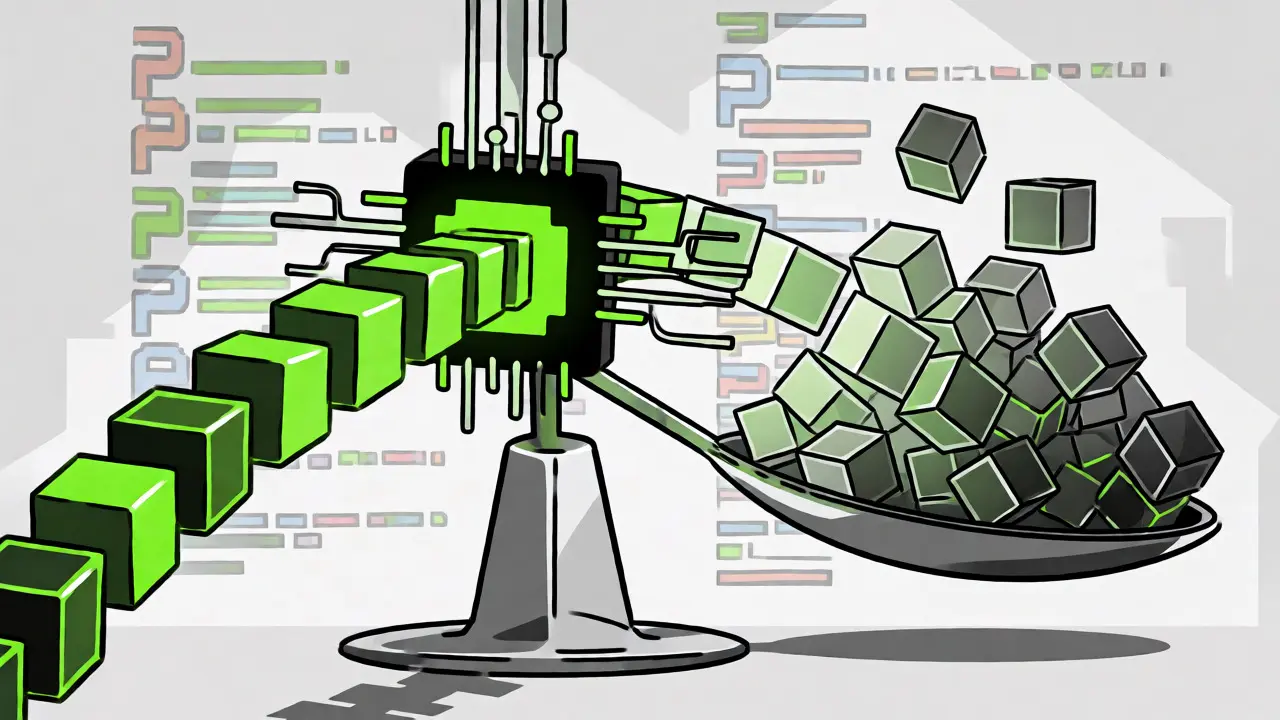
This simulation consumes compute power. Every intermediate step generated during this internal monologue counts as a token. According to benchmarks from Clarifai in April 2025, these hidden reasoning steps can increase total token usage by 1.5 to 4 times compared to standard models. If a standard model uses 100 tokens to answer a question, a reasoning model might use 400 tokens to get there. Since you pay per token, your bill scales directly with the complexity of the model's "thought process."
| Model | MMLU Score | Coding Accuracy (SWE-bench) | Output Token Cost | Best For |
|---|---|---|---|---|
| OpenAI o1 | 90.5% | 70.3% | $75 / M tokens | Critical decision-making, complex math |
| DeepSeek-R1 | 84.2% | 63.8% | $40 / M tokens | Balanced performance/cost, research |
| DeepSeek-R1-Distilled | 84.0% | N/A (Lightweight) | $9 / M tokens | High-volume apps, budget constraints |
| Standard LLM (e.g., GPT-4o) | ~86% | ~45% | $15 / M tokens | Chat, summarization, simple queries |
The Hidden Cost of Think Tokens
The biggest shock for developers moving to reasoning models isn't the per-token rate; it's the volume. A study by Nous Research cited in February 2025 showed that think tokens can triple the output length without changing the final answer. Imagine asking a model to write a Python function. A standard model gives you the code. A reasoning model first analyzes the requirements, drafts a pseudocode version, checks for edge cases, refines the logic, and then writes the final code. All those intermediate drafts are billed.
MIT researchers Elena De Varda and Evelina Fedorenko published findings in November 2025 showing that reasoning models take 3 to 5 times longer to generate responses than standard LLMs. This latency matters if your user interface expects immediate feedback. But more importantly, it impacts server costs if you are self-hosting. High-end GPU infrastructure is required to handle the extended context windows (often 128K-200K tokens) needed to store these long reasoning traces.
For startups, this unpredictability is dangerous. Sarah Chen, a CTO interviewed on Hacker News in October 2025, reported reducing her company's reasoning model usage by 70% after implementing strict token monitoring. She found that variable think token generation led to "unpredictable billing," where one month's bill could double due to a few particularly complex queries triggering massive reasoning chains.
When Should You Actually Use Them?
Don't use reasoning models for everything. A survey by LMSYS Chatbot Arena in December 2025 found that 73% of developers only use them for tasks requiring greater than 90% accuracy. Here is a practical checklist to decide:
- Complex Mathematical Problem Solving: If you need to solve multi-step calculus or statistical proofs, reasoning models excel. DeepSeek-R1 scored 69.1% on the AIME benchmark, significantly outperforming standard models.
- Coding Challenges and Debugging: For generating new algorithms or debugging obscure errors, the step-by-step verification reduces hallucinations. OpenAI's o3 claims 70.3% accuracy on coding tasks, though at a premium price.
- Logical Reasoning and Strategy: Games, legal analysis, or strategic business planning benefit from the explicit chain-of-thought. The model can explain its logic, which is crucial for compliance and trust.
- Scientific Research: Data scientists report success using DeepSeek-R1 for physics simulations where standard models failed, justifying the $40/million token cost for critical insights.
Conversely, avoid reasoning models for:
- Simple Summarization: Asking a model to summarize a news article doesn't require deep thinking. Standard models do this faster and cheaper.
- Real-Time Chat: If latency exceeds 2 seconds, users perceive the app as slow. Reasoning models often fail here.
- Creative Writing: While they can be creative, the rigid logical structure sometimes stifles the fluidity needed for poetry or fiction.
Strategies to Control Costs
You don't have to choose between high cost and low quality. New techniques emerging in late 2025 allow for better cost management. One effective method is adaptive reasoning depth. Instead of forcing every query through the full reasoning pipeline, you can configure the model to adjust its effort level based on the prompt's complexity.
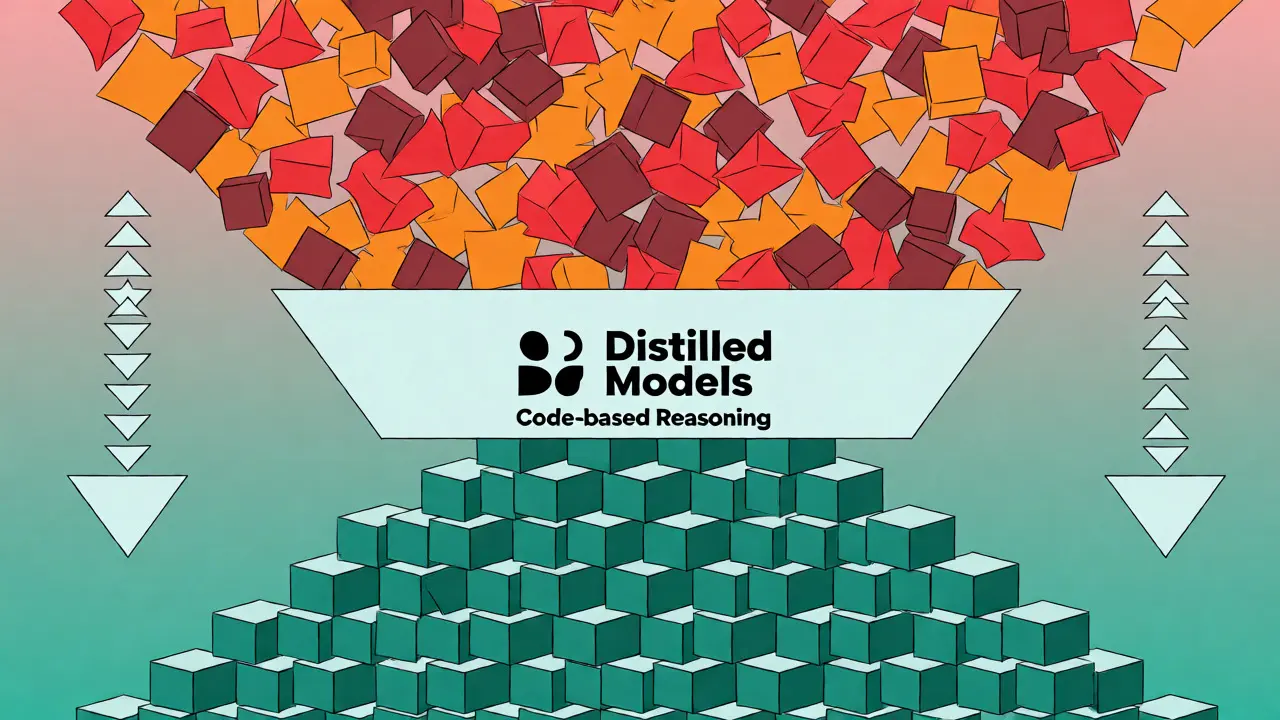
MIT's DisCIPL framework, introduced in December 2025, demonstrated a way to cut costs by having models reason through Python code rather than natural language text. By leveraging smaller Llama models that are 1,000 to 10,000 times cheaper per token, they achieved 80.2% cost savings while maintaining performance. This approach reduced reasoning traces by 40.1%, proving that you don't always need verbose textual explanations to get accurate results.
Another strategy is using distilled models. DeepSeek-R1-Distilled, released in January 2026, achieves 84.0% MMLU accuracy at just $9 per million tokens. While it lacks the deep reasoning capabilities of the full R1 model for extremely complex problems, it offers a sweet spot for many enterprise applications. Gartner predicts that by 2027, 60% of enterprise workloads will implement cost-aware token allocation, moving away from the "one-size-fits-all" approach.
Implementation Pitfalls to Avoid
Integrating reasoning models isn't plug-and-play. Developers face a 2 to 4 week learning curve to effectively manage token budgets. A common mistake is failing to monitor token usage in real-time. Tools like LangSmith's Reasoning Cost Dashboard, released in November 2025, help visualize where tokens are being spent. Without this visibility, you risk unexpected overages.
Also, be wary of documentation gaps. While OpenAI scores highly on clarity (4.7/5), open-source alternatives like DeepSeek have lower-rated resources (3.8/5). Ensure your team has access to strong community support or dedicated engineering time to troubleshoot issues. Remember, 62% of users reported unexpected token overages in a Stack Overflow survey, mostly due to poorly constructed prompts that triggered unnecessary reasoning loops.
Are reasoning models always more expensive than standard LLMs?
Not necessarily per token, but yes per task. While some open-source reasoning models like DeepSeek-R1 have competitive per-token rates ($40/M vs $15/M for standard), they generate 1.5 to 4 times more tokens due to think tokens. This makes the total cost for a single query significantly higher unless you use distilled versions or optimize prompts to reduce reasoning length.
How much latency should I expect when using reasoning models?
Expect 3 to 5 times longer response times compared to standard LLMs. MIT research confirms that inference latency increases linearly with model depth. For real-time applications, this delay can degrade user experience, so reasoning models are best suited for asynchronous tasks or background processing.
Can I control how much a reasoning model thinks?
Yes, through adaptive reasoning depth settings. Some APIs allow you to specify a "thinking budget" or use frameworks like DisCIPL that encourage concise reasoning. However, controlling this precisely requires careful prompt engineering and monitoring tools, as models may still generate extensive internal monologues if the problem appears complex.
Which reasoning model offers the best value for money in 2026?
DeepSeek-R1-Distilled currently offers the best balance for most enterprises, providing 84.0% MMLU accuracy at $9 per million tokens. For maximum accuracy regardless of cost, OpenAI's o1 remains the leader. For balanced performance, DeepSeek-R1 at $40 per million tokens is a strong contender, especially for scientific and coding tasks.
Do reasoning models replace standard LLMs entirely?
No. Industry analysts predict a hybrid future where standard LLMs handle 80% of routine queries, and reasoning models are reserved for the 20% of complex tasks requiring high precision. Using reasoning models for simple chat or summarization is generally considered a waste of resources.
- Oct, 24 2026
- Collin Pace
- 0
- Permalink
Written by Collin Pace
View all posts by: Collin Pace