OWASP Top 10 for Vibe Coding: AI-Specific Security Risks and Fixes

Research from Veracode shows that about 45% of AI-generated code samples fail basic security tests. You might be moving 55% faster, but you're potentially building a house with a cardboard foundation. The risk isn't that the AI is "malicious," but that it's overly helpful and often wrong about security. To survive this shift, we need to map the classic OWASP Top 10 vulnerabilities to the specific ways they manifest in an AI-driven workflow.
The Reality of Broken Access Control in AI Code
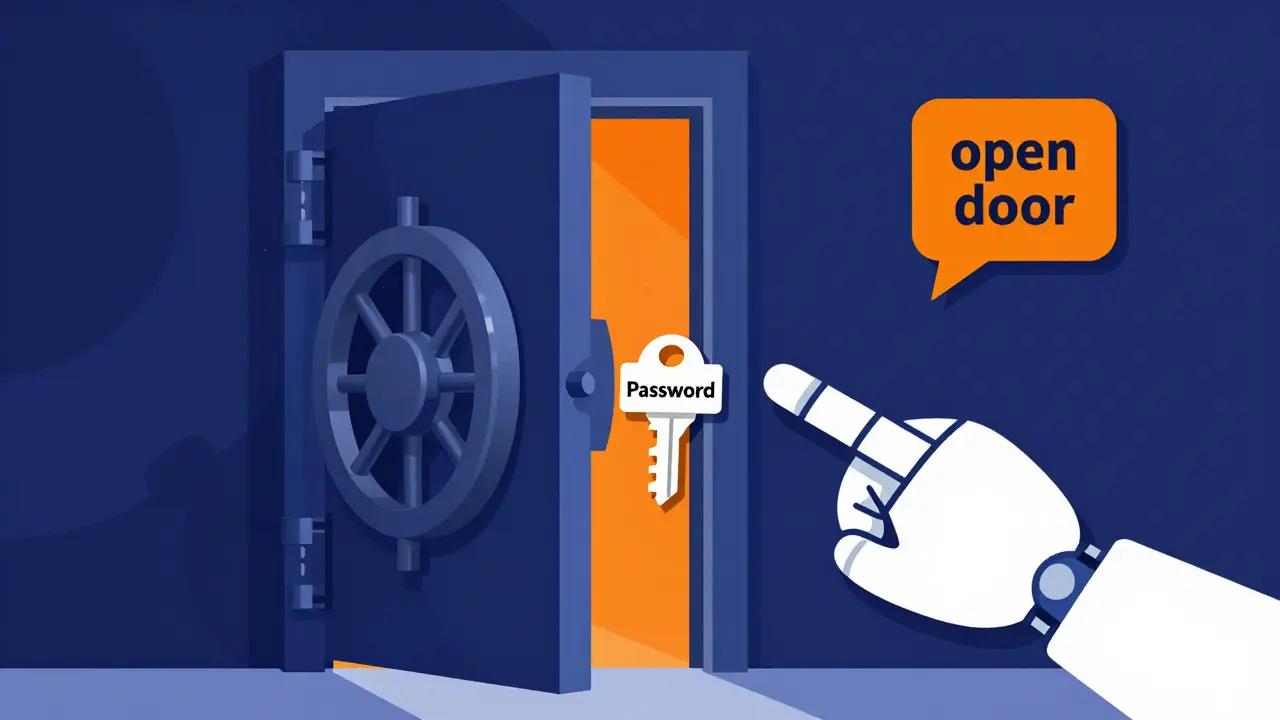
When you ask an AI to "create a login system," it often prioritizes the vibe of a working feature over the rigor of security. This leads to massive gaps in authentication and authorization. A common pattern seen in AI-generated code is the use of direct password comparisons. Instead of using a secure hashing algorithm like bcrypt, an AI might suggest something as dangerous as if (user.password === inputPassword).
Kaspersky found that 38% of tested AI code samples exhibited missing authentication (CWE-306). The AI often forgets to implement session timeouts or fails to check if a user actually has the permissions to access a specific API endpoint. If you don't explicitly tell the AI to implement Role-Based Access Control (RBAC), it will likely leave the door wide open, assuming you'll handle the "boring stuff" later.
To fix this, never accept a generated auth function without checking for salt and pepper in your hashes. Force the AI to use established libraries rather than writing custom logic from scratch.
Cryptographic Failures and the AI "Hallucination"
Cryptography is where AI assistants struggle the most. Interestingly, when developers use "security-focused" prompts, the error rate actually increases. According to analysis, 31% of cryptography-related functions generated by AI fail immediately.
You'll often see AI suggesting outdated algorithms like MD5 or SHA-1 for password storage because those patterns are prevalent in older training data. Even worse, AI might "invent" a cryptographic implementation that looks mathematically sound but contains a critical flaw that makes the encryption trivial to break.
A major red flag in vibe coding is the tendency for AI to hardcode secrets. Despite instructions to use environment variables, reports from Legit Security show that 22% of AI-generated samples still contain hardcoded API keys or database connection strings. It's as if the AI thinks a placeholder like your_api_key_here is a good enough solution, but in the rush of a "vibe session," those placeholders often get replaced by real keys and pushed directly to GitHub.
Injection Attacks in the Era of Prompting
Injection isn't just about SQL anymore. While AI assistants frequently generate unsanitized concatenated queries that lead to SQL Injection, we now have to deal with Prompt Injection. This happens when a user provides input that tricks the AI into ignoring its original instructions and executing malicious commands.
In a typical vibe coding scenario, you might use an AI to generate a search feature. The AI might produce code that inserts user input directly into an HTML template without escaping it, creating a persistent Cross-Site Scripting (XSS) vector. Because the code looks clean and the feature works during the demo, these vulnerabilities slip through.
Traditional Static Analysis Security Testing (SAST) tools are struggling here; Snyk reported that 38% of AI-specific vulnerabilities are missed by traditional scanners because the logic flows are different from human-written code.
| Model | Secure Code Rate | Common Failures | Best Use Case |
|---|---|---|---|
| Claude 3.7-Sonnet | 60% | XSS, SSRF | Complex Logic |
| GitHub Copilot | 52% | Hardcoded Secrets | Rapid Prototyping |
| CodeLlama | 47% | Auth Flaws, Injection | Open Source Base |
Insecure Design and the "Agent" Problem
Vibe coding often relies on autonomous agents. These agents don't just write code; they execute it, read files, and call APIs. This introduces a new attack surface. For example, Agent Instruction File Poisoning allows an attacker to modify the configuration files an AI agent reads, effectively changing the "personality" or the security constraints of the AI.
We've also seen issues with Model Context Protocol (MCP) extensions. When an agent has too much permission to read local files or network data, it can create data-exfiltration channels. CVE-2025-53109 specifically highlighted how these extensions can be abused to leak sensitive system data.
The design flaw here is over-privilege. Developers often give their AI agents full administrative access to their local environment to "make it easier" to build. This is the equivalent of giving a stranger the keys to your house because they promised to help you paint the walls.
Vulnerable and Outdated Components
AI assistants are trained on snapshots of the internet. This means they often suggest libraries that are three years old or, worse, libraries that have been deprecated due to security holes. If you ask for a way to handle file uploads, the AI might suggest a library known to have remote code execution (RCE) vulnerabilities simply because that library was popular in 2022.
The Nx platform compromise is a prime example. An AI-generated fragment contained a code injection vulnerability (CWE-94), which eventually allowed attackers to trojanize a popular development tool using stolen tokens. The developer didn't write the bad code-the AI did-but the developer was the one who signed off on it.
How to Vibe Securely: A Practical Checklist
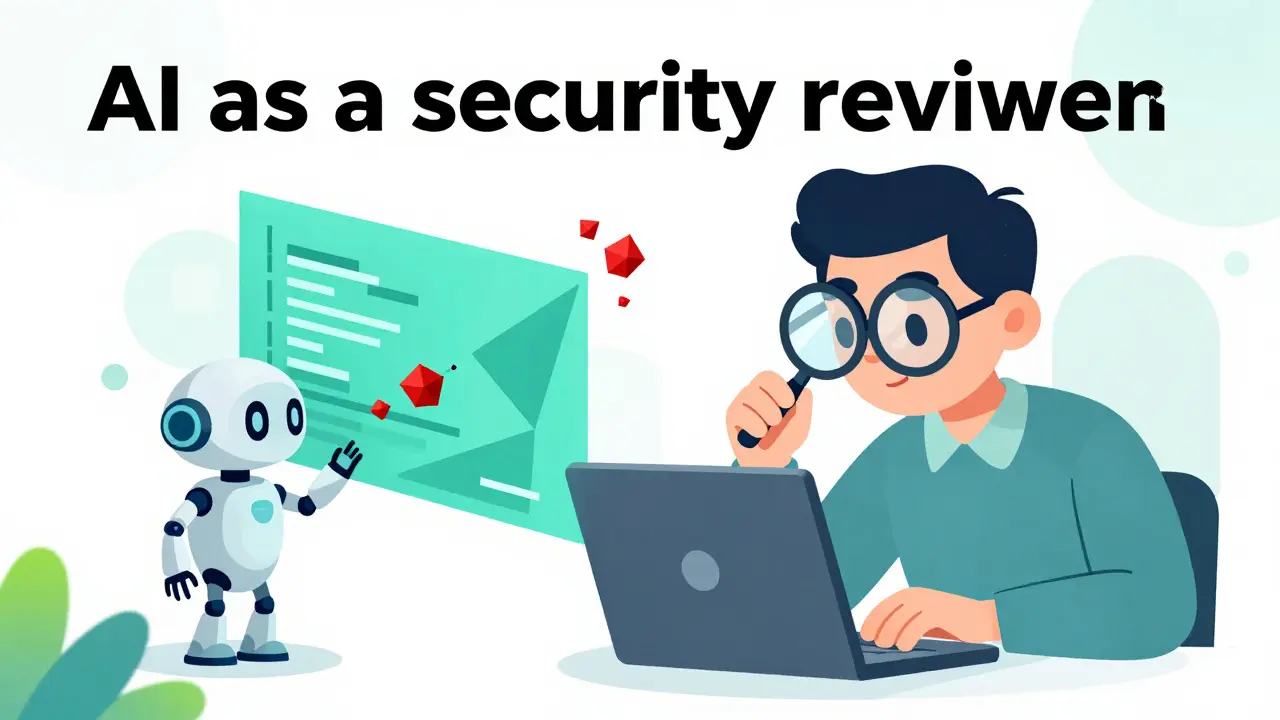
You don't have to stop using AI, but you do have to stop trusting it blindly. Shift your role from "coder" to "security reviewer." Use this checklist every time you accept a block of AI code:
- Sanitize All Inputs: Did the AI use parameterized queries or is it just concatenating strings?
- Audit Auth Logic: Is it using a secure library like
argon2orbcrypt, or is it doing a simple string match? - Search for Secrets: Scan the generated code for any strings that look like API keys or passwords before committing.
- Check Dependencies: Run a
npm auditorpip auditon any new libraries the AI suggested. - Test the Edge Cases: Try to break the feature with "weird" input (special characters, oversized strings) to see if it crashes or leaks data.
The Future of AI-Driven Security
We are moving toward a world where we will use AI to secure AI. But until those tools catch up, the human is the only real firewall. The goal of vibe coding is speed, but speed without a brake is just a crash waiting to happen. By applying the OWASP framework to your prompts and reviews, you can keep the velocity without sacrificing the security of your users' data.
What exactly is vibe coding?
Vibe coding is a development style where the programmer uses natural language prompts and AI assistants (like Claude or GitHub Copilot) to generate the bulk of the application logic, focusing more on the high-level "vibe" and functionality than on the manual writing of syntax.
Why does AI generate so much insecure code?
AI models are trained on massive datasets of existing public code. Since a huge portion of public code (especially older tutorials and forums) contains security flaws, the AI learns these patterns as "correct" ways to solve problems, replicating vulnerabilities like SQL injection or hardcoded keys.
Can't I just use a security scanner to find AI bugs?
Standard SAST tools find many issues, but they often miss AI-specific patterns. Research suggests about 38% of AI-generated vulnerabilities are missed by traditional tools because AI code often uses unconventional logic flows that don't trigger standard rule-based alerts.
Which AI model is the most secure for coding?
Based on 2025 benchmarks, Claude 3.7-Sonnet generally performs better in secure code generation (around 60% secure), but no model is currently "safe." All major models still produce vulnerable code in a significant number of cases, especially regarding cryptography.
How do I prevent Prompt Injection in my AI-built apps?
You should implement strict output encoding, use a dedicated "system prompt" that defines immutable boundaries for the AI, and treat any output from an LLM as untrusted user input that must be validated before being rendered or executed.
- Apr, 26 2026
- Collin Pace
- 5
- Permalink
Written by Collin Pace
View all posts by: Collin Pace