Securing Vibe Coding: Access Control, Data Privacy, and Repo Scope
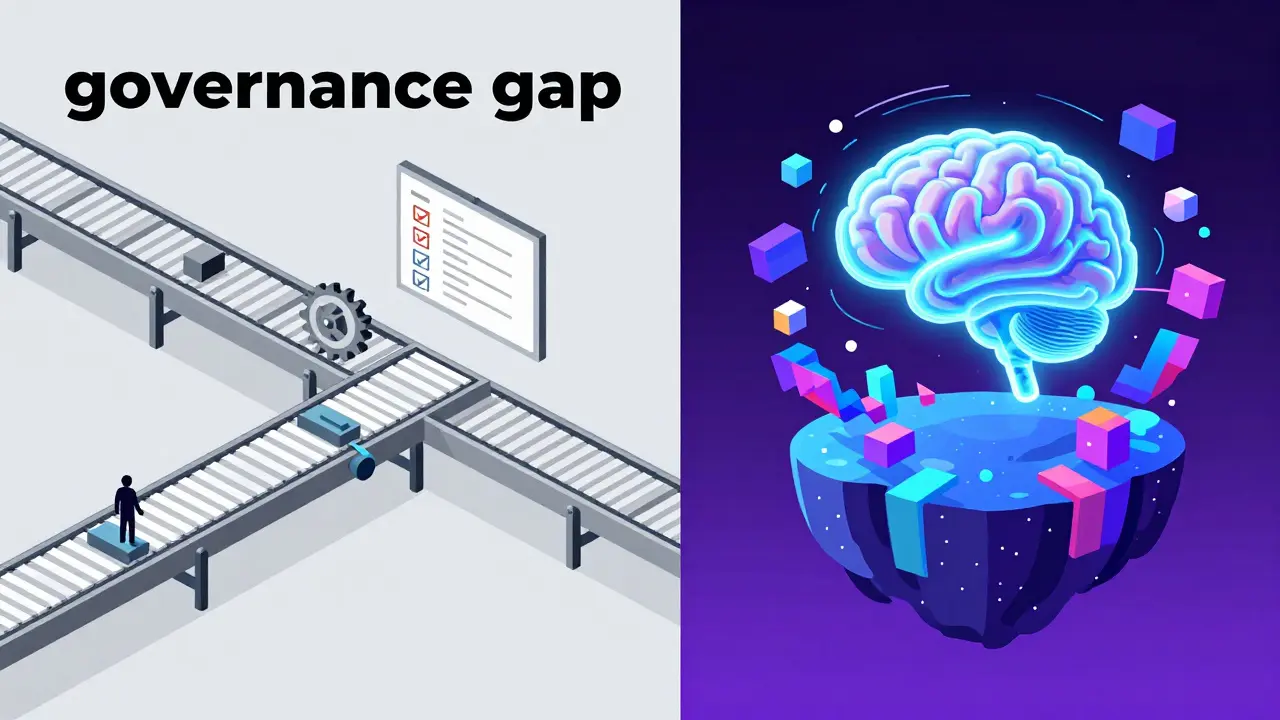
Vibe coding is an absolute blast. You describe a feature, the AI writes the code, and suddenly you have a working app without spending hours in a debugger. But here is the scary part: when you "vibe" your way to a product, you often bypass the boring security checks that keep hackers out. Most AI-generated authorization logic is prone to hallucinations or partial implementations. If your AI forgets one if statement in your permission check, you might accidentally give every user admin access to your entire database.
The Governance Gap in AI-Driven Development
Traditional software development uses a DevSecOps pipeline. This means code goes through linting, security scans, and peer reviews before it ever touches a server. Vibe coding usually happens in a vacuum-local folders, random directories, or a single-person GitHub repo. This creates a massive visibility gap for security teams. If the security lead doesn't even know where the code lives, they can't possibly know who has access to it.
To fix this, we need to stop treating security as a final gate and start treating it as part of the AI's context. Instead of a 50-page PDF manual that no developer reads, put your security policies in a .coderules is a configuration file that provides specific instructions and constraints to AI coding agents during the development process file or a README in the repository. When the AI reads these rules before writing a single line, it's much more likely to implement the correct access controls from the start.
Hardening Authentication and Authorization
One of the biggest risks in vibe coding is relying on the AI to handle the "front door." If you ask an AI to "add a login page," it might give you something that looks great but has a gaping hole in the backend. A golden rule here is that a non-authenticated request should never trigger a single line of your application logic.
Instead of letting the AI write the authentication logic, move it to a reverse proxy. For example, using NGINX is a high-performance HTTP server and reverse proxy that can handle authentication at the edge before traffic reaches the app allows you to ensure that users are verified before they even touch your vibe-coded backend. Once they're in, you need a strict system for what they can actually do.
The most reliable approach is Role-Based Access Control (also known as RBAC) which is a method of restricting system access to authorized users based on their assigned roles within an organization . Don't just prompt the AI to "make it secure." Be specific. Use prompts like: "Generate code that implements RBAC, ensuring that a 'Viewer' role cannot access the '/admin/settings' endpoint." This reduces the chance of the AI hallucinating a permission level that doesn't exist.
| Feature | Traditional DevSecOps | Vibe Coding Approach |
|---|---|---|
| Code Review | Manual peer review + Static Analysis | AI-generated (often unreviewed) |
| Policy Location | Corporate Wiki / Jira | .coderules / Repository README |
| Deployment | Staging $\rightarrow$ Production Pipeline | Direct push or local deployment |
| Auth Logic | Standardized Frameworks | Custom AI-generated logic |
Managing Repository Scope and AI Agent Permissions
It isn't just the users you have to worry about; it's the tools. Modern AI agents like
Claude Code or GitHub Copilot are no longer just autocomplete boxes. They operate inside
GitHub Actions, which is
a CI/CD platform that allows automation of software workflows directly in the GitHub repository
. These agents often have GITHUB_TOKEN privileges, meaning they can push commits, create branches, and install dependencies autonomously.
This is where "repository scope" becomes a nightmare. If an AI agent has blanket write access to your entire organization's repos, a single prompt injection or a hallucinated dependency could compromise your entire source code. You need to implement the Principle of Least Privilege. This means the agent should only have access to the specific branch or repository it is currently working on, not the whole kingdom.
Another blind spot is egress traffic. You can't always see what processes an AI agent spawns or what external endpoints it contacts at runtime. To prevent your source code from being leaked to a random server, you must enforce egress policy restrictions. Block unauthorized outbound traffic at the DNS and network layers. This is especially critical for tools that operate without a built-in firewall, ensuring that your secrets don't wander off to a third-party API without your knowledge.

Data Privacy and Secret Management
Vibe coders love to hardcode things because it's faster. It is incredibly common to find API keys, database passwords, and secret tokens sitting right in the code because the AI suggested it as a "placeholder." This is a disaster waiting to happen. You must treat AI-generated code as untrusted by default.
Use a dedicated secrets management tool rather than environment files that get accidentally committed to Git. When prompting your AI, explicitly tell it: "Do not hardcode secrets. Use a placeholder for an environment variable and provide a guide on how to set it up in a secure vault."
Data privacy also extends to how your app talks to the world.
Cross-Origin Resource Sharing (or CORS) is
a security feature that restricts how resources on a web page can be requested from another domain
. AI tools frequently suggest using a wildcard (*) for CORS settings to "just make it work." In a production environment, a wildcard is an open invitation for unauthorized access. Always double-check the CORS configuration and restrict it to only your trusted domains.
Testing and Validation Framework
You cannot trust the AI to test its own security. If the AI wrote the bug, it will likely write a test that ignores the bug. You need to validate authentication and authorization at runtime using tools that don't care how the code was written. Focus on these three areas:
- Broken Object Level Authorization (BOLA): Test if a user can access another user's data just by changing an ID in the URL (e.g., changing
/user/123to/user/124). - Forgotten Endpoints: Use a scanner to find "shadow" endpoints the AI created for debugging that bypass the login flow.
- Consistency Checks: Ensure that the same permission rules apply to the web frontend, the mobile API, and internal microservices.
The goal isn't to stop vibe coding-it's to give the AI a set of guardrails. By moving policies into the AI's context and stripping away excessive permissions from coding agents, you can keep the speed of AI development without sacrificing your data privacy.
What is the biggest security risk with vibe coding?
The biggest risk is the "governance gap." Because vibe coding skips traditional DevSecOps pipelines, there is often no formal review of authorization logic, leading to critical vulnerabilities like BOLA or hardcoded secrets that are easily exploited by attackers.
How do I prevent AI agents from leaking my source code?
Implement strict egress policy enforcement. Block unauthorized outbound network traffic at the DNS and HTTPS layers to ensure that AI agents operating in your CI/CD pipeline cannot send data to external, untrusted servers.
Should I let the AI handle my authentication logic?
Generally, no. It is safer to implement authentication at the reverse proxy level (like NGINX) so that unauthenticated requests never even reach your AI-generated application code.
What are .coderules and why do they matter?
.coderules are context files placed in a repository that the AI reads before generating code. They allow security teams to embed policies and constraints directly into the AI's workflow, ensuring security is "baked in" rather than added as an afterthought.
Why is a CORS wildcard dangerous in AI-generated apps?
A wildcard (*) tells the browser to allow any domain to access your API. This makes your application vulnerable to Cross-Site Request Forgery (CSRF) and unauthorized data access. You should always specify exact, trusted domains.
- Apr, 4 2026
- Collin Pace
- 8
- Permalink
Written by Collin Pace
View all posts by: Collin Pace