Self-Supervised Learning in NLP: How LLMs Learn Without Labels
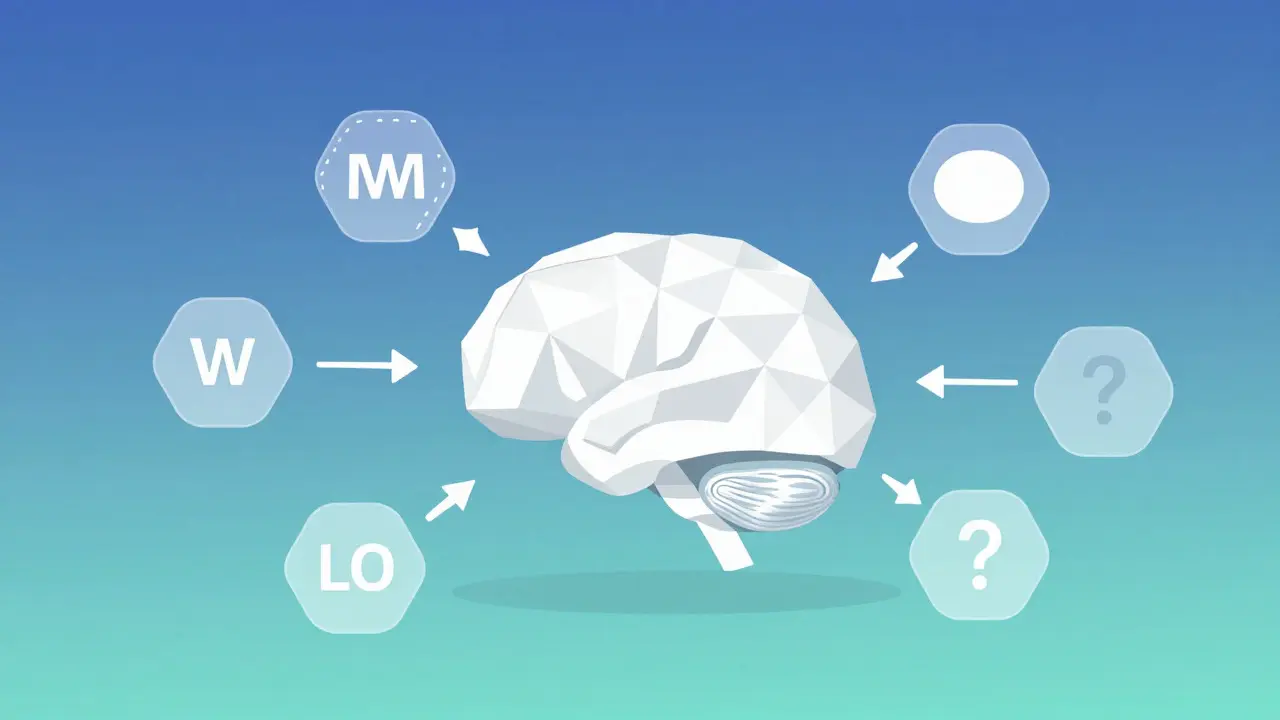
Imagine teaching a child to read by handing them a library of books but never correcting their pronunciation or spelling. Instead, you just ask them to guess the next word on the page. If they get it right, they learn. If they get it wrong, they adjust. This is essentially how Self-Supervised Learning works in natural language processing (NLP). It is the invisible engine that powers every major large language model (LLM) you interact with today, from chatbots to code assistants.
You don’t need human experts to label millions of sentences for these models to understand grammar, context, and logic. The data labels itself. This shift has revolutionized AI, moving us away from expensive, slow manual annotation toward scalable, automated training on the entire internet’s worth of text. But how exactly does a machine "learn" without a teacher holding its hand? And why is this specific method so critical for the future of artificial intelligence?
The Core Mechanism: Creating Your Own Teacher
Traditional supervised learning requires pairs of input and output. You show the model an image of a cat and label it "cat." You show it a sentence and label the sentiment as "positive." This is labor-intensive and doesn't scale well. Unsupervised learning, on the other hand, tries to find hidden patterns in data without any specific goal, like clustering similar documents together.
Self-supervised learning (SSL) sits in the middle. It takes raw, unlabeled data-like all the public websites, books, and articles on the web-and creates its own labels automatically. The "label" is derived directly from the input data itself. This process is often called predictive learning or pretext learning.
Think of it this way: if you take a sentence and remove one word, the missing word becomes the label. The model’s job is to predict that missing word based on the surrounding context. There is a single correct answer-the actual word that was there originally. Because there is a clear right and wrong answer, it acts like supervised learning, but without the human cost of labeling.
Next Token Prediction: The Workhorse of Modern AI
The most dominant form of self-supervised learning in modern generative AI is next token prediction. This is the core technique used by Generative Pre-trained Transformers (GPT) models, including those behind ChatGPT and other leading assistants.
Here is how it works step-by-step:
- Data Ingestion: The model consumes massive amounts of raw text from the internet.
- Tokenization: Text is broken down into smaller units called tokens (words, subwords, or characters).
- Prediction Task: The model looks at a sequence of tokens and tries to predict the very next one.
- Error Correction: The model compares its guess to the actual next token in the source text. If it’s wrong, it adjusts its internal parameters slightly to reduce the error.
- Repetition: This happens billions of times across trillions of tokens.
Over time, the model isn’t just memorizing text; it’s learning the statistical structure of language. It learns that "The sky is..." is likely followed by "blue," not "banana." It learns complex syntax, factual relationships, and even reasoning patterns because those patterns are statistically prevalent in high-quality text.
| Feature | Supervised Learning | Unsupervised Learning | Self-Supervised Learning |
|---|---|---|---|
| Label Source | Human annotators | No labels | Derived from input data |
| Cost & Scale | High cost, limited scale | Low cost, hard to evaluate | Low cost, massive scale |
| Primary Goal | Classification/Regression | Clustering/Dimensionality Reduction | Representation Learning |
| Use Case Example | Spam detection | Topic modeling | Language model pretraining |
BERT vs. GPT: Two Paths to Understanding
While next token prediction is king for generation, another major approach emerged alongside it: Masked Language Modeling (MLM), popularized by BERT (Bidirectional Encoder Representations from Transformers). Unlike GPT, which predicts forward, BERT masks a word in the middle of a sentence and asks the model to fill in the blank using both the words before and after it.
This bidirectional context gives BERT a deep understanding of semantics and meaning, making it excellent for tasks like question answering and sentiment analysis. However, it struggles with generation because it doesn’t inherently predict sequentially. GPT-style models, being autoregressive, are better suited for generating coherent paragraphs of text. Today, most state-of-the-art models use variations of the autoregressive approach because it aligns perfectly with how humans write and speak-one word at a time.
The Three-Phase Training Pipeline
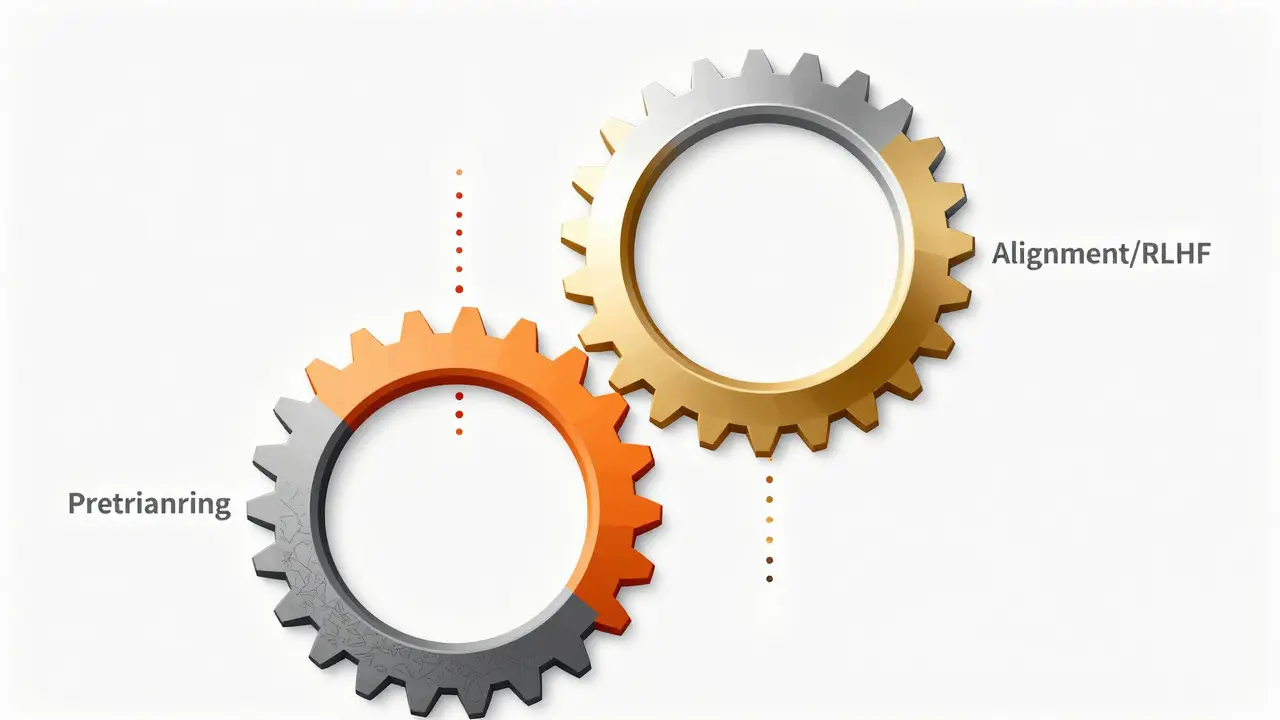
Self-supervised learning is rarely the end of the road. It is the foundation, but not the final product. To turn a raw SSL model into a helpful assistant, developers follow a three-phase pipeline:
- Pretraining (Self-Supervised): The model learns general language patterns from vast datasets. At this stage, it can complete sentences but doesn’t necessarily know how to follow instructions or be polite.
- Fine-Tuning (Supervised): Also known as instruction tuning, this phase uses smaller, high-quality datasets where humans have provided ideal responses. The model learns to map user prompts to helpful answers.
- Alignment (Reinforcement Learning): Techniques like Reinforcement Learning from Human Feedback (RLHF) help the model prefer desirable outputs (helpful, harmless) over undesirable ones (biased, toxic).
Without the first phase, the second and third would require impossibly large labeled datasets. SSL provides the broad knowledge base that fine-tuning then shapes into a useful tool.
Transfer Learning and Practical Applications
One of the biggest advantages of SSL is its synergy with transfer learning. In the past, if you wanted to build a model for medical diagnosis, you needed thousands of labeled medical records. With SSL, you can train a base model on general text, then fine-tune it on a small set of medical texts. The model already understands language structure; it only needs to learn domain-specific terminology.
This approach has democratized AI development. Companies no longer need massive teams of annotators to start building specialized NLP tools. They can leverage pre-trained models like LLaMA or open-source alternatives and adapt them to specific verticals like legal tech, customer support, or software engineering.
Limitations and Biases
Despite its power, self-supervised learning is not perfect. Because the model learns from the internet, it inherits the biases, inaccuracies, and noise present in that data. If the training corpus contains stereotypes or false information, the model will likely reproduce them. This is why the subsequent alignment phases are crucial-they act as a filter to mitigate harmful outputs.
Additionally, SSL models are probabilistic. They predict what is *likely* to come next, not what is *factually true*. This can lead to hallucinations, where the model generates confident-sounding but incorrect statements. Understanding this limitation is key to deploying LLMs responsibly in production environments.
Future Trajectory of Self-Supervised Learning
As we move further into 2026, self-supervised learning remains the cornerstone of LLM development. Researchers are exploring multimodal extensions, where models learn from text, images, audio, and video simultaneously using self-supervised signals. For example, predicting the next frame in a video or the caption for an image follows the same principle as next-token prediction.
The efficiency of SSL also continues to improve. New architectures aim to achieve similar performance with fewer parameters and less compute, making powerful AI more accessible. While new techniques may emerge, the fundamental idea-that data can teach itself-will likely remain central to how machines understand human communication.
What is the difference between self-supervised and unsupervised learning?
Unsupervised learning finds patterns in data without any specific target or label, such as grouping similar customers. Self-supervised learning creates its own labels from the input data (e.g., masking a word and predicting it), giving the model a specific task to optimize, which leads to better representations for downstream tasks.
Why is next token prediction so effective for LLMs?
Predicting the next token forces the model to understand context, grammar, and facts. To accurately guess what comes next, the model must build a rich internal representation of the world described in the text, enabling it to generate coherent and relevant responses.
Can self-supervised learning replace human labeling entirely?
For the initial pretraining phase, yes. However, for fine-tuning and alignment, human-labeled data is still essential to ensure the model follows instructions safely and accurately. SSL provides the knowledge base, but human feedback shapes the behavior.
What are some examples of self-supervised learning models?
Prominent examples include BERT (using masked language modeling), GPT series (using next token prediction), and LLaMA. These models form the backbone of most modern NLP applications.
How does transfer learning work with self-supervised models?
A model pretrained via SSL on general text learns broad language skills. It can then be fine-tuned on a small, specific dataset (e.g., legal contracts) to specialize in that domain, leveraging its existing knowledge to perform well with minimal additional data.
- Jul, 20 2026
- Collin Pace
- 9
- Permalink
Written by Collin Pace
View all posts by: Collin Pace