Tag: large language models
Encoder-Decoder vs Decoder-Only Transformers: Which Architecture Wins for LLMs?

Discover the critical differences between encoder-decoder and decoder-only transformers. Learn why GPT dominates chat while T5 rules translation, and choose the right LLM architecture for your needs.
- Sep 17, 2026
- Collin Pace
- 7
- Permalink
Compositional Generalization in NLP: Can LLMs Reason Systematically?

Discover why LLMs struggle with compositional generalization. Learn how benchmarks like SCAN and CFQ reveal the gap between memorization and systematic reasoning, and explore practical strategies to improve AI reliability.
- Sep 14, 2026
- Collin Pace
- 6
- Permalink
Prompt Injection in LLMs: Attacks, Defenses & Best Practices

Discover how prompt injection threatens LLMs, why it differs from SQL injection, and effective defense strategies like context partitioning and output validation.
- Aug 31, 2026
- Collin Pace
- 9
- Permalink
Self-Supervised Learning in NLP: How LLMs Learn Without Labels
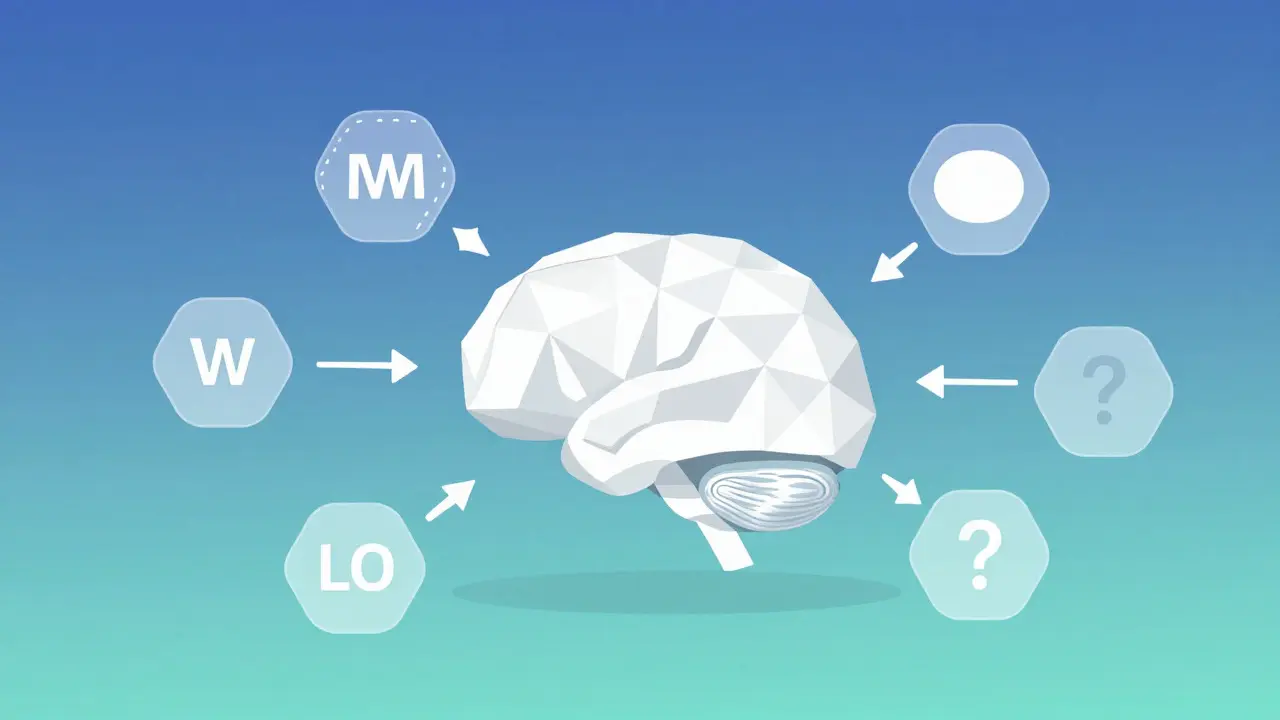
Explore how self-supervised learning enables large language models to master language without human labels, driving the evolution of NLP and generative AI.
- Jul 20, 2026
- Collin Pace
- 9
- Permalink
Scaling Laws in NLP: How Bigger Data and Models Created Modern LLMs

Explore how scaling laws transformed AI development. Learn how Chinchilla scaling and compute predictions enabled the rise of modern Large Language Models.
- Jul 19, 2026
- Collin Pace
- 0
- Permalink
How Think-Tokens Change Generation: Reasoning Traces in Modern LLMs

Explore how think-tokens and reasoning traces transform LLM generation. We analyze the trade-offs between accuracy and latency, compare major models, and provide strategies for optimizing reasoning in 2026.
- Jul 10, 2026
- Collin Pace
- 0
- Permalink
From BERT to GPT: How LLM Architectures Evolved

Explore the architectural differences between BERT and GPT. Learn how encoder-only and decoder-only designs shape modern AI tasks.
- Jun 21, 2026
- Collin Pace
- 10
- Permalink
Knowledge vs Fluency in Large Language Models: Understanding Strengths and Gaps
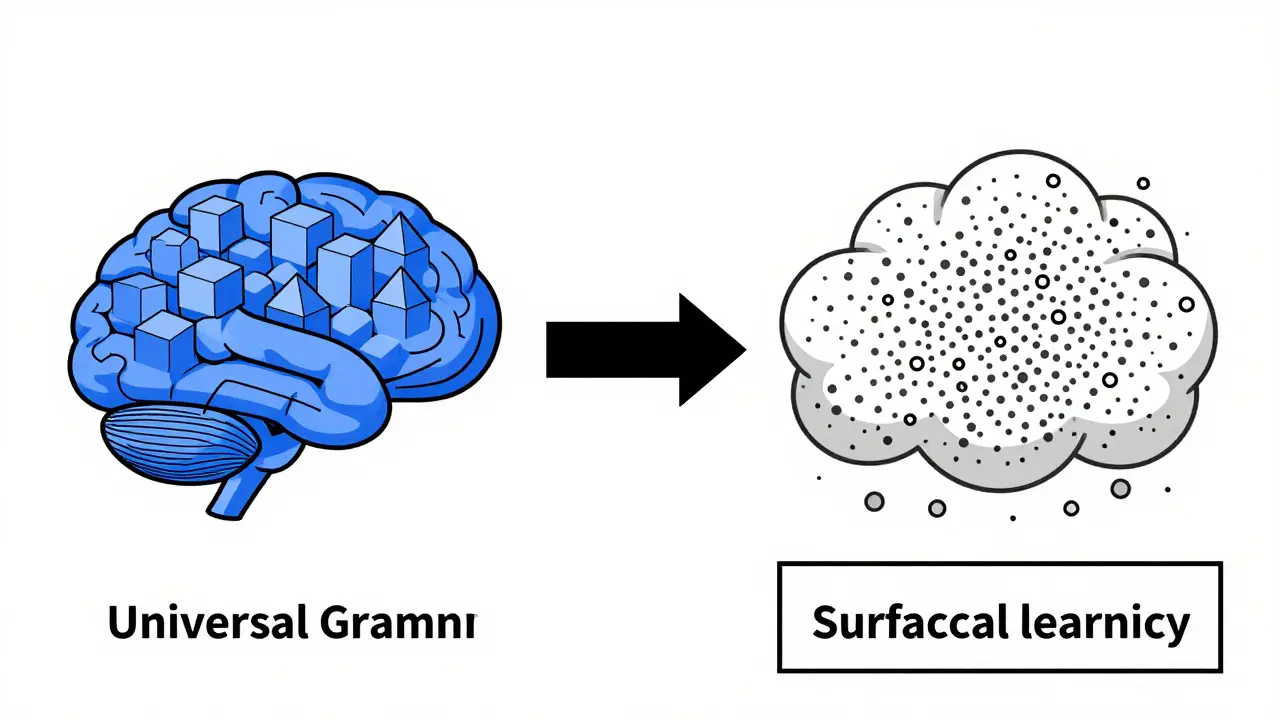
Explore the critical gap between LLM fluency and true knowledge. Learn why models like GPT-4 pass exams yet lack deep linguistic understanding, and how to use AI effectively despite these limitations.
- Jun 19, 2026
- Collin Pace
- 0
- Permalink
In-Context Learning Explained: How LLMs Adapt to Prompts Without Retraining

Discover how In-Context Learning enables LLMs to adapt to new tasks via prompts without retraining. Learn the mechanics, best practices, and limitations of few-shot learning.
- Jun 10, 2026
- Collin Pace
- 5
- Permalink
Sliding Windows and Memory Tokens: Extending LLM Attention

Explore how Sliding Window Attention and Memory Tokens extend Large Language Model capabilities. Learn about transformer design optimizations that balance computational efficiency with long-context understanding.
- May 1, 2026
- Collin Pace
- 0
- Permalink
Transfer and Emergence: When LLM Capabilities Appear at Scale

Explore the phenomenon of emergent capabilities in LLMs and how scaling laws lead to sudden, unpredictable breakthroughs in AI reasoning and skill.
- Apr 16, 2026
- Collin Pace
- 10
- Permalink
Domain Adaptation in NLP: Fine-Tuning Large Language Models for Specialized Fields

Learn how to adapt Large Language Models for specialized fields. This guide covers DAPT, SFT, and the DEAL framework to boost accuracy in NLP.
- Mar 27, 2026
- Collin Pace
- 6
- Permalink
- 1
- 2