Transfer Learning in NLP: How Pretraining Powers LLM Breakthroughs
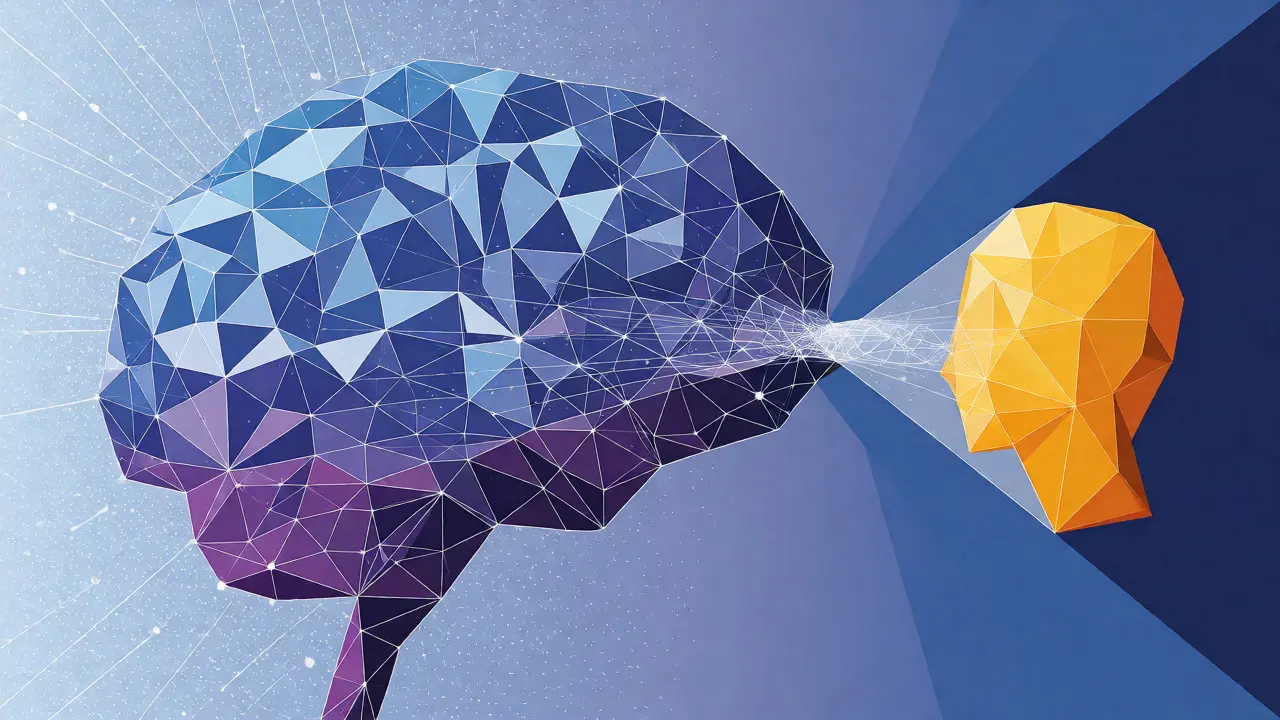
Imagine trying to teach a computer to understand sarcasm, translate legal contracts, or summarize medical journals from scratch. You'd need billions of labeled examples and months of supercomputer time. Now imagine you could just take a model that already "read" the entire internet and tweak it slightly for your specific job. That is the magic of Transfer Learning in Natural Language Processing. It turned NLP from a niche, data-hungry science into the dominant force behind today's AI assistants.
If you've ever wondered how tools like ChatGPT or Claude got so good so fast, the answer isn't just bigger computers. It's a fundamental shift in how we train models. Instead of building a new brain for every task, we now build one massive general-purpose brain and then specialize it. This article breaks down exactly how Pretraining enabled these breakthroughs, why it matters for your projects, and what pitfalls to watch out for.
The Shift from Scratch to Shared Knowledge
For decades, NLP was stuck in a cycle of repetition. If you wanted to detect spam, you built a spam detector. If you wanted to translate French, you built a translator. Each system started with random weights, knowing nothing about grammar, context, or human nuance. They had to learn everything from zero using only the data available for that specific task. This was inefficient and often inaccurate because small datasets couldn't capture the full complexity of language.
Transfer Learning flipped this script. The core idea is simple: knowledge gained from one task can help another. In NLP, this means training a model on a huge, unlabeled dataset (like Wikipedia or Common Crawl) first. This stage, called Pretraining, teaches the model the underlying structure of language-syntax, semantics, and common sense reasoning. Once the model understands how words relate to each other, you can "transfer" that knowledge to a specific downstream task, like sentiment analysis or question answering, by fine-tuning it on a much smaller dataset.
This approach mirrors how humans learn. We don't relearn English every time we read a novel; we use our existing linguistic foundation to understand new content quickly. By separating general language understanding from specific task execution, developers cut training times by orders of magnitude and boosted accuracy significantly.
BERT and the Rise of Bidirectional Context
The real explosion in transfer learning happened in late 2018 when Google released BERT (Bidirectional Encoder Representations from Transformers). Before BERT, most models processed text left-to-right (like GPT-1) or right-to-left. This meant they only saw half the context at any given moment. If you tried to predict the word "bank" in the sentence "I went to the bank to deposit money," a left-to-right model might struggle if it hadn't seen the word "deposit" yet.
BERT changed the game by looking at both directions simultaneously. It used two clever training tricks: Masked Language Modeling (MLM), where it randomly hides words and asks the model to guess them based on surrounding context, and Next Sentence Prediction (NSP), which taught it to understand relationships between sentences. The result? A model that truly understood context. Suddenly, you could take BERT, add a simple classification layer on top, and beat state-of-the-art results on eleven different NLP tasks with minimal extra training.
| Model | Architecture Type | Key Innovation | Parameter Count | Best Use Case |
|---|---|---|---|---|
| BERT | Encoder-only Transformer | Bidirectional context via Masked LM | 110M - 340M | Classification, Extraction |
| GPT-3 | Decoder-only Transformer | Massive scale & Few-shot learning | 175B | Generation, Creative Writing |
| T5 | Encoder-Decoder Transformer | Unified Text-to-Text framework | 60M - 11B | Translation, Summarization |
| ALBERT | Lightweight BERT | Parameter sharing across layers | 12M - 235M | Efficient Deployment |
How the Two-Stage Process Actually Works
Understanding the mechanics helps you choose the right strategy for your project. Transfer learning in NLP generally follows a strict two-stage pipeline: Pretraining and Fine-tuning.
Stage 1: Pretraining
This is the heavy lifting phase. The model ingests terabytes of raw text. It doesn't have labels telling it what's correct; instead, it learns through self-supervised objectives. For example, in MLM, the model sees "The cat sat on the [MASK]" and tries to predict "mat." By doing this millions of times, it builds a rich internal representation of language. It learns that "cat" is an animal, "sat" is an action, and "mat" is a surface. This stage requires massive computational resources-often thousands of GPU hours-but it happens once per base model.
Stage 2: Fine-tuning
Once you have a pretrained model, you adapt it to your specific problem. Let's say you want to classify customer support tickets as "Urgent" or "Low Priority." You take the pretrained model, freeze most of its layers (keeping the language knowledge intact), and replace the final output layer with a classifier that has two outputs. Then, you train this modified model on a few thousand labeled tickets. Because the model already understands English, it converges rapidly. You're not teaching it language anymore; you're teaching it policy.
There are two main ways to apply this knowledge:
- Feature-based transfer: You use the pretrained model just to extract embeddings (numerical representations of text). These vectors are then fed into a traditional machine learning algorithm like SVM or Random Forest. This is great if you have very little data or limited compute.
- Full fine-tuning: You update all (or most) of the model's weights during the second stage. This usually yields higher performance but requires more memory and careful tuning of learning rates to avoid "catastrophic forgetting," where the model loses its general language skills while overfitting to the new task.
Why Scale Matters: From BERT to GPT-3
While BERT proved transfer learning worked, OpenAI's GPT-3 showed us what happens when you scale it up aggressively. GPT-3 has 175 billion parameters-roughly 100 times more than BERT-large. But size alone wasn't the breakthrough. The breakthrough was emergent abilities.
At certain scales, models begin to perform tasks they were never explicitly trained to do. GPT-3 demonstrated Few-shot Learning, where you could ask it to translate a sentence or write code by simply providing a few examples in the prompt, without any additional training. This capability emerged directly from the sheer volume of patterns it absorbed during pretraining. It didn't just memorize rules; it developed a probabilistic intuition for how language works.
Other models pushed boundaries differently. XLNet improved upon BERT by using permutation-based training, allowing it to capture bidirectional context without masking artifacts. T5 unified all NLP tasks into a single text-to-text format, simplifying the ecosystem so developers didn't need different architectures for translation vs. summarization. These innovations collectively lowered the barrier to entry, allowing startups to leverage enterprise-grade NLP capabilities.
Practical Benefits and Real-World Impact
Why should a business care about transfer learning? The benefits are concrete and measurable.
- Data Efficiency: Traditional deep learning needed hundreds of thousands of labeled examples. With transfer learning, you can often achieve high accuracy with just a few hundred or thousand. This is crucial for niche domains like rare disease diagnosis or specialized legal queries, where labeled data is scarce and expensive.
- Reduced Training Time: Retraining a transformer from scratch takes weeks. Fine-tuning a pretrained model takes hours or days. This speed allows for rapid experimentation and iteration.
- Cost Optimization: You pay for the heavy pretraining once (or rent a model via API). Your own infrastructure needs are drastically reduced, making advanced NLP accessible to companies without million-dollar cloud budgets.
- Generalization: A single pretrained model can be adapted for multiple tasks. One base model can power your chatbot, your search engine, and your email classifier. This consistency improves user experience and simplifies maintenance.
Consider a healthcare startup analyzing doctor notes. Without transfer learning, they might spend six months labeling data and building a custom model. With a biomedical variant of BERT (like BioBERT), they can fine-tune in a week and achieve comparable accuracy, freeing up engineers to focus on product features rather than plumbing.

Challenges and Pitfalls to Avoid
It's not all smooth sailing. Transfer learning introduces new complexities that developers must manage.
Domain Mismatch: If you pretrain on general web text and fine-tune on technical engineering manuals, there's a gap. The model might misunderstand jargon. Mitigation involves continued pretraining on domain-specific corpora before fine-tuning.
Catastrophic Forgetting: When fine-tuning too aggressively, the model forgets its general knowledge. To prevent this, use lower learning rates for deeper layers and consider techniques like Elastic Weight Consolidation (EWC).
Bias Amplification: Pretrained models inherit biases from their training data. If the internet is biased against certain demographics, the model will likely reflect that. Careful evaluation and debiasing techniques are essential, especially in sensitive applications like hiring or lending.
Computational Overhead: While cheaper than training from scratch, running large models still requires significant VRAM. Quantization techniques (reducing precision from 32-bit floats to 8-bit integers) can help deploy these models on consumer hardware.
Key Takeaways
- Paradigm Shift: Transfer learning moved NLP from task-specific silos to a shared-knowledge ecosystem.
- Two Stages: Always separate pretraining (general language acquisition) from fine-tuning (task specialization).
- Scale Unlocks New Abilities: Larger models like GPT-3 exhibit emergent behaviors like few-shot learning that smaller models cannot.
- Efficiency Wins: You save massive amounts of time and data by leveraging pretrained weights.
- Watch for Bias: Pretrained models carry historical biases from their source data; audit them carefully.
Frequently Asked Questions
What is the difference between pretraining and fine-tuning?
Pretraining is the initial phase where a model learns general language patterns from vast, unlabeled datasets. Fine-tuning is the subsequent phase where the pretrained model is further trained on a smaller, labeled dataset to perform a specific task, such as sentiment analysis or named entity recognition.
Do I always need to pretrain my own model?
No, most organizations do not pretrain from scratch due to the high computational cost. Instead, they download publicly available pretrained models (like BERT, RoBERTa, or Llama) and fine-tune them on their specific data. This is known as leveraging open-source models.
What is catastrophic forgetting in transfer learning?
Catastrophic forgetting occurs when a neural network completely overwrites previously learned information when learning new tasks. In transfer learning, aggressive fine-tuning can cause the model to lose its general linguistic capabilities in favor of the specific task, leading to poor performance on unrelated inputs.
Which architecture is better for generation: BERT or GPT?
GPT-style models (decoder-only) are generally better for text generation because they are designed to predict the next token sequentially. BERT (encoder-only) is optimized for understanding and classification tasks because it considers the full context bidirectionally but does not generate text autoregressively.
How does transfer learning reduce data requirements?
Because the model already understands syntax, semantics, and world knowledge from pretraining, it only needs a small amount of labeled data to learn the mapping between inputs and specific outputs. This contrasts with training from scratch, which requires massive datasets to learn basic language structures.
- Oct, 23 2026
- Collin Pace
- 0
- Permalink
Written by Collin Pace
View all posts by: Collin Pace